KUALA LUMPUR — The controversy surrounding alleged “toll” charges in the Strait of Hormuz has yet to fully subside, despite an official denial from Iran. Instead, conflicting narratives are now raising fresh questions about transparency within the Malaysian government.
Earlier, several international media outlets, including Bloomberg, reported that Iran’s military had allegedly imposed fees of up to US$2 million per vessel for passage through the strategic waterway. The claims quickly sparked concern, given the Strait of Hormuz’s critical role in global energy trade.

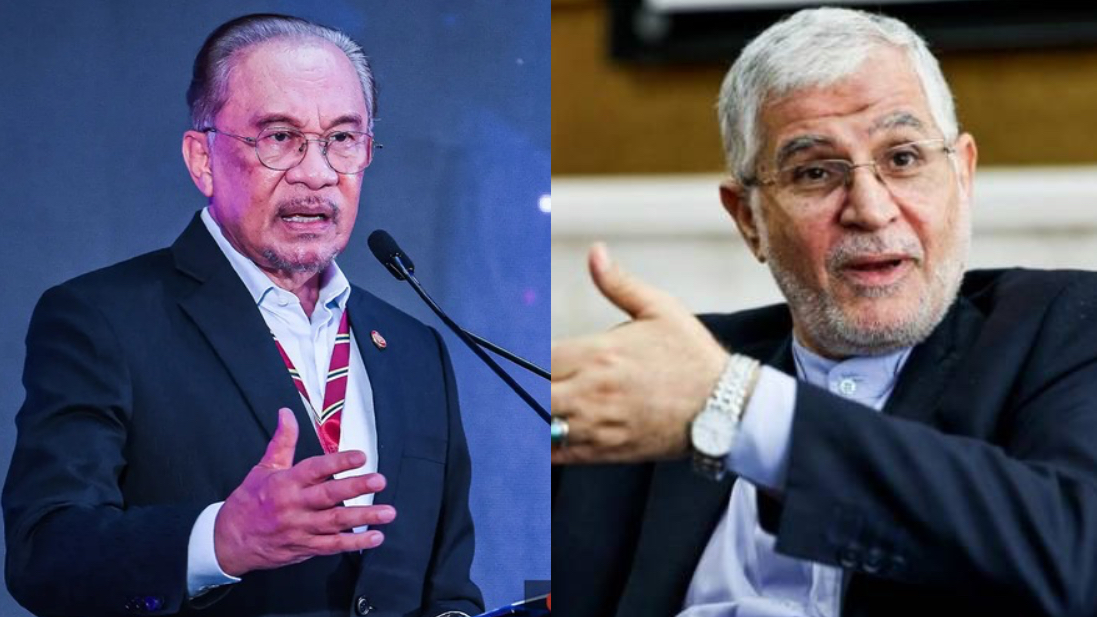
However, Iran’s Ambassador to Malaysia, Valiollah Mohammadi Nasrabadi, firmly denied the reports, stating that Malaysian vessels are not subject to any charges.
“Malaysian ships are free to pass. We will not impose any payment,” he said, emphasizing Malaysia’s status as a friendly nation.
Conflicting Narratives Raise Questions
Despite the strong denial, the gap between international reports and Iran’s official statement has created uncertainty.
Is there truly no payment involved, or are there undisclosed arrangements behind the scenes?
These concerns were echoed by Subang Member of Parliament, Wong Chen, who has called on the government to provide a clear and transparent explanation.
“If public funds are involved, the government must be transparent,” he stressed.
According to him, accountability is crucial, especially when the issue may involve taxpayer money in a sensitive geopolitical situation.
Between “Free Passage” and “Ad Hoc Payments”
The term “ad hoc payments,” highlighted in international reports, has become a key point of contention. With no clarity on the payment mechanism or currency used, speculation continues to grow.
Some observers suggest that even if there is no formal “toll,” there could still be:
- indirect facilitation costs
- diplomatic arrangements
- or other non-formal mechanisms
So far, however, there is no concrete evidence to support these possibilities.
Ships Safe, but Still Waiting
Meanwhile, Malaysia’s Foreign Minister, Mohamad Hasan, stated that seven Malaysian oil tankers are currently not being detained, but are instead waiting for the appropriate time and safe passage to proceed.
These vessels involve major companies such as Petronas and Sapura Energy.
Although described as safe, the fact that they remain on standby highlights the ongoing uncertainty in the region.
More Than Just a Trade Route
Iran has also reiterated that the Strait of Hormuz is not fully closed, but rather selectively restricted to countries deemed hostile.
This suggests that access to the waterway is no longer purely about commerce, but increasingly tied to geopolitical positioning and diplomatic relations.
Transparency Remains the Core Issue
While Iran’s denial may ease concerns over direct charges, it does not fully resolve the controversy. Instead, the conflicting narratives have intensified calls for greater transparency.
Until the Malaysian government provides a clearer and more detailed explanation, one key question remains:
Are Malaysian vessels truly passing for free, or is there more than meets the eye?