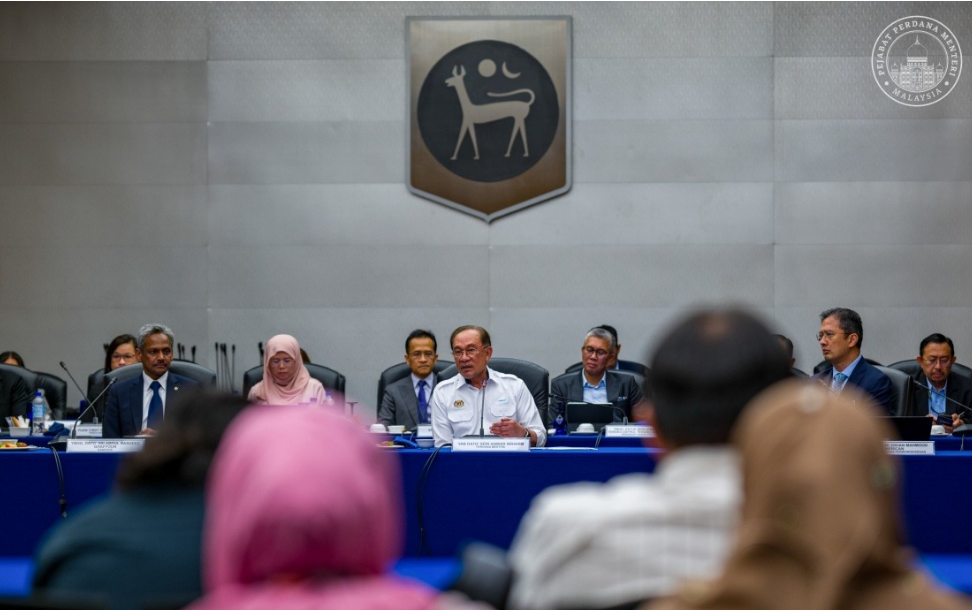
PUTRAJAYA, El Sky News – The Reciprocal Trade Agreement (ART) between Malaysia and the United States continues to spark intense debate across the country’s political and economic landscape. While the government maintains that the agreement is a strategic move essential to safeguarding Malaysia’s critical export markets, it has also raised pressing questions about its implications for national sovereignty and foreign policy autonomy.
ART Agreement: A Defensive Necessity, Not a Voluntary Trade Pact
According to the Ministry of Investment, Trade and Industry (MITI), the ART is not a conventional free trade agreement (FTA) voluntarily pursued by Malaysia. Instead, it acts as a defensive mechanism designed to stabilise Malaysia’s access to its largest export market after the US introduced aggressive reciprocal tariffs.

Without the ART, Malaysian products would be vulnerable to steep retaliatory tariffs ranging from 24% to over 50%, potentially crippling key sectors such as Electrical and Electronics (E&E), aerospace, rubber, cocoa, and pharmaceuticals—industries that support millions of jobs and thousands of SMEs.
Major Benefits Secured for Malaysian Exports
The government highlights several key achievements under the ART:
Tariff Reduction:
Malaysia successfully negotiated a reduced reciprocal tariff rate of 19%, the lowest among ASEAN countries with a trade surplus with the US.
Critical Exemptions:
A total of 1,711 essential Malaysian export products have been granted exemptions from the 19% tariff. These include palm oil and palm-based products, rubber goods, aircraft components, and pharmaceutical items—collectively valued at approximately RM22 billion.
These exemptions ensure Malaysian exports remain competitive globally and safeguard trade flows estimated at RM325 billion.
Sovereignty and Domestic Law: Government Issues Strong Reassurance
Critics have expressed concerns about potential sovereignty erosion. In response, the government has issued multiple reassurances:
Domestic Laws Take Precedence:
The Attorney General’s Chambers (AGC) and the Prime Minister have repeatedly affirmed that no provision in the ART supersedes the Federal Constitution or Malaysian law. Any enforcement actions will remain fully governed by domestic legislation.
Right to Terminate:
Article 7.5 of the ART clearly states that Malaysia maintains the absolute right to terminate the agreement at any time via written notice—without requiring approval from Washington. This clause serves as a safeguard for national sovereignty and foreign policy independence.
No Legal Amendments Required:
MITI emphasises that the ART does not require any amendments to Malaysian laws for it to be signed or enforced, ensuring that Malaysia’s legal sovereignty remains intact throughout the negotiation and execution process.
Conclusion
Overall, the government defends the ART as a carefully considered “response measure” aimed at protecting national economic interests, securing key export markets, and safeguarding Malaysian jobs—without compromising the country’s foreign policy freedom or constitutional sovereignty.