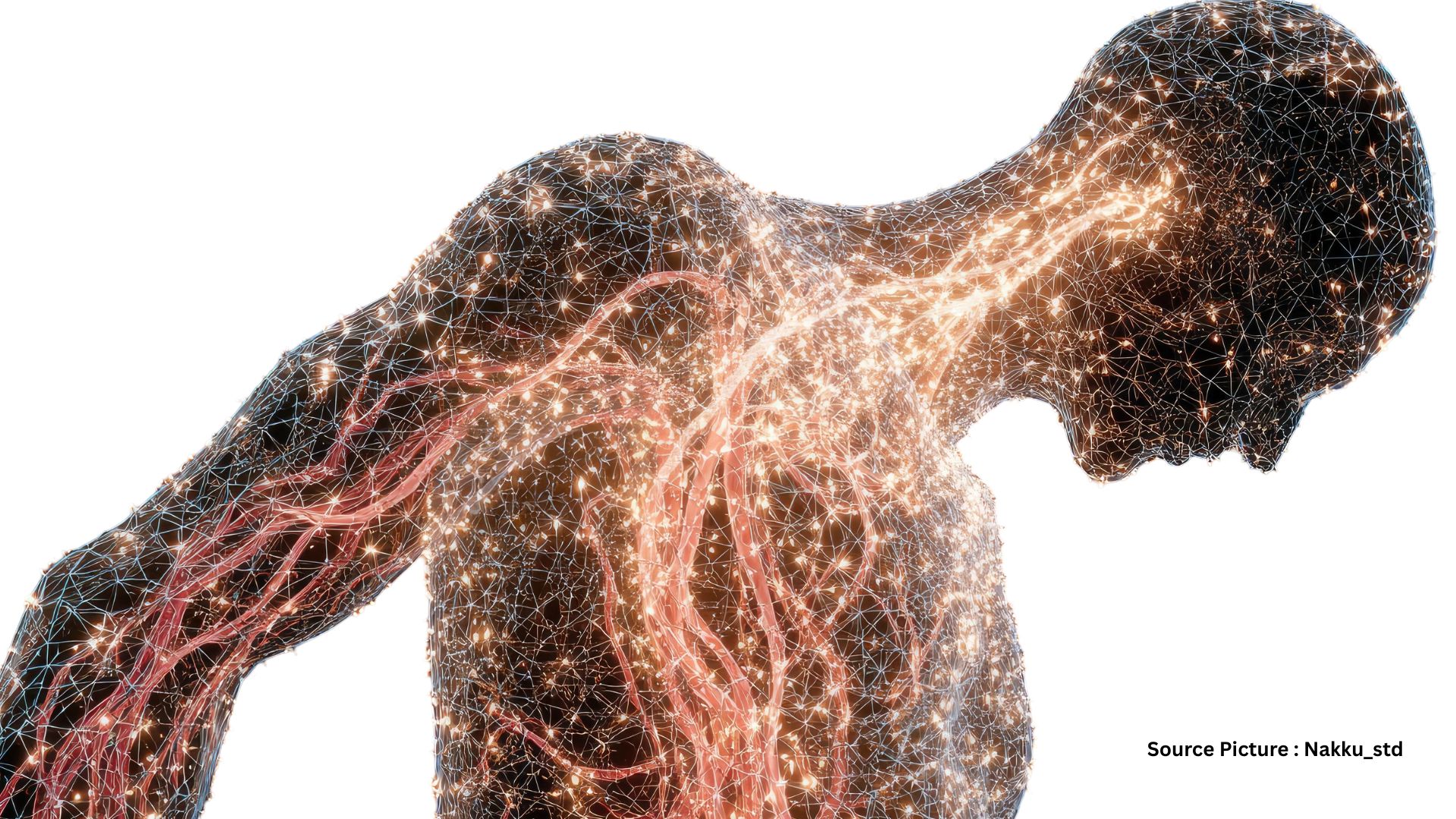
Tokyo, El Sky News – While it may sound like science fiction, the human body is not only a source of heat but also a constant emitter of visible light. This phenomenon, known as ultra-weak photon emission or bio-luminescence, is a fascinating aspect of human biology, according to research from Japanese scientists.
The study, which used highly sensitive cameras, confirmed that the light emitted by the body is approximately 1,000 times weaker than what the human eye can perceive, making the “glow” effectively invisible to us.

The Source of the Subtle Shine
Unlike the bright, distinct glow of organisms like fireflies, the light coming from human beings is the result of metabolic processes. Specifically, it is thought to be a byproduct of cellular respiration and the reactions involving free radicals.
“This light is incredibly faint. It’s not a steady flame but a whisper of light resulting from the biochemical energy transfer within our cells,” explained Dr. Takayuki Kobayashi, a biophysicist involved in the research.
The emission is generally considered to be in the red and near-infrared spectrum.
Emission Patterns Change Throughout the Day
The research also highlighted intriguing patterns in the body’s glow:
- Peak Time: The intensity of the light appears to fluctuate throughout the day, with scientists observing the highest levels of emission late in the afternoon.
- Body Areas: The forehead, cheeks, and neck typically emit more photons than other parts of the body.
Potential Applications in Medical Science
The discovery is not merely a biological curiosity. Researchers believe that by studying the changes in the body’s ultra-weak light signature, they may be able to gain valuable, non-invasive insights into human health and disease.
The changes in the emission pattern could potentially be correlated with metabolic health, stress levels, or even the presence of certain diseases, offering a new frontier in diagnostic technology.
“While we are far from using this as a common diagnostic tool, mapping these faint light changes could offer a real-time ‘window’ into cellular health without the need for blood tests or radiation,” Dr. Kobayashi noted. Further research is ongoing to establish a concrete link between these subtle light signals and physiological states.