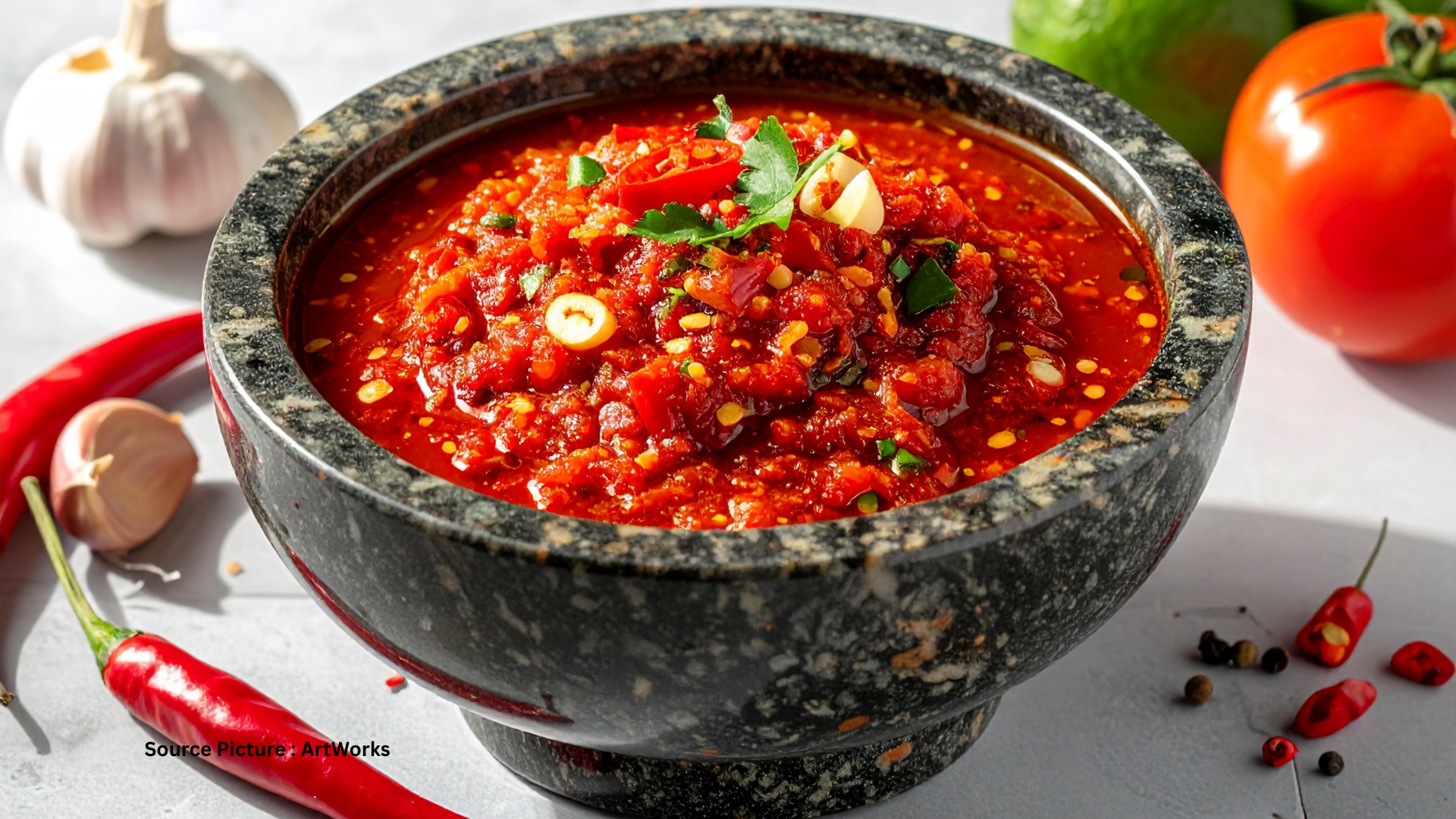
Kuala Lumpur, El Sky News – A common culinary observation among international visitors and neighboring food enthusiasts suggests that Malaysian sambal, the ubiquitous chili paste condiment, often falls short of the extreme heat found in other Southeast Asian variations, particularly those from Indonesia. While this perception is widespread, culinary experts argue it is less about a lack of heat and more about a fundamental difference in the desired flavor profile.
The Profile Over Pungency
The divergence in the flavor experience stems primarily from the ingredients and cooking techniques. Unlike some Indonesian sambal varieties that rely heavily on raw cili padi (bird’s eye chili) for maximum raw pungency, Malaysia’s most popular sambals often involve extended cooking processes.

For instance, Sambal Tumis, a staple condiment often served with Nasi Lemak, is simmered for hours with copious amounts of shallots, tamarind, and sugar. This long cooking time and the addition of sweet and sour elements serve to mellow the chili’s heat while building a complex, caramelized foundation that balances the spicy kick with sweetness and tanginess.
Focus on Flavor Balance
Dr. Ahmad Razali, a food historian at a local university, explains that the Malaysian palate frequently prioritizes flavor harmony over singular spice dominance. “The goal of a signature Malaysian sambal like Sambal Belacan is to integrate umami from the fermented shrimp paste (belacan) and acidity from lime, creating a multi-layered taste experience. The spice is a key player, but it’s meant to complement the dish, not overwhelm it,” he stated in an interview.
This approach contrasts with regions where the intensity of the pedas (spicy) heat itself is the primary culinary objective. A global study on preferred spice levels, as observed in some international restaurant menus, often places Malaysian and Singaporean heat levels significantly lower than those associated with Indonesian cuisine, reinforcing the general perception of milder flavor preferences.
Niche Heat Options
Despite the general trend toward balanced spice, pockets of extreme heat do exist within Malaysian culinary tradition. Specialized products like Sambal Ikan Bilis Cili Padi Opah and certain artisan or homemade chili concoctions are marketed specifically for their searing heat, appealing to the segment of the population that seeks maximum pungency.
Ultimately, the perceived “lack of spice” in Malaysian sambal is not a deficiency but a deliberate culinary choice—a preference for a rich, balanced flavor symphony that integrates spice alongside notes of sweet, sour, and savory.