


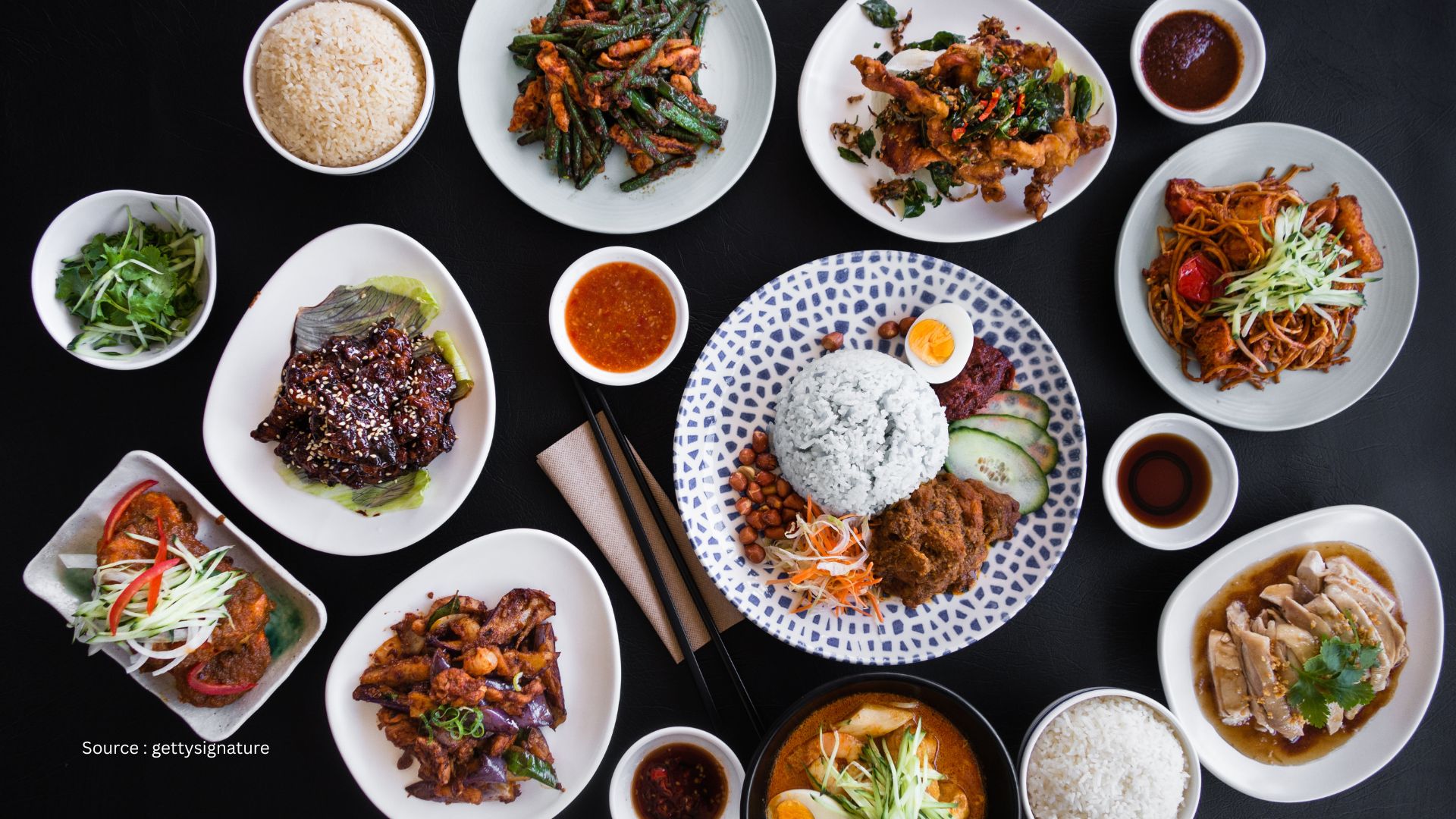
Kuala Lumpur, El Sky News – Malaysia’s gastronomic landscape is a vibrant reflection of its multicultural heritage, resulting from the centuries-old convergence of its major ethnic groups: the Malays, Chinese, and Indians. This fusion, enriched by regional influences from Thailand and Indonesia, has crafted one of the world’s most compelling and diverse cuisines.
1. Malay Cuisine: The Foundation of Flavor
Malay cooking forms the core of the national palate, characterized by its deep, aromatic flavors derived from a rich blend of spices, chili, and the essential use of coconut milk (santan).

- Key Ingredients: Belacan (shrimp paste), lengkuas (galangal), serai (lemongrass), and kunyit (turmeric).
- Iconic Dishes:
- Nasi Lemak: Often hailed as the national dish, this fragrant rice cooked in coconut milk and pandan leaves is served with a spicy sambal, fried anchovies (ikan bilis), peanuts, and a boiled egg.
- Rendang: A slow-cooked meat dish (usually beef or chicken) braised in coconut milk and a spice paste until the liquid is absorbed, resulting in a tender, flavor-packed meal.
- Satay: Marinated, skewered, and charcoal-grilled meat served with a distinctive sweet and spicy peanut sauce.
2. Malaysian Chinese Cuisine: A Southern Legacy
The Chinese culinary tradition in Malaysia is heavily influenced by Southern Chinese migrants, particularly from the Hokkien, Cantonese, Hakka, and Teochew groups.
- Key Techniques: Emphasis is placed on techniques such as stir-frying, deep-frying, and steaming.
- Iconic Dishes:
- Char Kway Teow: Flat rice noodles expertly stir-fried over high heat with prawns, cockles, bean sprouts, egg, and dark soy sauce.
- Hainanese Chicken Rice: A simple yet perfect dish where poached chicken is served alongside rice cooked in chicken stock, complemented by a pungent chili-ginger sauce.
- Bak Kut Teh: A comforting herbal pork rib soup.
3. Indian Cuisine: Spice and Savor
Malaysian Indian food primarily draws from Southern Indian (Tamil) traditions, featuring the liberal use of spice blends, robust curries, and various flatbreads.
- Key Elements: Rich curry bases, diverse spices (cumin, coriander, cardamom), and leavened bread.
- Iconic Dishes:
- Roti Canai: A flaky, pan-fried flatbread often served with curries (like dhal, or fish/chicken curry).
- Nasi Kandar: A meal of steamed rice accompanied by a selection of mixed gravies and various meat and vegetable side dishes.
- Mee Goreng Mamak: Yellow noodles stir-fried with a tangy, slightly sweet, and spicy sauce, tofu, and meat.
4. Peranakan/Nyonya: The Ultimate Fusion
The Peranakan, or Nyonya, cuisine represents the true merger of Chinese ingredients and methods with the intense aromas and spices of Malay cooking. This distinct style is most prominent in Malacca and Penang.
- Signature Flavor Profile: Combines Chinese elements with Malay staples like tamarind (asam), shrimp paste (belacan), and coconut milk.
- Iconic Dishes:
- Ayam Kapitan: A dry Nyonya-style chicken curry.
- Laksa Lemak (Nyonya Laksa): A rich, coconut milk-based noodle soup, contrasting with the tamarind-based Asam Laksa.
The result of these cross-cultural interactions is a dynamic culinary scene where every dish tells a story of migration, adaptation, and shared history.





