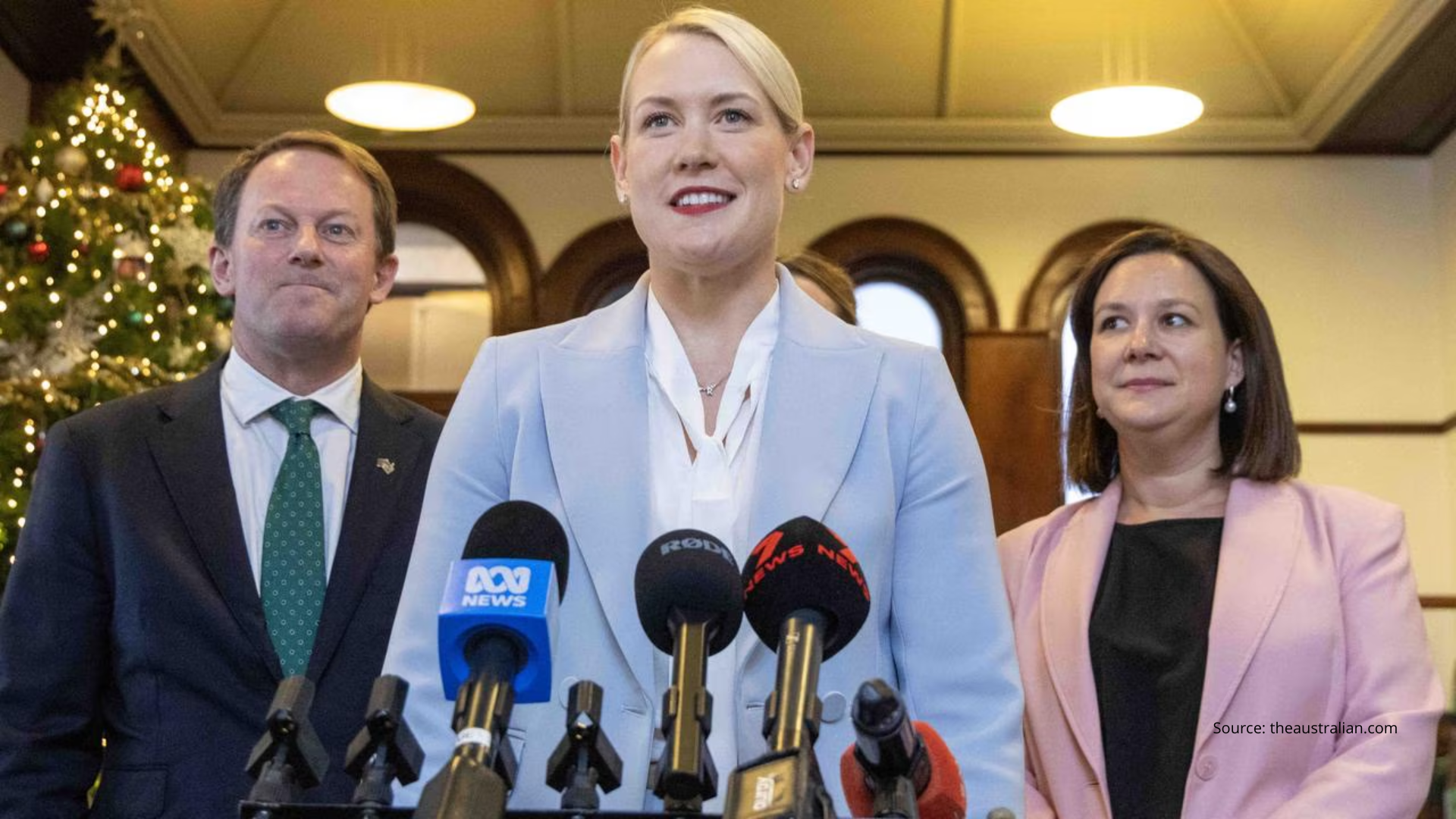
Australia, El Sky News — In a development widely regarded as politically significant, Australia’s Liberal Party is now led by women in three key states, marking a notable shift within a party long perceived as struggling to attract female voters. The emergence of Ashton Hurn (South Australia), Kellie Sloane (New South Wales), and Jess Wilson (Victoria) as state leaders has placed women at the forefront of the party’s efforts to rebuild and redefine its political identity.
Leadership Changes Across Three States

The latest leadership shift occurred in South Australia, where Ashton Hurn, a relatively new member of parliament, was elected as Leader of the Opposition following the resignation of Vincent Tarzia. Her appointment makes her one of three women now leading Liberal Party branches at the state level.
Hurn follows Kellie Sloane, who was elected leader of the Liberal Party in New South Wales in November 2025, and Jess Wilson, who assumed leadership of the Victorian Liberal Party after a leadership spill earlier this month. Together, their appointments represent a rare moment of simultaneous female leadership within the party’s state structures.
Each leader brings a different professional background, ranging from journalism and public policy to health and community advocacy, and all face the challenge of rebuilding party credibility ahead of upcoming state elections.
Political Significance and Internal Challenges
Political analysts view the rise of these leaders as a potential turning point for the Liberal Party, which has faced ongoing criticism for its lack of female representation and declining support among women voters. The party suffered significant losses in recent federal and state elections, prompting internal calls for cultural reform and broader representation.
Supporters argue that placing women in top leadership roles signals a genuine effort to modernize the party’s image and reconnect with a more diverse electorate. However, critics caution that leadership change alone will not be sufficient without substantial policy shifts addressing issues such as housing affordability, healthcare, cost-of-living pressures, and workplace equality.
Some commentators have also raised concerns about the so-called “glass cliff” phenomenon, where women are promoted during periods of crisis, inheriting leadership roles when political risks are at their highest.
Impact on Australia’s National Political Landscape
The developments at the state level coincide with broader changes at the federal level. Earlier in 2025, Sussan Ley became the first woman to lead the Liberal Party at the national opposition level, reinforcing the perception that the party is undergoing a wider transformation in its leadership culture.
Together, these changes suggest growing recognition within conservative politics that voter expectations are evolving, and that leadership diversity may play a role in restoring public trust.
Looking Ahead
As Australia approaches a series of crucial state and national elections, the performance of these female leaders will be closely watched. Their success or failure may determine whether this moment represents a lasting structural shift within the Liberal Party or a temporary response to electoral setbacks.
What remains clear is that December 2025 marks a pivotal moment in Australia’s political landscape, with women increasingly positioned at the center of conservative leadership and reform.
(Lunar)