


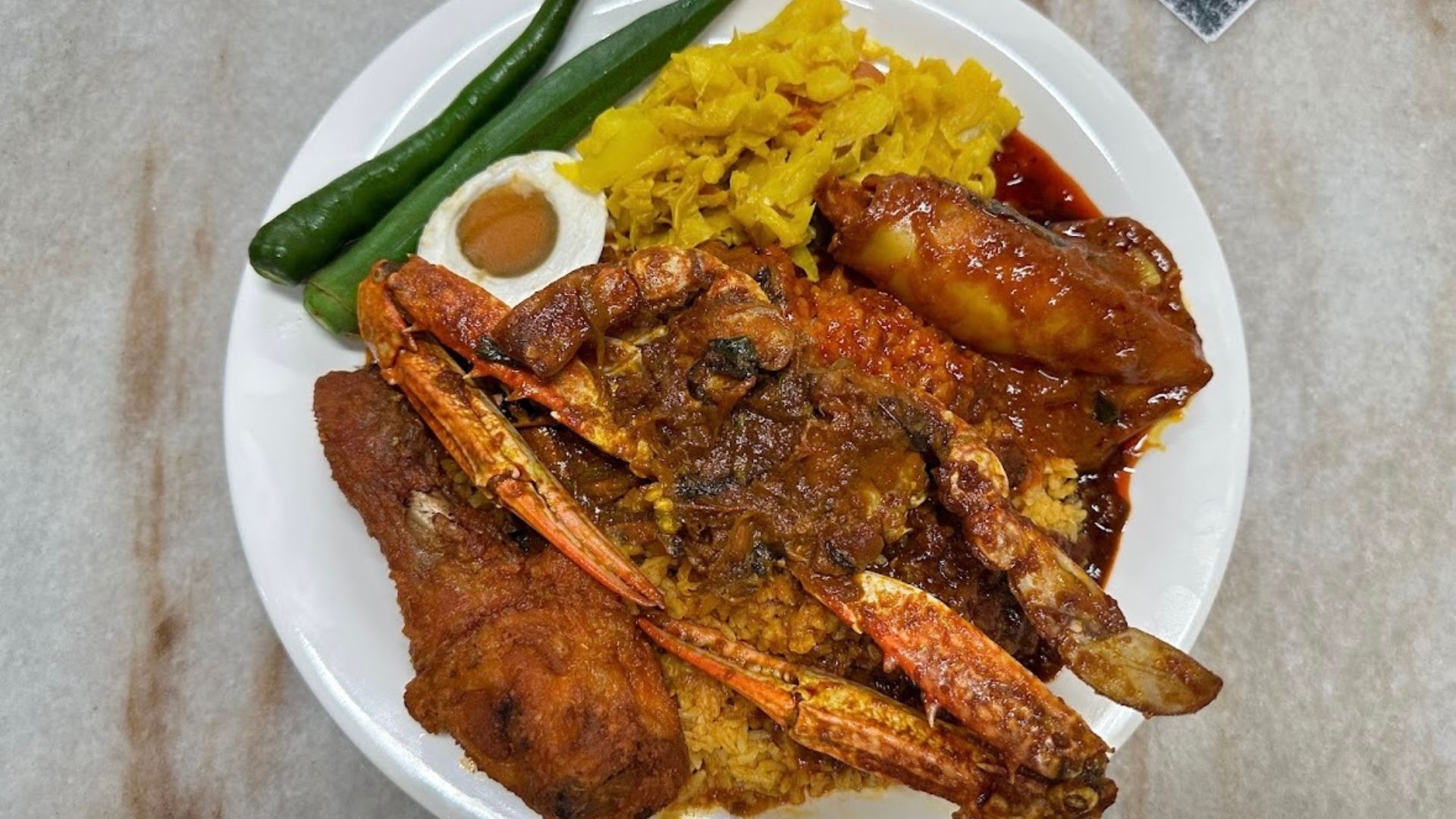
Kuala Lumpur, El Sky News – While modern food trends come and go, one Malaysian staple remains an immovable pillar of the nation’s culinary identity. Nasi Kandar, the aromatic rice dish synonymous with Penang, carries a legacy that stretches back over a century, originating from the sweat and toil of the early 20th-century spice trade.
The Shoulder-Pole Origins
The term “Kandar” is not a culinary technique, but a reference to a physical struggle. In the early 1900s, Tamil Muslim immigrants—commonly known as the Mamak community—navigated the bustling streets of George Town’s port.

They balanced a “kayu kandar” (a wooden yoke) across their shoulders. On either end hung baskets filled with steaming white rice and earthen pots of spicy fish curry. These mobile vendors provided a quick, high-calorie meal for dockworkers and laborers who needed sustenance for their grueling shifts.
A Laborer’s Luxury
“In those days, it was the food of the working class,” explains a local heritage historian. “A plate cost only a few cents. It was simple—just rice, a piece of fish or an egg, and a splash of curry. The complexity of flavors we see today evolved as the vendors settled into permanent locations.”
By the mid-20th century, these itinerant hawkers began moving into “kopitiams” (coffee shops) and dedicated storefronts. This transition allowed for an explosion of variety, leading to the “Kuah Campur” (mixed gravy) phenomenon that defines the dish today.
The Secret is in the ‘Banjir’
What separates Nasi Kandar from a standard curry rice is the art of the pour. Master servers today practice a technique known as “Nasi Kandar Banjir” (flooded rice).
Rather than choosing one sauce, a medley of gravies—ranging from spicy squid ink to creamy chicken kurma and tangy fish curry—is splashed over the rice. This creates a complex, multi-layered flavor profile that is impossible to replicate with a single recipe.
A Living Heritage
Today, institutions like Hameediyah Restaurant, which traces its roots back to 1907, and the legendary Line Clear, located in a narrow alleyway, continue to serve thousands of patrons daily. What began as a humble meal for port workers has transformed into a premier food tourism draw, attracting gourmands from across the globe to the heart of Penang.
Despite its commercial success, the essence of Nasi Kandar remains unchanged: a testament to the resilience of the migrant spirit and the rich, spicy melting pot of Malaysian culture.





