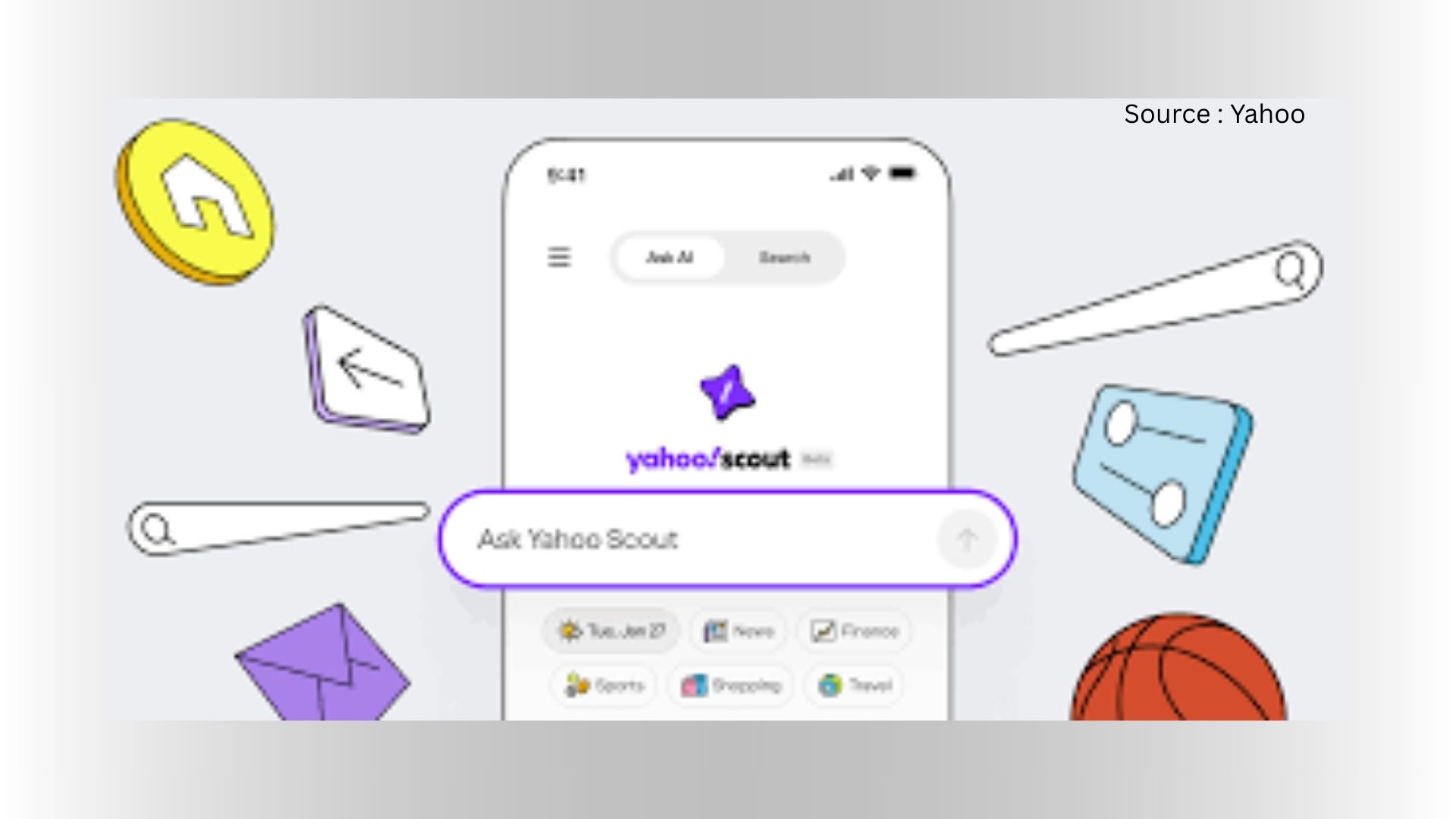
KUALA LUMPUR – In a major move to reassert its influence in the digital landscape, Yahoo has officially launched Yahoo Scout, an AI-powered “answer engine” designed to transform how users interact with information across its massive ecosystem.
Currently available in beta, Yahoo Scout marks the company’s first significant return to search innovation in over a decade. The feature aims to compete with industry giants like Google’s AI Mode and OpenAI’s ChatGPT by blending generative AI with Yahoo’s decades of specialized data.

A Conversational Search Experience Unlike traditional search engines that primarily provide a list of links, Yahoo Scout functions as an intelligent companion. It synthesizes information from the open web and Yahoo’s internal knowledge graph to deliver clear, conversational responses.
“Search is fundamentally changing, and we are using our unique assets to create something truly useful for our hundreds of millions of users,” said Jim Lanzone, CEO of Yahoo.
To power the engine, Yahoo has partnered with Anthropic, utilizing the Claude AI model for its speed and safety, while also leveraging Microsoft Bing’s grounding API to ensure that answers are backed by authoritative and up-to-date sources.
Integration Across All Platforms Yahoo Scout is not limited to a search bar. The “Yahoo Scout Intelligence Platform” is being integrated into various high-traffic verticals to streamline the user experience:
- Yahoo News: Provides concise highlights and audio summaries of trending articles.
- Yahoo Finance: Features an “Analyze” button for real-time stock insights and sentiment analysis.
- Yahoo Mail: Assists with smart compose features, calendar event extraction, and message summaries.
- Yahoo Sports: Generates AI-powered game breakdowns and box score analysis.
Focusing on User Discovery A key differentiator for Yahoo Scout is its commitment to the “open web.” While many AI search tools keep users within their own interface, Scout is designed to drive traffic back to publishers by prominently featuring direct links and citations within its summaries.
The beta is currently available to users in the United States on both desktop and mobile platforms, with plans for a global rollout and further personalization features in the coming months.