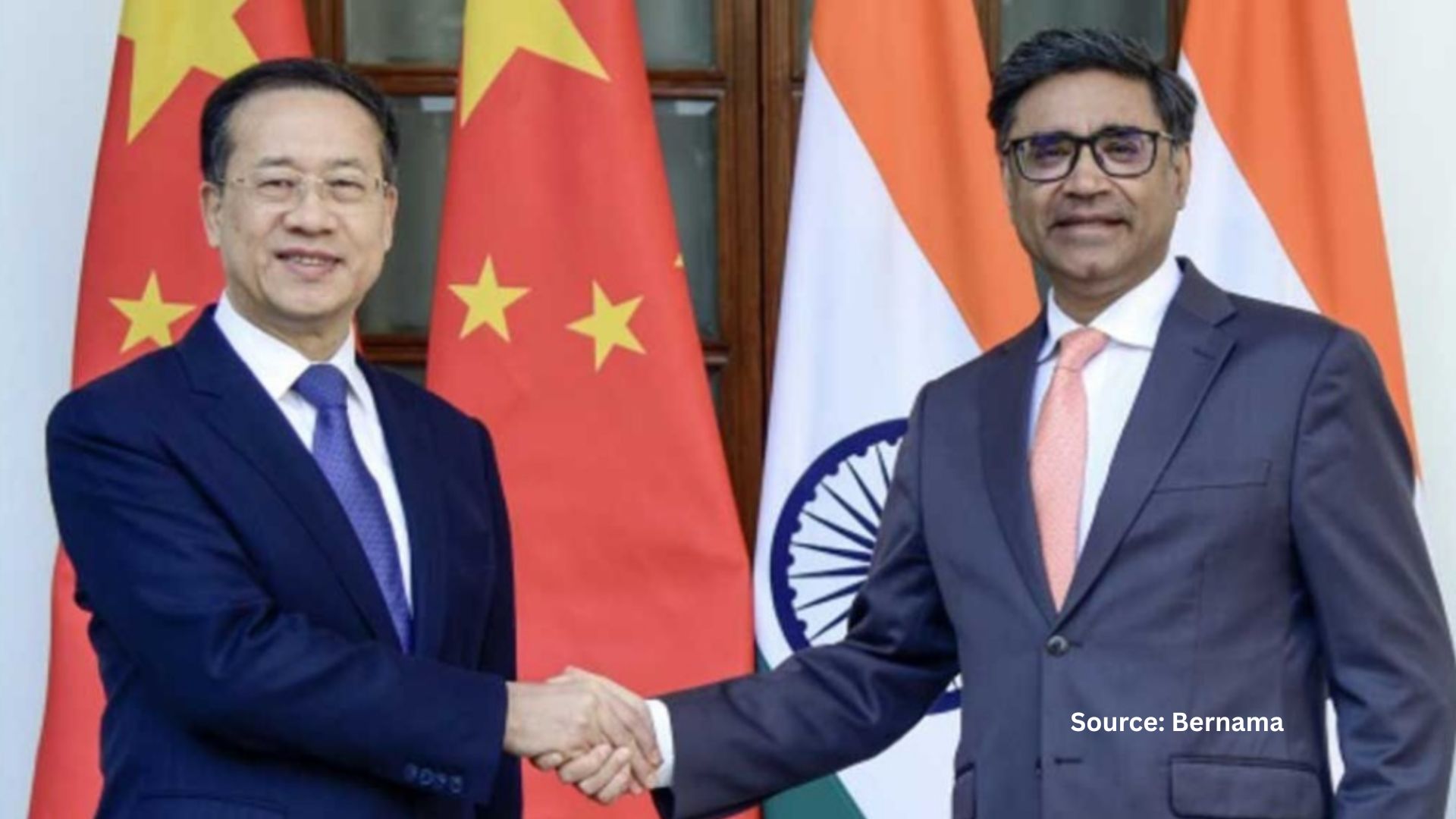
KUALA LUMPUR – In a significant move to stabilize regional relations, China and India have reached a consensus to prioritize strategic cooperation over competition. During a new round of strategic dialogue held here on Thursday, both nations emphasized the importance of viewing each other’s development as an opportunity rather than a threat.
The high-level meeting was attended by China’s Vice Foreign Minister Ma Zhaoxu and India’s Foreign Secretary Vikram Misri. Amidst a complex and volatile international landscape, the two diplomats engaged in what was described as a candid and in-depth communication regarding bilateral ties, regional security, and global diplomatic concerns.

Fostering Mutual Trust A key outcome of the dialogue was the mutual agreement to enhance “mutual trust” and expand collaborative efforts across various sectors. Recognizing the friction that has occasionally defined their relationship, both representatives stressed the need for a prudent approach to handling disputes. The goal is to ensure that China-India relations progress along a healthy and stable trajectory.
“Both sides need to look forward when managing bilateral relations from a strategic perspective,” the consensus noted, highlighting a shift toward long-term stability in the face of global uncertainty.
Global Cooperation and Multilateralism Beyond bilateral issues, the two giants of the Global South reaffirmed their commitment to international order. They pledged mutual support for their respective chairmanships of the BRICS bloc for this year and the next. Furthermore, both nations expressed a shared vision for upholding multilateralism, with the United Nations remaining at the center of the global framework.
The representatives also discussed the importance of strengthening unity among Global South nations to defend international justice and peace. By fostering a more multipolar world, China and India aim to contribute significantly to the peace and development of Asia and the world at large.
A New Chapter This dialogue marks a renewed effort by the world’s two most populous nations to bridge differences. By focusing on shared goals and cautious conflict management, the meeting sets a foundation for a more cooperative era in Asian geopolitics, aiming for a balance that benefits both emerging economies.