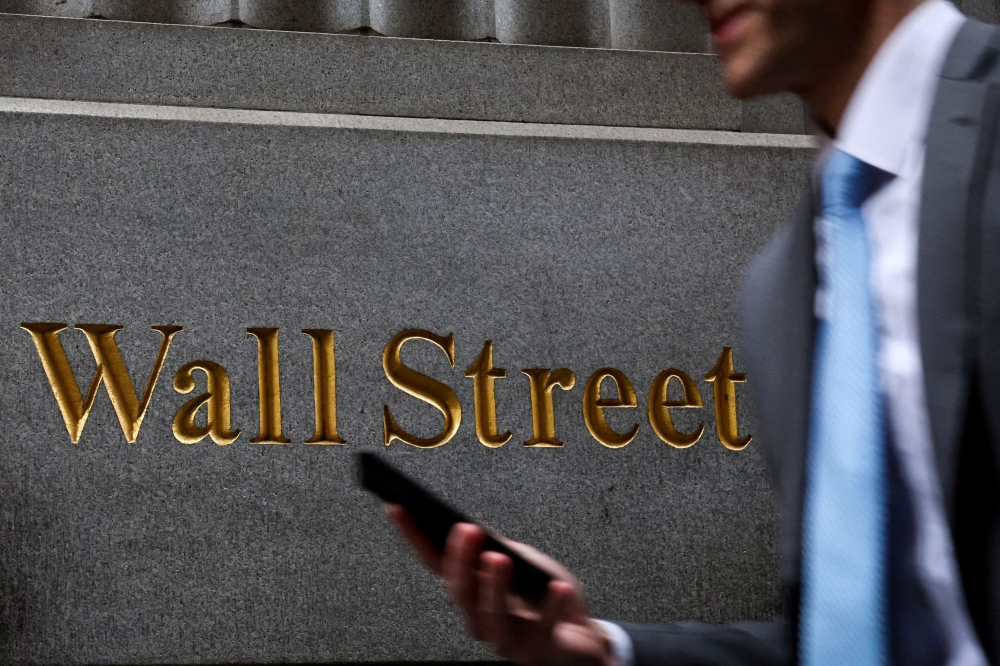
Wall Street Rallies After High Court Limits Trump’s Tariff Authority; Markets Weigh Effects of New Levies
Wall Street closed higher on Friday after the US Supreme Court struck down former President Donald Trump’s use of emergency powers to impose sweeping global tariffs, a ruling that eased some uncertainty in financial markets and lifted equity indexes.

The U.S. top court – with a conservative‑leaning majority – ruled 6‑3 that the International Emergency Economic Powers Act (IEEPA) does not authorise the president to impose tariffs, a move that underpinned many of the tariff measures announced last year.
Following the decision, Wall Street stocks climbed, with the S&P 500 up about 0.7%, the Nasdaq gaining nearly 0.9%, and the Dow Jones Industrial Average rising around 0.47% as investors responded to the ruling. Major technology and consumer companies such as Alphabet, Amazon, and Apple registered notable gains, reflecting renewed confidence among traders.
Investors had earlier reacted to a mix of disappointing U.S. economic data, but the court’s intervention helped shift sentiment into positive territory by removing an element of policy uncertainty that had weighed on markets in recent months.
Trump’s Response and Future Tariff Plans
In response to the setback, Donald Trump criticised the ruling, calling it a “disgrace” and claimed he still intended to pursue tariff measures using alternative legal authority under the Trade Act of 1974. Trump has vowed to impose a 10% global tariff for up to 150 days under new legal powers, though details remain unclear.
Treasury officials have said the alternative method could result in similar tariff revenues for 2026, even if the Supreme Court decision limits emergency powers previously cited. Analysts and business leaders are carefully watching how these new measures will be drafted and implemented.
Market Interpretation and Reactions
Some market analysts said the ruling could reduce inflationary pressures, as tariffs had previously been passed on to prices for goods and services, while others cautioned that policy uncertainty remains due to the potential for new levies. Investors also expressed relief that the decision fell broadly in line with expectations, dampening a previously sharper market reaction.
Stocks particularly sensitive to tariff uncertainty, such as consumer discretionary, industrial, and technology sectors, showed stronger performance in trading. The outlook for global markets now partly hinges on how trade policy evolves and whether additional disputes are resolved through negotiation rather than unilateral action.
Broader Economic Context
The court’s decision comes amid lingering concerns about global inflation, supply chain dynamics, and geopolitical pressures. U.S. economic growth data had shown slower‑than‑expected trends in late 2025 and early 2026, leaving investors to balance weaker macroeconomic signals with reduced trade policy risk.
Despite the positive equity market response, some experts warn that the ruling could lead to complex legal disputes over potential refunds for tariffs already collected and raise questions over the future of trade relations with major partners.
Looking Ahead
With equity markets now catching their footing and the dollar softening against certain currencies, traders are watching upcoming U.S. economic data releases, inflation indicators, and Federal Reserve policy expectations — all of which could shape market direction in the weeks ahead.
The Supreme Court’s intervention has temporarily eased tariff‑related concerns, but how trade policy will evolve under new legal frameworks and executive actions remains a key theme for global markets in 2026.