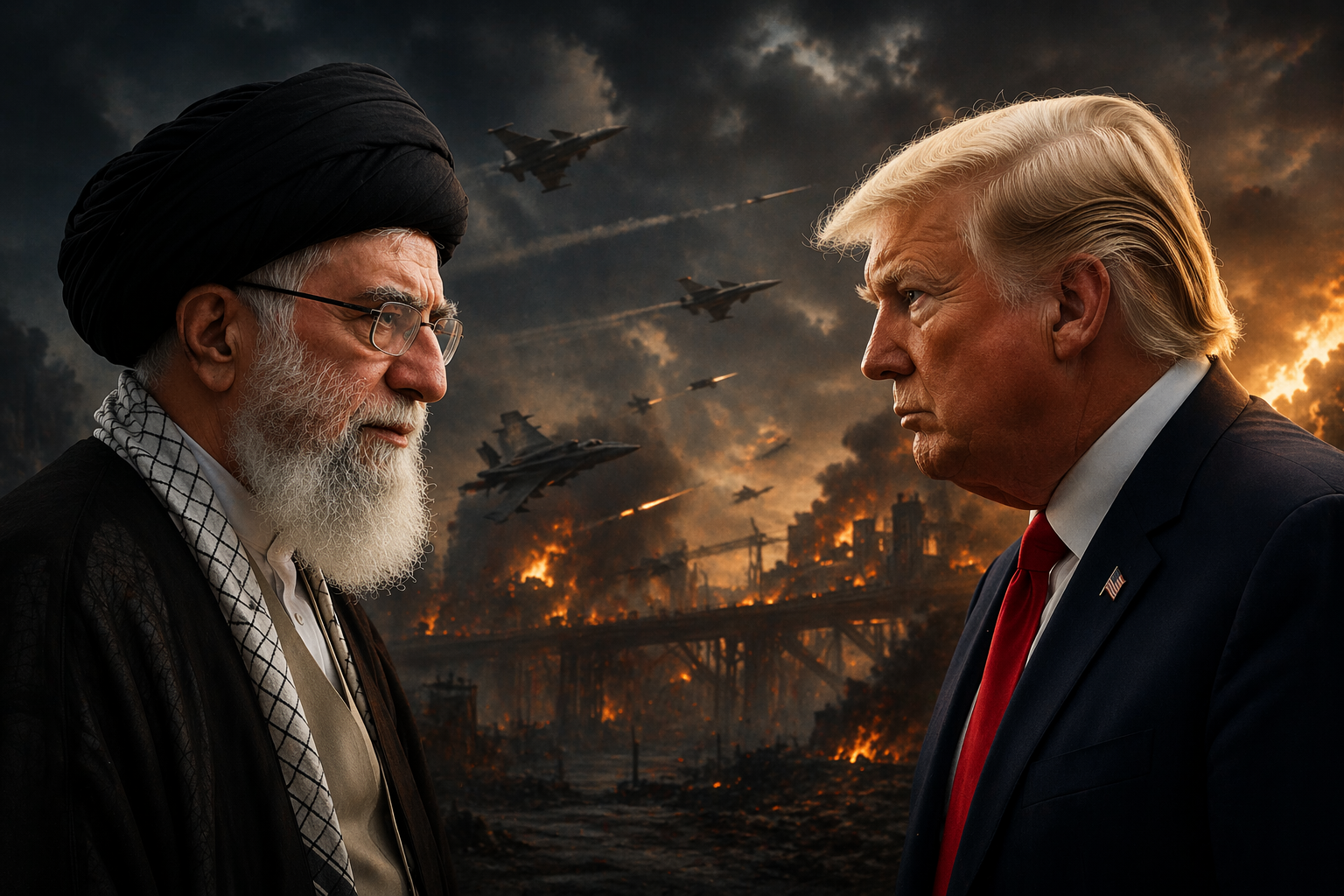
TEHRAN — Tehran has been hit hard by repeated US and Israeli strikes as the conflict between the United States, Israel and Iran entered its fourth day, with residents reporting widespread damage and deserted streets in the Iranian capital. US President Donald Trump has declared it “too late” for Iran to seek peace talks, asserting that much of Tehran’s defence capabilities and leadership have been dismantled.
Military drones and missiles have targeted key installations in Tehran and other parts of Iran, including oil facilities and buildings connected with the country’s interim leadership structure. Local media showed columns of smoke rising over the city’s centre, and one of Tehran’s main airports was reported to have been struck during the broad wave of attacks.

In a social media post, President Trump wrote that Iran’s air defence, air force, navy and leadership had been “gone”, and that it was “too late” for Tehran to seek negotiations to end the conflict. His remarks came two days after he had earlier signalled openness to talks, and four days after the initial US–Israeli strikes — which killed Iran’s Supreme Leader Ayatollah Ali Khamenei and other senior figures — inflamed the crisis.
Iranian officials, however, have denied approaching the United States with a request for negotiations. At the United Nations in Geneva, Iran’s ambassador stated that no such talks had been initiated, even as calls for diplomatic intervention grow amid the intensifying conflict.
The US-Israeli offensive has not been limited to Tehran. According to Iranian media reports, strikes also hit a building in Qom linked to the committee tasked with selecting a new supreme leader, underscoring the extensive reach of the campaign.
Iran, meanwhile, has continued to fire missiles and drones across the Middle East, hitting US facilities and diplomatic missions in several Gulf countries, including Dubai, Riyadh and Kuwait. One Iranian drone attack in Dubai caused a fire near the US consulate, and the US embassy in Riyadh was also damaged after an overnight strike.
In response to the bombardment, a Revolutionary Guards general warned that if the adversary continued to strike Iran’s main centres, Tehran would target economic infrastructure across the region — a clear indication of the widening nature of the conflict.
The violence has triggered significant diplomatic and economic consequences. Israel’s foreign minister has urged countries to sever ties with Tehran, while nations such as China and India have warned that the escalation threatens broader regional stability and could harm global trade and energy supplies. Energy markets have already responded with higher crude prices, reflecting anxiety over possible disruptions in the Strait of Hormuz, a key oil transit chokepoint.
In Tehran itself, many residents have fled or remain confined to their homes amid heavy bombardment. Shops that remain open operate under tense conditions, and security forces have been mobilised across major junctions to maintain order. Those who have stayed describe the capital as eerily quiet, with the usual bustle replaced by a tense stillness.
International responses continue to vary, with some world powers condemning the violence and urging restraint, while others brace for broader instability. As military operations persist and diplomatic channels appear closed, concerns mount that the conflict could spread further across the Middle East and beyond. Analysts suggest that without substantial de-escalation or renewed diplomatic efforts, the region may confront an extended period of instability with wide-ranging humanitarian and economic impacts