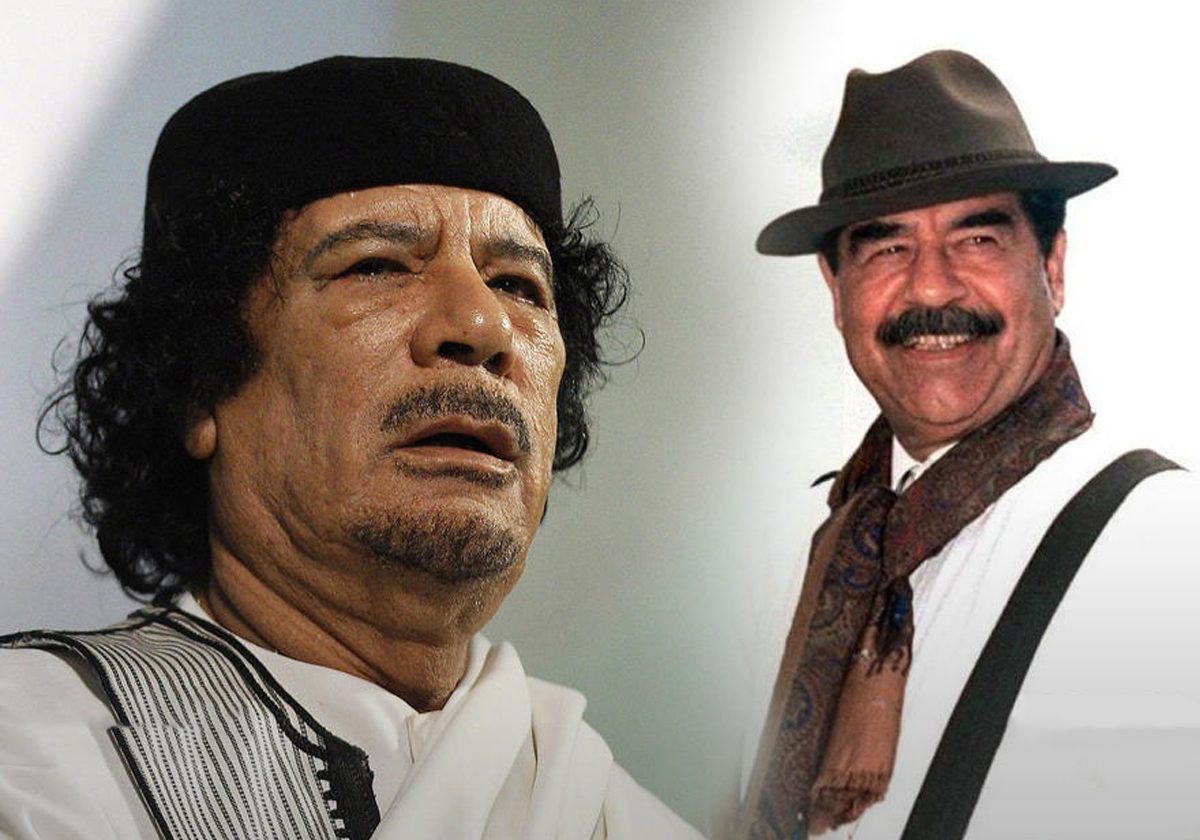
For decades, US foreign policy has been associated with military interventions aimed at removing authoritarian leaders. Two of the most debated examples are the fall of **Saddam Hussein in Iraq and **Muammar Gaddafi in Libya. While Washington argued that these interventions were necessary to promote democracy and security, critics say the long-term consequences have created instability across the Middle East and North Africa.
The removal of Saddam Hussein began with the **Iraq War in 2003, launched by the United States under President **George W. Bush. The US government justified the invasion by claiming Iraq possessed weapons of mass destruction and posed a global security threat. However, those weapons were never found, and the war quickly became one of the most controversial military campaigns in modern history.

After Saddam Hussein was captured and later executed in 2006, Iraq did not immediately become stable. Instead, the country faced years of sectarian conflict, insurgency, and political instability. The power vacuum that followed the collapse of Saddam’s regime allowed extremist groups to emerge, creating security challenges that lasted for more than a decade.
A similar pattern appeared in Libya during the **Libyan Civil War in 2011. Western countries, including the United States, supported NATO airstrikes against the government of Muammar Gaddafi. At the time, the intervention was supported by the administration of **Barack Obama, which argued that action was necessary to protect civilians during the uprising.
The intervention ultimately led to the collapse of Gaddafi’s 42-year rule. However, Libya soon entered a prolonged period of political chaos. Rival militias, competing governments, and foreign influence turned the country into one of the most unstable regions in North Africa.
These events continue to shape global debates about US regime change policies. Supporters argue that removing authoritarian leaders can open the path to democracy and human rights. Critics counter that military interventions often leave countries fragmented and vulnerable to further conflict.
More than a decade later, both Iraq and Libya remain powerful examples of how regime change can transform an entire region. The fall of Saddam Hussein and Muammar Gaddafi did not simply end two long-standing regimes; it also reshaped the geopolitical landscape of the Middle East and North Africa.
As global tensions continue to rise, the legacy of these interventions raises an important question: can foreign powers truly build stability after dismantling a government, or does regime change risk creating even deeper instability?