Kuala Lumpur, — Despite possessing just one aircraft carrier that is currently non-operational, the Russian Navy (VMF) still holds the No. 2 position as the world’s largest naval fleet by total number of vessels.
According to the latest 2026 data from Global Firepower and the World Directory of Modern Military Warships, Russia operates approximately 747–781 naval assets (including active ships, reserves, and support vessels). This figure trails only China (841 units) but surpasses the United States in third place with around 465–472 units.

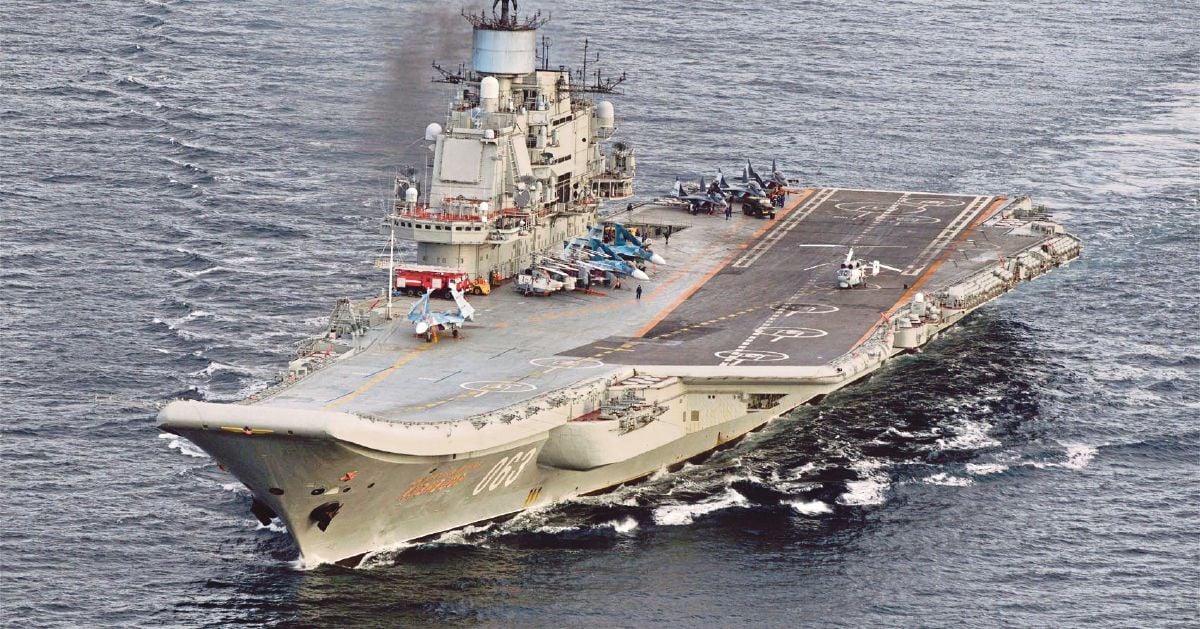
Russia’s sole aircraft carrier, the Admiral Kuznetsov (Project 1143.5), a 55,000-ton vessel, has been the center of attention. The ship has not sailed since 2017 and remains in mothballed (preserved) status after an eight-year refit that cost hundreds of millions to over a billion USD. In mid-2025, Russia suspended further modernization due to excessive costs, recurring technical issues—including fires and the sinking of the PD-50 floating dock—as well as budget constraints caused by the conflict in Ukraine.
Carrier-based fighter jets such as the MiG-29K and Su-33 have even been reassigned to bolster air defense in the Arctic region. Many Western analysts suggest the Kuznetsov will likely be sold or scrapped, temporarily making Russia the only permanent UN Security Council member without an operational aircraft carrier.
However, Russia’s naval strength lies in its submarine fleet (around 60–80 units, including nuclear-powered strategic submarines) and a small but lethal surface fleet. The navy fields dozens of modern corvettes (Steregushchy and Buyan classes), frigates, and missile boats equipped with advanced hypersonic weapons like the Zircon and Kalibr cruise missiles. This approach makes the Russian fleet highly effective for coastal defense, operations in the Black Sea and Baltic Sea, and power projection in the Arctic.
“Russia is no longer chasing massive aircraft carriers like the United States. Instead, they are focusing on submarines, anti-ship missiles, and an affordable yet hard-to-destroy fleet,” said one military analyst quoted by international media.
Long-term plans for a new aircraft carrier, such as the Project 23000 Shtorm (a nuclear-powered supercarrier capable of carrying 80–90 aircraft), remain on hold with no keel-laying scheduled as of 2026. The Russian Navy’s current priority is the production of new submarines and the modernization of its existing fleet.
With a total number of vessels exceeding that of the United States, Russia remains a naval power to be reckoned with, even without long-range airborne projection from an aircraft carrier. This capability is becoming increasingly significant amid global geopolitical tensions, particularly in the strategically important Arctic region.