


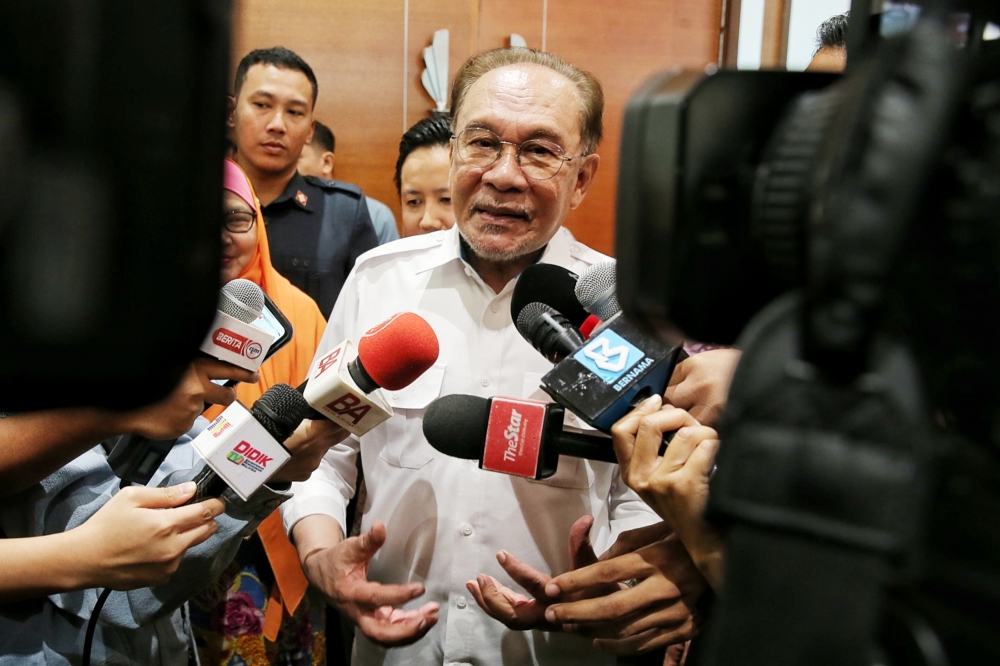
KUALA LUMPUR, May, 2026 — Prime Minister Anwar Ibrahim has confirmed that the Malaysian government is currently reviewing the country’s RON95 petrol subsidy framework, amid ongoing efforts to restructure national subsidy spending and improve fiscal sustainability.
Speaking after attending an official programme at Universiti Malaya, Anwar stressed that while the government is committed to reforming fuel subsidies, it must ensure that middle-income groups are not unfairly impacted by any new policy direction. He said the review is being conducted carefully to balance economic realities with public welfare concerns.

Anwar emphasised that Malaysia’s subsidy system must evolve in a way that remains fair, efficient, and targeted, particularly as global fuel prices and fiscal pressures continue to fluctuate.
Targeted Subsidy System Under Consideration
According to the prime minister, the government has already agreed in principle that fuel subsidies should not be universally applied to all income groups. Instead, Putrajaya is studying a more targeted model that focuses assistance on lower-income households while gradually reducing support for higher earners.
He noted that discussions are ongoing regarding which income brackets — including possible categories such as T20 or higher-middle-income groups — may be excluded or receive reduced benefits under a restructured system.
However, Anwar clarified that no final decision has been made yet, and the matter is still under detailed review by the National Economic Action Council, supported by economic experts tasked with evaluating the best approach for implementation.
He also stressed that any future subsidy mechanism must be simple, transparent, and practical, so it can be implemented effectively without causing administrative complexity or confusion among the public.
Protecting Middle-Income Malaysians Remains Priority
One of the key points highlighted by Anwar is the need to ensure that middle-income earners are not wrongly affected by subsidy rationalisation efforts.
He acknowledged that while higher-income groups may eventually receive reduced fuel support, the government must be cautious not to place additional financial pressure on households that are already managing rising living costs.
Anwar said the objective is not simply to cut subsidies, but to redirect government assistance more efficiently so that it benefits those who need it most, particularly lower-income Malaysians.
He also pointed out that fuel subsidy reform is part of a broader national effort to strengthen Malaysia’s fiscal position while maintaining social protection for vulnerable groups.
Rising Subsidy Costs Driving Policy Change
The review comes at a time when Malaysia’s fuel subsidy bill has been increasing significantly due to global economic conditions and fluctuating crude oil prices.
Recent estimates indicate that fuel subsidies have surged sharply in recent months, placing additional pressure on government finances. This has intensified calls from economists and policy analysts for Malaysia to transition toward a more targeted subsidy system, rather than blanket subsidies that benefit all income groups equally.
Experts argue that universal fuel subsidies tend to disproportionately benefit higher-income households, as they typically consume more fuel due to higher vehicle ownership and travel frequency.
As a result, targeted subsidy mechanisms are increasingly seen as a more sustainable approach that can reduce government expenditure while still protecting vulnerable populations.
RON95 Pricing and Public Sensitivity
Malaysia continues to maintain one of the lowest petrol prices in the region, with RON95 currently priced at RM1.99 per litre, making fuel subsidy policy a highly sensitive public issue.
Any changes to the subsidy system are expected to have a significant impact on households, transport costs, and overall cost-of-living perceptions. As such, the government is proceeding cautiously to avoid sudden price shocks or public dissatisfaction.
Anwar reiterated that any reform will be implemented in a way that is gradual and carefully structured, ensuring that the public is adequately informed and prepared before any changes take effect.
Balancing Fiscal Reform and Social Protection
The government’s challenge, according to analysts, lies in striking a balance between fiscal responsibility and social protection.
On one hand, Malaysia must reduce excessive subsidy spending to maintain long-term economic stability. On the other, abrupt changes could affect consumer confidence and household financial security, especially among middle- and lower-income groups.
Anwar’s remarks suggest that the administration is attempting to adopt a measured and inclusive approach, ensuring that reforms do not disproportionately burden the public while still addressing structural inefficiencies in subsidy distribution.
While no official timeline has been announced, the RON95 subsidy review is expected to continue over the coming months as the government evaluates data, income classifications, and implementation mechanisms.
Observers expect that any final policy may involve a tiered or targeted fuel subsidy system, potentially using income verification or digital assistance frameworks to ensure accuracy and fairness.
For now, Anwar has reassured Malaysians that the government remains committed to protecting vulnerable groups and ensuring that subsidy reforms are carried out responsibly, transparently, and without harming middle-income households.





