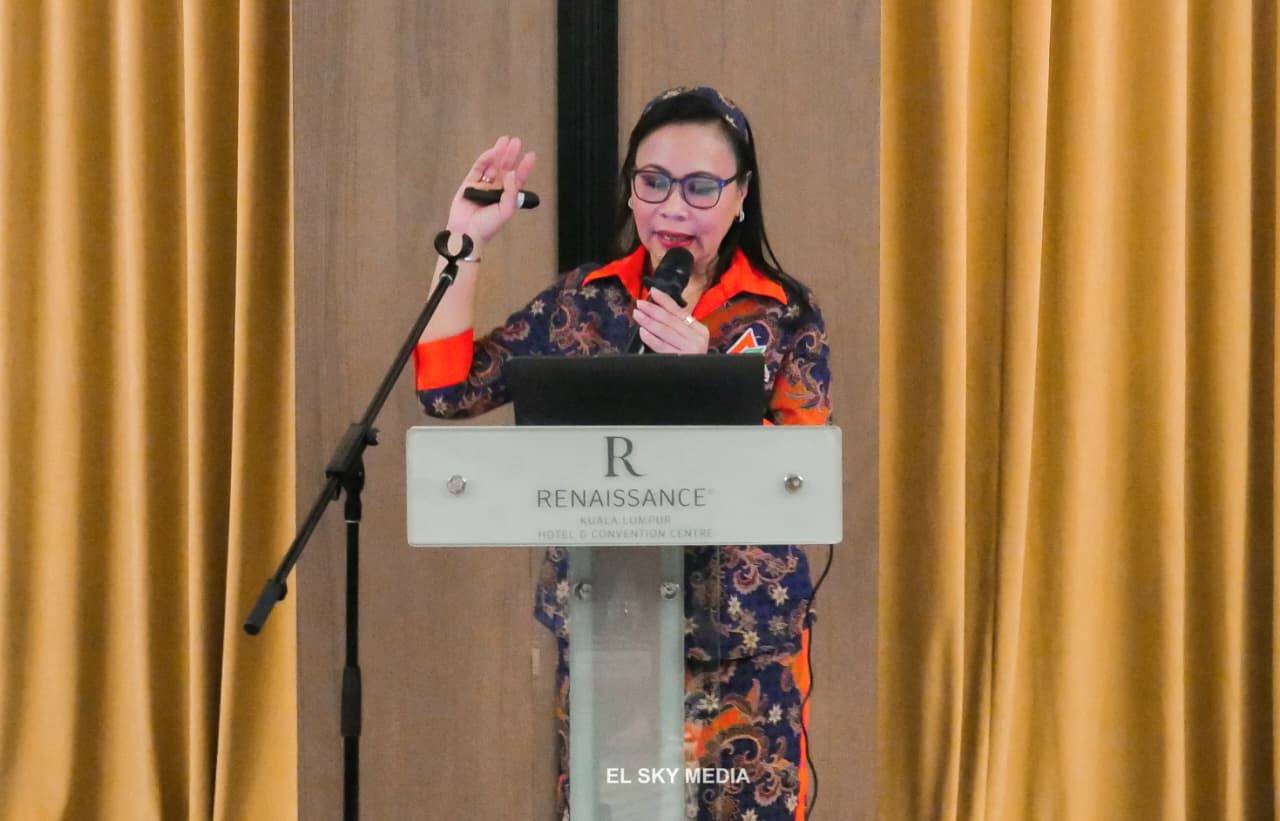
KUALA LUMPUR, El Sky News – During the Copper & Nickel seminar held at the Asia Iron Ore Summit 2025 in Kuala Lumpur, Meidy Katrin Lengkey, Secretary General of the Indonesian Nickel Miners Association (APNI), shared her insights on Indonesia’s evolving nickel policy and the nation’s ambition to dominate the global supply chain for nickel-based industries.
In an exclusive interview with Langit News, Meidy outlined both the short-term and long-term goals of Indonesia’s nickel sector.

“In the short term, our focus is on four key objectives creating jobs, increasing investment revenue, boosting regional GDP in nickel-producing areas, and upgrading technological skills,” Meidy explained.
“In the long run, Indonesia aims to control key materials in the global supply chain particularly for battery manufacturing and stainles steel production. That is the ultimate vision for Indonesia’s nickel industry,” she added.
Urgent Regulatory Reform and Technology Transfer
When asked about the most pressing changes needed for the sector’s sustainability, Meidy emphasized the importance of regulatory reform.
“The government needs to rebalance production capacity with market demand. We currently face an oversupply issue because of excessive investor entry without considering global market needs,” she said.
“Nickel should become a success story a model for managing other minerals in Indonesia. But beyond that, we need to focus on technology transfer, not just bringing in foreign investment and technology, but ensuring knowledge is shared with Indonesian workers,” she continued.
According to Meidy, education and collaboration are key to this transformation.
“Through scholarships and partnerships with international universities, Indonesians can gain the technical skills needed to move beyond low-level labor positions and compete with global experts,” she explained.
Challenges and Opportunities in Asia’s Mineral Market
Discussing broader regional challenges, Meidy highlighted the need for production control and strategic negotiation amidst complex political and market dynamics.
“The biggest challenge for Asia’s steel and mineral sectors today is balancing production capacity with global demand. Indonesia must develop a complete value chain from nickel ore to intermediate products and eventually to finished goods,” Meidy said.
“Our goal is to establish a strong ‘Indonesian Stainless Steel’ brand, and to create a full domestic supply chain from nickel ore to battery cells and even electric vehicles,” she added.
Stainless Steel Demand as a Future Game-Changer
Looking ahead, Meidy identified stainless steel demand as a key market driver over the next five years.
“We must analyze market need in property, construction, and industry to anticipate stainless steel demand. By understanding this, Indonesia can position itself as a major or even leading global producer of nickel-based stainless steel,” she concluded.