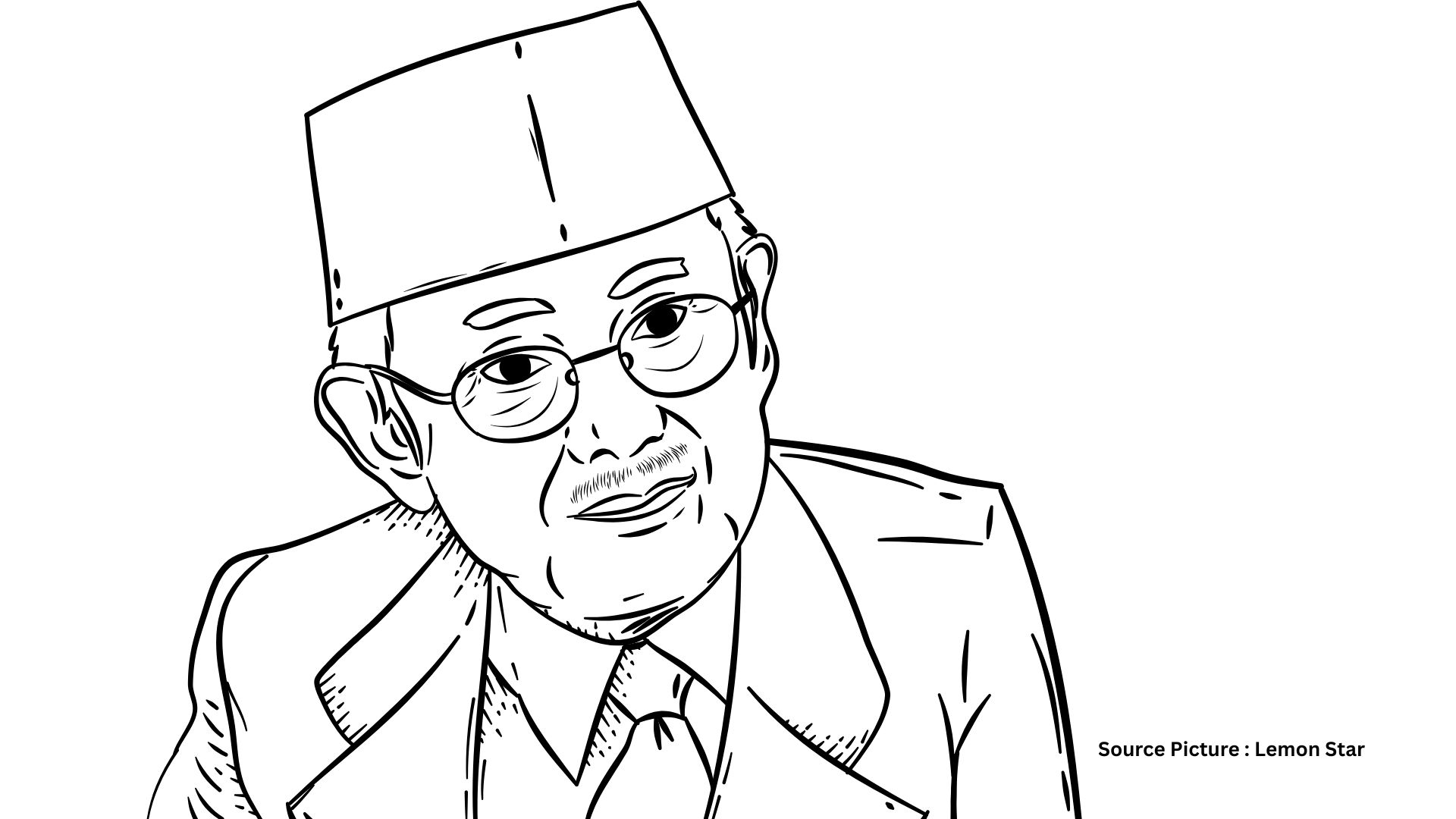
Indonesia, El Sky News – The late Dr. Ing. Bacharuddin Jusuf Habibie, Indonesia’s third President, remains one of the nation’s most profound sources of inspiration, not merely for his brief but pivotal political tenure, but for his extraordinary dedication to science, engineering, and his unwavering belief in the potential of the Indonesian people. His life story is a compelling narrative of a brilliant mind who leveraged world-class expertise to serve his homeland, transforming him from an internationally recognized aerospace engineer to a beloved icon of national advancement.
A Prodigy Forged in Germany
Habibie’s journey to global recognition began with intense study in Germany. Having left Indonesia in 1955, he immersed himself in aircraft construction at the prestigious Rheinisch-Westfälische Technische Hochschule (RWTH) in Aachen. His academic brilliance culminated in earning a doctorate (Doktor Ingenieur) with a distinction of summa cum laude. During this period, he developed foundational theories in thermodynamics, construction, and aerodynamics, most famously known as the “Habibie Factor” (or “Habibie Theorem”), a critical contribution to predicting metal fatigue in aircraft wings. This innovative work secured his place in the global aerospace industry, leading him to a lucrative career at Messerschmitt-Bölkow-Blohm (MBB) in Germany.

The Call of Duty: Returning Home
Despite his successful career and comfortable life abroad, Habibie answered a persistent call from President Suharto to return and lead Indonesia’s technological leap. In 1974, he gave up his senior position in Germany to pioneer Indonesia’s strategic industries. His key mission was the ambitious creation of the Nusantara Aircraft Industry (IPTN), transforming Indonesia from a mere consumer of foreign technology into a producer. This move symbolized his deep-seated patriotism: the readiness to sacrifice personal gain for the dream of a technologically independent Indonesia.
Championing National Technology
As the Minister of Research and Technology (1978-1998), Habibie drove several national projects, most notably the development and successful maiden flight of the N-250 Gatotkaca aircraft in 1995. The N-250, a commuter turboprop airplane developed entirely by Indonesian engineers under his leadership, was a powerful symbol that Indonesians were capable of mastering advanced technology. It became a monumental source of national pride, validating his philosophy that technology transfer must lead to capability absorption and innovation.
A Beacon of Integrity and Humanity
Beyond his scientific achievements, Habibie’s inspiration stems from his character. His brief presidency (1998-1999) was marked by the crucial establishment of democratic foundations, including passing laws that allowed for free elections and freedom of the press—actions that stabilized the country during a period of massive political turmoil (Reformasi). Furthermore, his enduring, selfless love story with his wife, Hasri Ainun Besari, documented in the book and film Habibie & Ainun, offered a poignant example of personal devotion and partnership that resonated deeply across the nation.
B.J. Habibie’s life is a testament to the power of education, the necessity of dedication, and the ultimate reward of patriotism. He demonstrated that Indonesia’s greatest resource is its human capital. His legacy is not just in the aircraft he helped build, but in the belief he instilled in millions of young Indonesians: that with hard work and integrity, they too can stand shoulder-to-shoulder with the world’s greatest minds. He remains the enduring example of a true nation-builder.