Sofia, Bulgaria, El Sky News — Sofia and multiple major cities across Bulgaria were rocked on Wednesday evening, 10 December 2025, by one of the largest waves of anti-government demonstrations in recent memory. Tens of thousands of citizens took to the streets to demand the resignation of Prime Minister Rosen Zhelyazkov’s center-right minority government, accusing it of widespread corruption, undue political influence and unpopular economic policies.
Background and Causes of Unrest

The protests trace their roots to growing public discontent against the draft 2026 state budget, initially proposed by the government, which included controversial fiscal measures such as higher social security contributions and tax increases. Although the government later withdrew the budget after earlier protests, public anger did not dissipate and quickly transformed into a broader political movement calling for systemic reform and governmental accountability.
Organizers framed the December 10 demonstrations under the slogan:
“Resignation! Peevski and Borissov Out of Power.”
The slogan refers to Delyan Peevski a powerful political figure and oligarch sanctioned by the United States and the United Kingdom and Boyko Borissov, leader of the ruling GERB party. Both men symbolize, for many protestors, entrenched corruption and alleged oligarchic influence over Bulgarian politics.
Scale and Locations of Protests
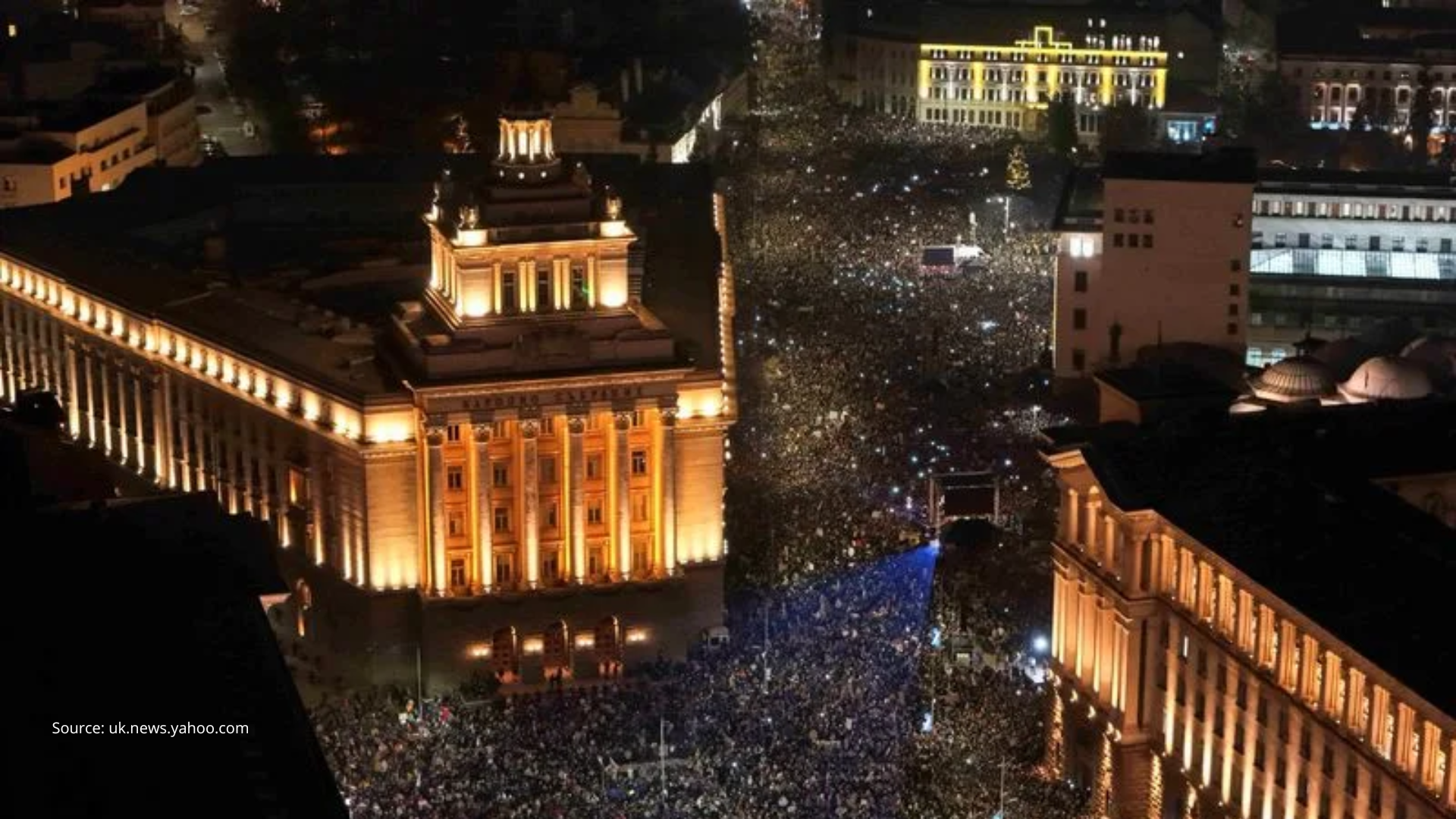
The main protest took place in Independence Square also known as the “Power Triangle” in central Sofia, situated between the National Assembly, the Presidency and the Council of Ministers. Demonstrators in Sofia chanted slogans such as “Resign!” and “Mafia!” while holding up placards critical of the government and systemic corruption.
Simultaneous demonstrations were also reported in many other cities across the country, including but not limited to Burgas, Plovdiv, Varna, Ruse, Blagoevgrad, and Stara Zagora, demonstrating the widespread nature of discontent.
Estimates from aerial imagery and media coverage suggest that well over 100,000 participants joined the marches nationwide, with tens of thousands concentrated in Sofia alone. Students from universities in Sofia also actively participated, reflecting broad generational engagement in the movement.
Political Dynamics and Reactions
The protests were organized principally by the opposition coalition We Continue the Change Democratic Bulgaria (CC-DB), which has also submitted a motion of no confidence against Prime Minister Zhelyazkov’s government. This vote was scheduled for 11 December 2025, marking the sixth such motion since the government took office in January 2025.
President Rumen Radev, a vocal critic of the current administration, publicly expressed support for the demonstrations, characterizing them as a symbolic vote of no confidence in the cabinet.
The ruling coalition, however, reiterated its intention to remain in power at least until Bulgaria joins the eurozone on 1 January 2026, a major milestone in the country’s integration with the European Union. Some government figures have dismissed the protests as politically motivated attempts to derail the euro adoption process.
Public Voices and Atmosphere
Protestors carried banners decrying corruption and the influence of powerful political elites. Many chanted for judicial reform and fair elections, underscoring a deep frustration with perceived institutional failures. Despite the presence of large crowds and high tensions, the events reportedly remained largely peaceful, with no major clashes between protesters and police.
In Sofia, students and youth groups were particularly visible, highlighting a surge in political engagement among younger generations who see the protests as a defining moment for Bulgaria’s democratic future.
Implications and Outlook
Bulgaria’s December 10 protests reflect deep political and societal divisions just weeks before the country is set to adopt the euro as its official currency a historic shift scheduled for 1 January 2026. Analysts suggest that sustained unrest could complicate the government’s agenda and potentially reshape political alliances ahead of upcoming parliamentary cycles.
With the no-confidence vote looming and calls for government resignation resonating across regional centers, December’s demonstrations may mark a pivotal moment in Bulgaria’s ongoing struggle over corruption, governance and democratic reform.
(Lunar)