KUALA LUMPUR, April, 2026 — The United States is facing renewed uncertainty within its defense leadership following the abrupt departure of John Phelan, who stepped down as Secretary of the Navy with immediate effect. The announcement, confirmed by the United States Department of Defense, comes at a critical moment as the country remains actively engaged in military operations tied to the ongoing conflict involving Iran.
No official reason has been disclosed for the sudden exit, prompting widespread speculation among defense analysts and political observers. The timing, however, has amplified concerns, as leadership stability is typically considered essential during periods of active military engagement.

Phelan’s departure is widely viewed as part of a broader leadership shake-up within the Pentagon under Defense Secretary Pete Hegseth. Over recent months, several high-ranking officials have either been reassigned or removed, signaling a strategic realignment within the US military command structure.
This ongoing restructuring appears to be driven by efforts to:
- Streamline decision-making processes
- Align military leadership with evolving strategic priorities
- Strengthen operational effectiveness during wartime
However, experts warn that rapid leadership changes—particularly during an active conflict—can introduce risks related to coordination, communication, and long-term planning.
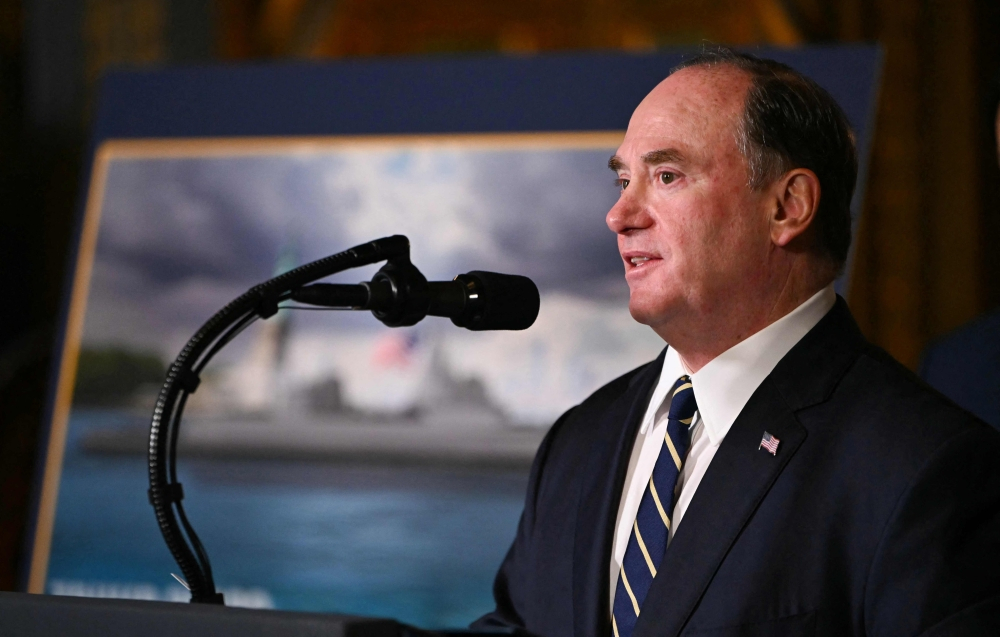
Following Phelan’s exit, Hung Cao has been appointed as Acting Secretary of the Navy. A former naval officer with extensive experience, Cao now assumes responsibility for overseeing one of the most strategically important branches of the US military.
The leadership transition comes at a time when the US Navy is deeply involved in:
- Maritime security operations in the Middle East
- Strategic deterrence missions
- Protection of key global shipping routes
- Support for broader joint military operations
Given the Navy’s central role in projecting US power globally, continuity in leadership is seen as vital to maintaining operational readiness and strategic coherence.
The leadership shake-up unfolds against the backdrop of escalating tensions in the Middle East, particularly involving Iran. The ongoing conflict has placed significant demands on US military resources, with the Navy playing a pivotal role in both offensive and defensive operations.
Key developments in the conflict include:
- Deployment of naval fleets to strategic
- Enforcement of maritime security and blockades
- Increased military coordination with regional allies
- Heightened risk of broader geopolitical escalation
In this context, any disruption in leadership can have far-reaching implications for both operational effectiveness and strategic decision-making.
Defense analysts have expressed concern over the cumulative impact of leadership changes within the Pentagon. While restructuring can be necessary to adapt to evolving threats, frequent or abrupt changes may:
- Disrupt command hierarchies
- Affect morale among military personnel
- Delay critical decision-making processes
- Create uncertainty among allies and partners
The sudden nature of Phelan’s exit, combined with the absence of a clear explanation, has intensified these concerns.
Beyond military operations, the leadership shake-up carries broader political and geopolitical implications. The United States’ defense posture is closely monitored by both allies and adversaries, particularly during times of conflict.
The situation may:
- Influence diplomatic relations in the Middle East
- Shape perceptions of US military stability
- Affect global security dynamics and strategic alliances
Observers note that maintaining a consistent and predictable leadership structure is crucial for reinforcing confidence among international partners.
The abrupt departure of John Phelan marks a significant moment in the ongoing transformation of US defense leadership. As the Pentagon continues to undergo restructuring amid active military operations, questions remain about the long-term impact on strategic stability and operational effectiveness.
With the United States deeply engaged in a complex and evolving conflict environment, the importance of strong, stable leadership within the military hierarchy has never been more critical.