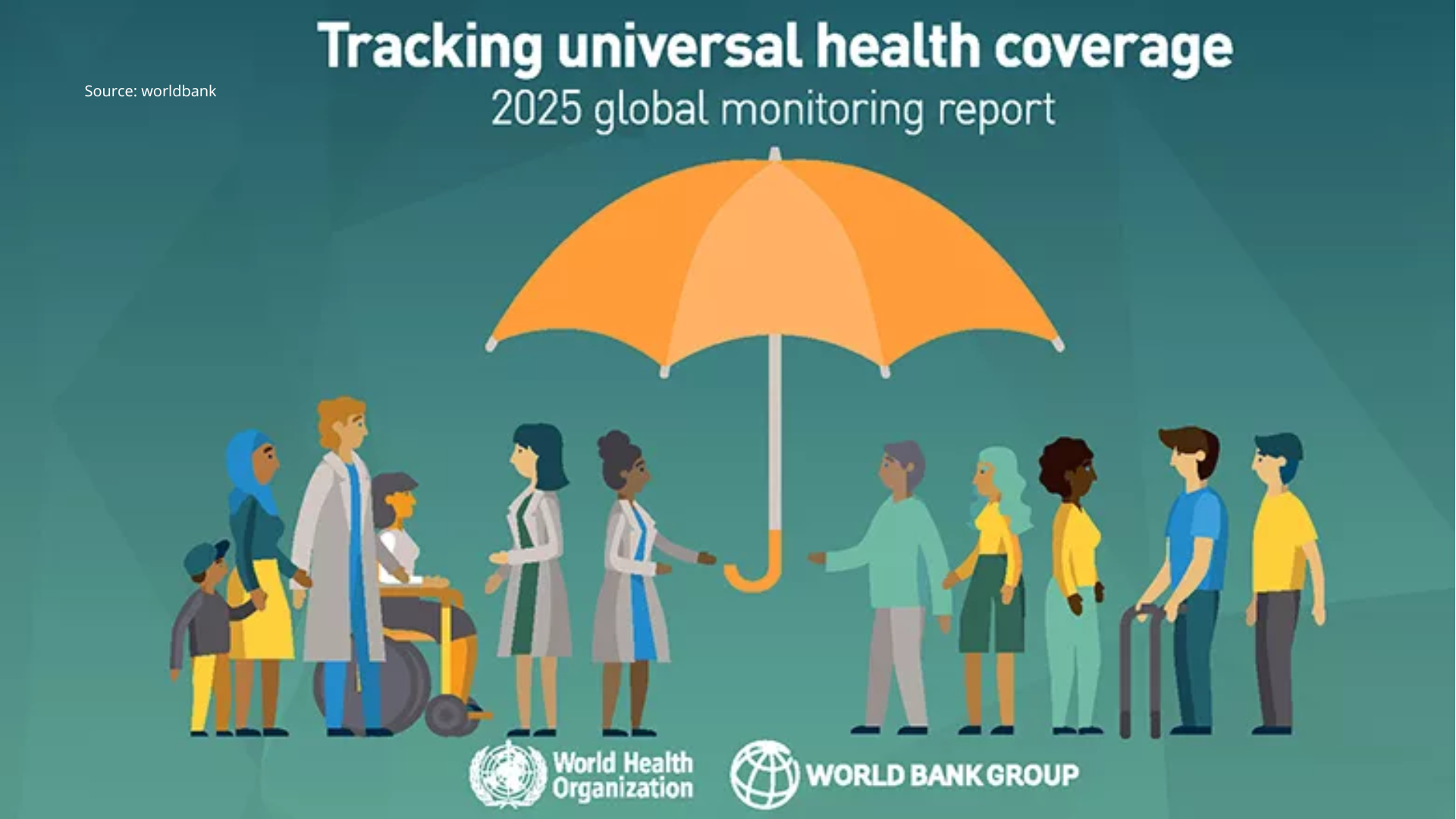
Washington, El Sky News — A joint report released by the World Health Organization (WHO) and the World Bank in early December 2025 reveals that most countries have made measurable progress toward Universal Health Coverage (UHC), expanding access to essential health services for millions of people worldwide. However, the report also warns that serious gaps in service quality, financial protection, and equity remain, particularly affecting low-income populations and vulnerable communities.
Steady Progress, Uneven Results

According to the report, many countries have increased coverage of essential health services such as maternal and child healthcare, immunization programs, infectious disease control, and primary healthcare access. Global UHC service coverage indicators show gradual improvement compared to the previous decade, reflecting increased public investment in health systems and international cooperation following the COVID-19 pandemic.
Despite these gains, WHO and the World Bank emphasize that progress remains uneven across regions and income groups. Low- and middle-income countries continue to face shortages of trained healthcare workers, limited infrastructure, and inconsistent access to medicines and diagnostics.
Financial Hardship Remains a Key Challenge
One of the most critical concerns highlighted in the report is financial protection. While more people can access health services, millions still face catastrophic out-of-pocket health expenditures, pushing families into poverty each year.
The report notes that high out-of-pocket costs remain common in parts of Sub-Saharan Africa, South Asia, and Latin America, where social health insurance systems are either underdeveloped or unevenly implemented. WHO and the World Bank stress that achieving UHC is not only about service availability, but also about ensuring care is affordable and does not cause financial hardship.
Quality and Equity Gaps
Beyond access and affordability, the report underscores persistent quality gaps in healthcare delivery. In many countries, facilities lack essential equipment, consistent drug supplies, or adequately trained personnel resulting in preventable deaths despite nominal service coverage.
Equity remains another major challenge. Marginalized populations including rural communities, migrants, people with disabilities, and those living in fragile or conflict-affected settings are still disproportionately excluded from quality healthcare.
“Universal health coverage is only meaningful if everyone, everywhere can access high-quality care without financial strain,” the report states.
Impact of Crises and Global Pressures
The report also highlights how global crises, including armed conflicts, climate-related disasters, and economic slowdowns, have disrupted health systems and diverted public spending away from long-term health investments. Inflation and debt pressures in developing economies have further constrained health budgets, slowing progress toward UHC goals.
WHO and the World Bank warn that without sustained political commitment and financing, gains made over recent years risk stagnation or reversal.
Policy Recommendations
To accelerate progress, the report outlines several key recommendations for governments and international partners, including:
- Strengthening primary healthcare systems as the foundation of UHC
- Increasing public health financing and reducing reliance on out-of-pocket payments
- Investing in healthcare workers, especially in underserved areas
- Improving data systems to better track inequalities and service quality
- Ensuring inclusive policies that prioritize vulnerable and marginalized groups
Global Commitment Still Needed
The WHO–World Bank report concludes that while the world is moving closer to universal health coverage, current efforts are insufficient to meet global health targets, including the Sustainable Development Goals (SDGs) set for 2030.
Health leaders urge governments to treat UHC as both a public health necessity and a social justice priority, emphasizing that resilient health systems are critical not only for everyday care, but also for responding to future pandemics and global health emergencies.
(Lunar)