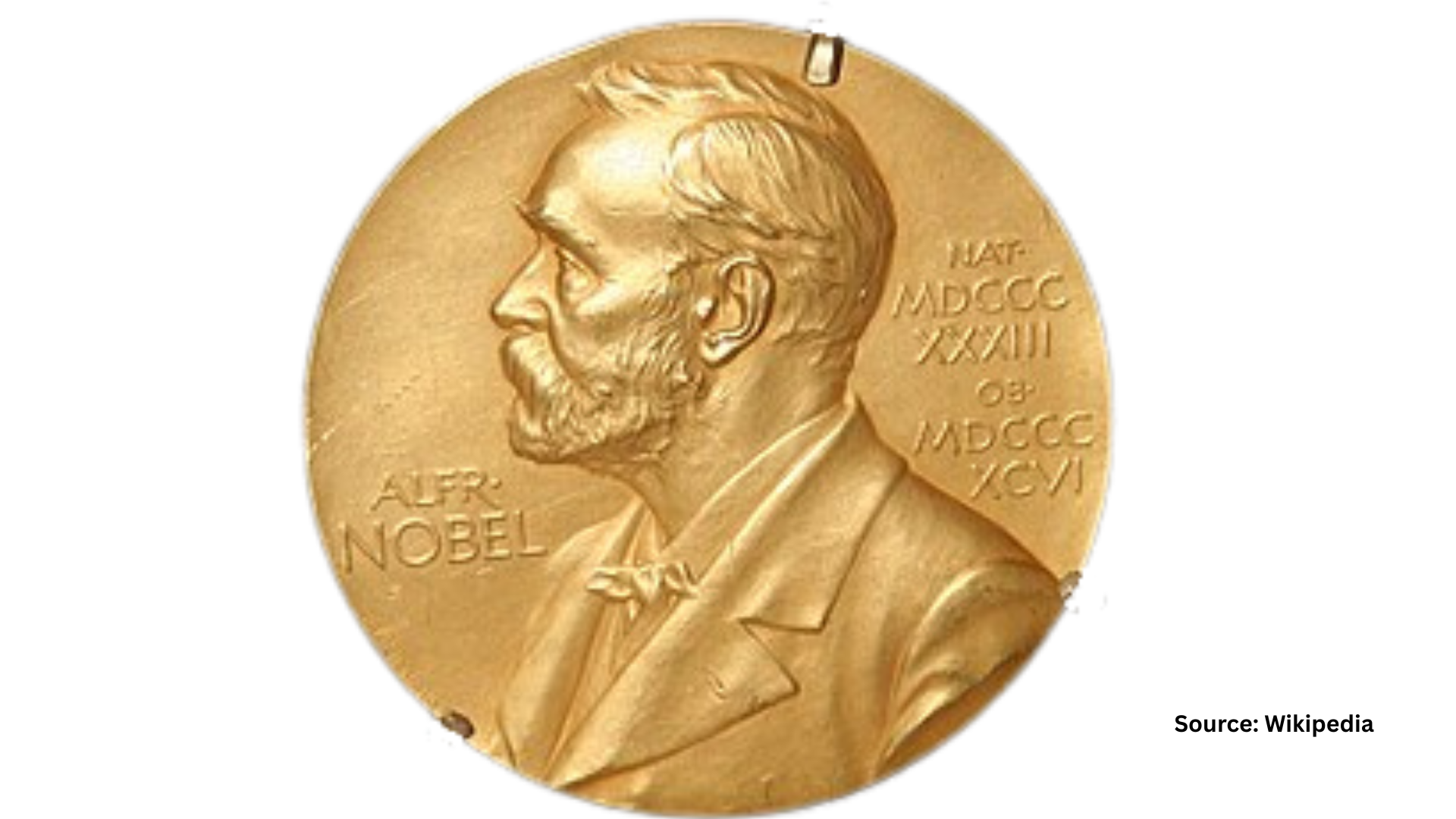
CHICAGO, El Sky News – The world of social sciences continues to draw inspiration from the legacy of Ronald H. Coase, the British-born economist whose revolutionary ideas on transaction costs and property rights fundamentally altered the landscape of modern law and economics.
Born on December 29, 1910, in Willesden, Middlesex, Coase’s intellectual journey was marked by a unique ability to challenge prevailing economic dogmas through simple yet profound observations of how firms and markets operate in reality.

The Power of Quality Over Quantity Unlike many of his peers who filled volumes with complex mathematical equations, Coase’s path to the 1991 Nobel Prize in Economic Sciences was paved by just two landmark papers. His 1937 essay, “The Nature of the Firm,” introduced the concept of transaction costs, explaining why companies exist as hierarchical structures instead of relying solely on market exchanges.
Two decades later, he published “The Problem of Social Cost” (1960). This work birthed the “Coase Theorem,” suggesting that if trade in an externality is possible and there are sufficiently low transaction costs, bargaining will lead to an efficient outcome regardless of the initial allocation of property rights.
A Lifelong Intellectual Pursuit Coase’s most inspiring trait was perhaps his enduring curiosity. While most professionals retire in their 60s, Coase remained a prolific thinker well into his second century. At the age of 101, he co-authored “How China Became Capitalist,” a detailed analysis of China’s economic transformation, proving that the mind knows no age limit when fueled by passion.
“He was a man who didn’t just look at models; he looked at the world,” said a former colleague from the University of Chicago Law School, where Coase spent much of his career. “He taught us that to understand the economy, one must understand the legal and social institutions that frame it.”
Legacy and Influence Today, the “Coasian” perspective is a cornerstone of New Institutional Economics. His warning against “blackboard economics”—theories that work on paper but fail in practice—remains a vital lesson for policymakers worldwide.
As the anniversary of his birth approaches, Coase stands as a testament to the idea that one does not need a mountain of publications to change the world. Instead, a sharp eye for the truth and the courage to question the status quo are the true hallmarks of greatness.