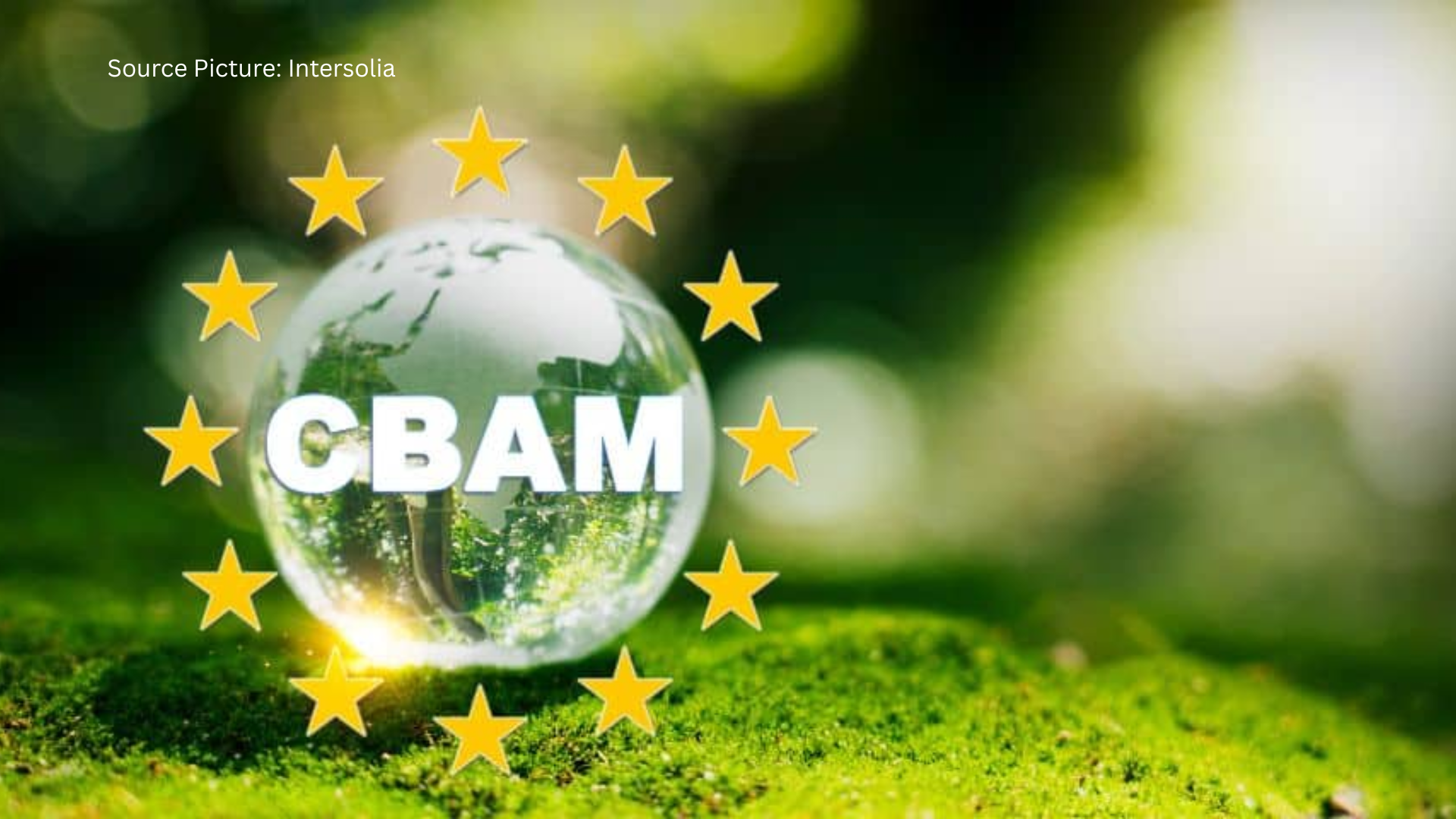
BRUSSELS, El Sky News – In a historic shift for international commerce, the European Union (EU) has officially commenced the full implementation of the Carbon Border Adjustment Mechanism (CBAM) as of today, January 5, 2026. This landmark policy, often referred to as the “Green Border” agreement, establishes a framework to ensure that global trade aligns with the ambitious climate targets of the European Green Deal.
The mechanism is designed to equalize the carbon price between domestic European products and imported goods, encouraging cleaner industrial production worldwide while preventing “carbon leakage”—where companies move production to countries with less stringent environmental regulations.

Impact on High-Carbon Imports Under the new regulations, businesses importing specific carbon-intensive commodities into the EU must now account for the greenhouse gas emissions embedded in their products. The primary sectors affected during this initial phase include:
- Steel and Iron: Essential components for global construction and automotive industries.
- Cement: A cornerstone of infrastructure development.
- Aluminum and Fertilizers: Key drivers of manufacturing and large-scale agriculture.
- Electricity and Hydrogen: The building blocks of the modern energy transition.
Importers will be required to purchase “CBAM certificates” corresponding to the carbon price that would have been paid had the goods been produced under the EU’s domestic carbon pricing rules.
Strategic Implications for Southeast Asia The activation of CBAM has significant implications for global trading partners, including major exporting nations in Southeast Asia. As countries like Malaysia, Thailand, and Vietnam continue to expand their industrial output, the “Green Border” serves as a professional incentive to accelerate the adoption of renewable energy and carbon-capture technologies.
“We view this not as a barrier, but as an invitation for global innovation,” stated an EU trade representative. “Our goal is to create a friendly, level playing field where environmental responsibility becomes a competitive advantage. We are committed to working closely with our partners in Asia to ensure a smooth and transparent transition.”
Professional Support and Transition To maintain healthy international relations, the EU has introduced a series of “friendly” technical support initiatives. These programs are designed to assist developing economies in establishing their own carbon monitoring and reporting systems, ensuring that the new standards do not disproportionately hinder economic growth.
Market Outlook for 2026 Global economists predict that the CBAM will trigger a “ripple effect,” prompting other major economies—including the United States and Canada—to consider similar carbon-accounting frameworks. By placing a clear financial value on carbon at the border, the EU is effectively steering the global supply chain toward a more sustainable and accountable future.
As of today, the era of “carbon-neutral trade” has moved from theory to practice, marking a pivotal moment in the global effort to combat climate change through economic diplomacy.
(Leakim Otid)