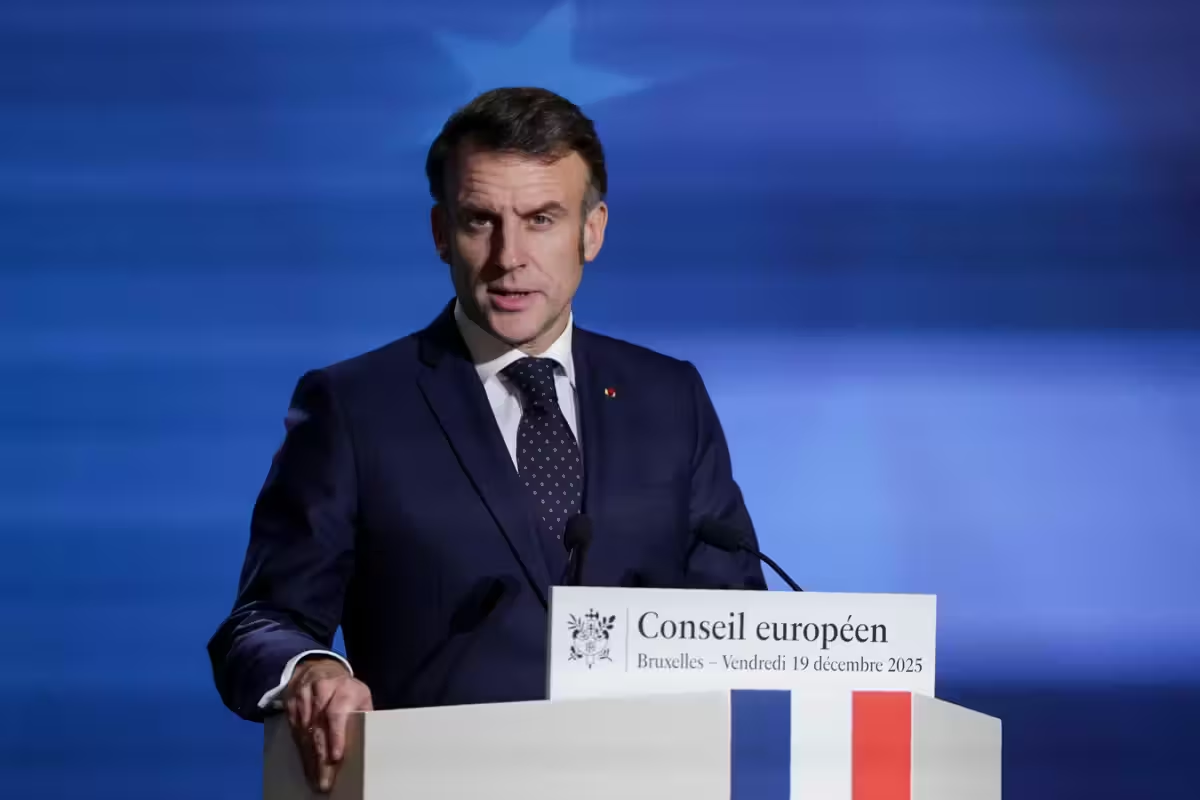
PARIS,El Sky News – In a move that underscores a deepening diplomatic divide across the Atlantic, French President Emmanuel Macron has officially declined an invitation from U.S. President Donald Trump to join his newly formed “Peace Board.” The initiative, a centerpiece of Trump’s renewed foreign policy agenda, aims to centralize international mediation efforts under White House leadership.
Macron’s decision to stay at arm’s length from the board suggests that Paris is wary of a Washington-centric approach to global stability, particularly concerning European security.

The Push for European Sovereignty
At the heart of Macron’s refusal is the long-standing doctrine of “European Strategic Autonomy.” Sources from the Élysée Palace indicate that the French President believes Europe must maintain its own independent diplomatic channels rather than operating as a secondary partner in an American-led council.
By declining the invitation, Macron is signaling that while France remains a key NATO ally, it will not outsource its geopolitical decision-making to a centralized “Peace Board” that may prioritize “America First” interests over the collective security of the European Union.
Clashing Visions on Conflict Resolution
The “Peace Board” was designed by the Trump administration as a fast-track mechanism to settle major global disputes, most notably the ongoing war in Ukraine and volatile tensions in the Middle East. However, the French administration has expressed reservations about the board’s structure, which appears to bypass established multilateral institutions like the United Nations.
There is also a significant ideological gap regarding the Ukraine-Russia settlement. While Trump has promised a swift end to the war through direct negotiation, Macron has remained steadfast that any peace framework must be dictated by Kyiv and adhere to international law, fearing that a centralized board might push for a “peace at any cost” that compromises Ukrainian sovereignty.
The Future of Trans-Atlantic Diplomacy
Macron’s rejection presents an early challenge to the legitimacy of Trump’s second-term foreign policy initiatives. Without the participation of a major European power and a permanent member of the UN Security Council, the “Peace Board” risks being viewed as a unilateral tool of the U.S. executive rather than a true international coalition.
As Washington prepares to move forward with the board, the focus shifts to other G7 leaders. Whether Berlin, London, or Rome will follow Paris’s lead in maintaining diplomatic distance or opt to join Trump’s table will likely define the future of Western unity in 2026.( Rahul Rezky )