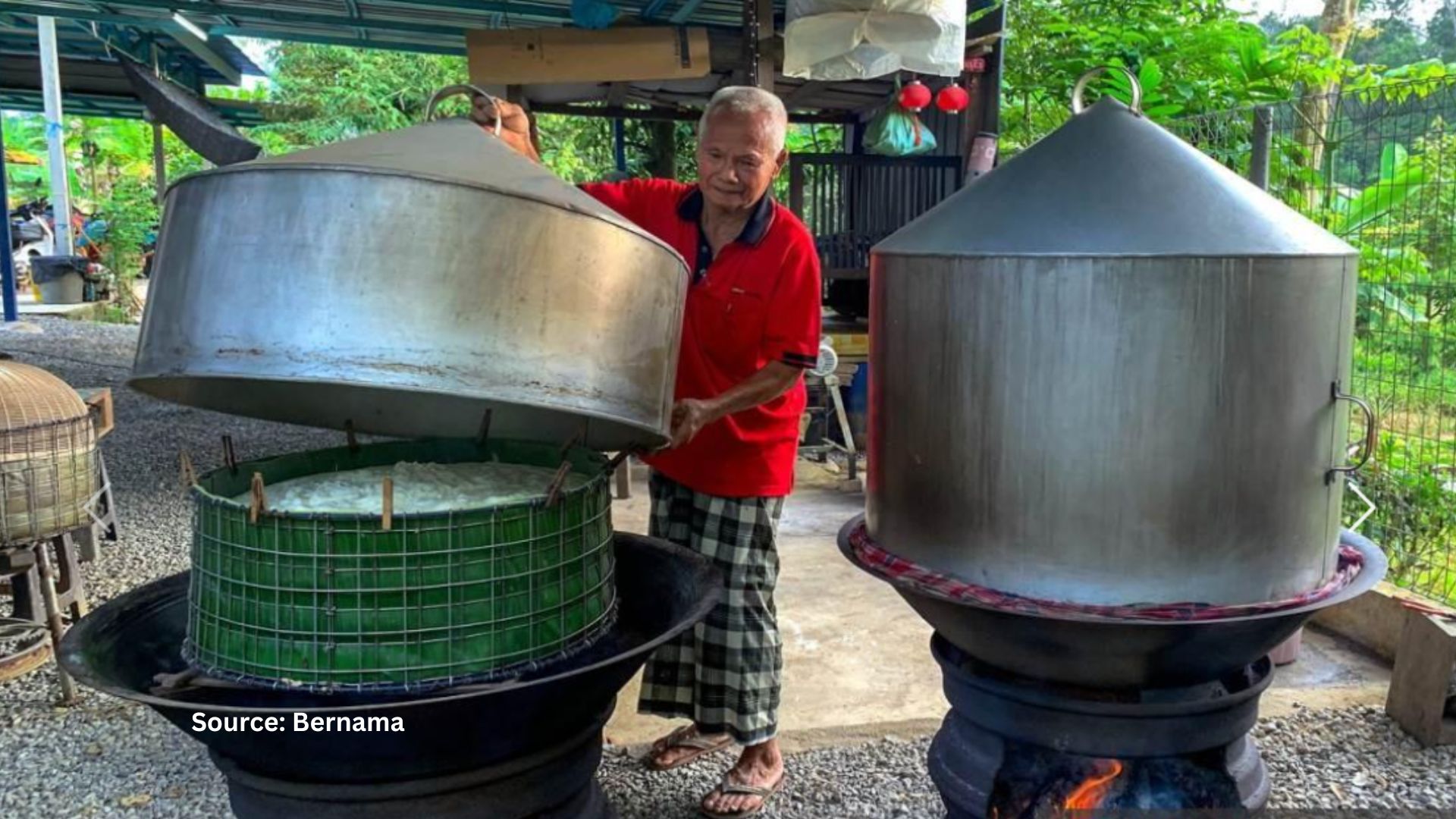
KUALA LUMPUR – As the lunar calendar turns and Chinese New Year festivities approach, the quiet village of Kampung Pasir Parit in Chekok becomes the stage for a vanishing culinary art. At the center of this tradition is 80-year-old Wee Ah Liong, one of the few remaining masters of Kiam Koay—or Kia Koi, as it is known in the local Kelantanese dialect.
For over four decades, Wee has dedicated himself to this labor-intensive craft, upholding a family legacy that spans four generations. Despite the modern shift toward mass-produced snacks, the demand for his handmade traditional cakes remains high, with orders pouring in months before the festive season begins.

Making Kia Koi is not a task for the faint of heart. Unlike modern pastries, this traditional delicacy requires a grueling nine-hour steaming process and a level of physical endurance that Wee continues to display even at 80.
The production process is a meticulous blend of simple ingredients and complex timing:
- Preparation: 10kg of rice is soaked in a mixture of lime water and salt before being ground into a smooth paste.
- The First Cook: The batter is partially cooked in a large wok to achieve the right consistency.
- The Long Steam: The mixture is transferred to specialized containers and steamed over a traditional wood fire for nine hours. This specific method is crucial for imparting the cake’s signature smoky aroma and firm texture.
- The Waiting Period: Once cooked, the 60kg cake must cool at room temperature for two full days before it can be sliced and sold.
“I can only prepare about six Kia Koi for each festive season,” Wee explained, noting that he limits production to ensure the quality remains consistent with the standards set by his late father, Wee Sock Kui.
What sets Kia Koi apart from other festive treats is its incredible versatility. While many enjoy it as a sweet snack dipped in palm sugar syrup or tossed in grated coconut, it is equally popular in savory dishes. Local residents often pair the sliced cake with bihun soup, kuetiau ladna, or even deep-fry it for a crispy exterior.
Currently sold at RM12 per kilogram, the cake remains an affordable link to the past for the community. Wee is supported in his efforts by his 76-year-old wife, Ko Mek Gan, who assists him through every stage of the grueling production.
Despite his age, Wee’s primary concern is the survival of the craft. As the younger generation moves toward faster, more convenient lifestyles, the intricate knowledge required to make Kia Koi risks being lost.
“I hope the younger generation will continue to appreciate and inherit the making of Kia Koi,” Wee said. “I want this traditional cake to stay alive so it can be enjoyed by future generations, rather than disappearing with time.”
For now, as long as the wood fire burns in Kampung Pasir Parit, the scent of steaming Kia Koi remains a symbol of heritage and resilience in the heart of Kelantan.