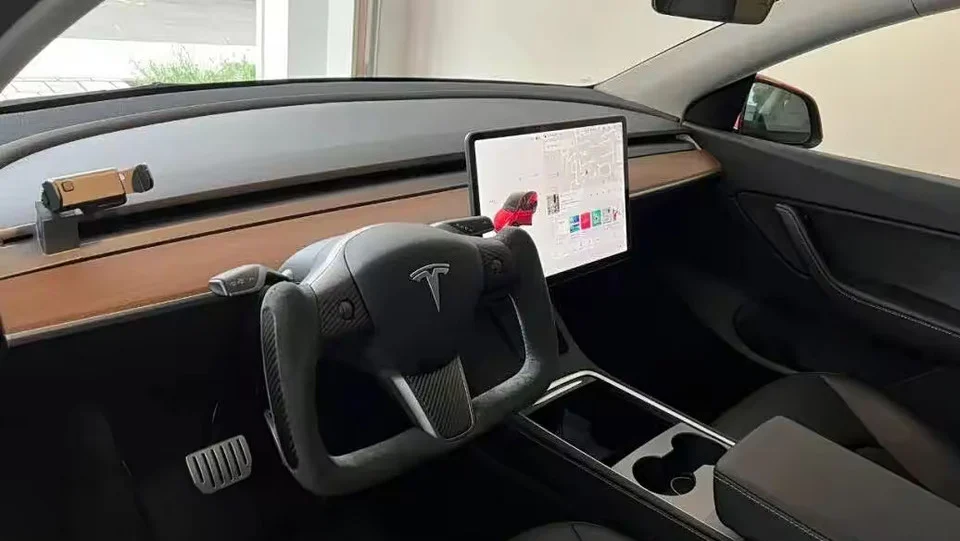
China’s Ministry of Industry and Information Technology (MIIT) has unveiled a draft of stringent new automotive safety standards that could effectively eliminate yoke‑style steering wheels on new vehicles sold in the country beginning January 1, 2027. The proposed changes aim to tighten crash safety requirements for steering systems — a move that could force global automakers to rethink interior designs that have become symbols of futuristic electric vehicles (EVs).
The draft standard — known as GB 11557‑202X, or the “Provisions on Protecting Drivers from Injury by Motor Vehicle Steering Mechanisms” — represents a major overhaul of China’s current steering safety rules. It removes all technical provisions related to half‑steering wheel designs, commonly called “yoke” steering wheels, and introduces stricter human impact testing that all steering wheels must pass. Due to their incomplete, non‑circular shape, yoke‑style wheels lack essential structural points required under the new testing regime, making compliance virtually impossible.

Stricter Safety Tests Target Yoke Designs
Under the updated standard, regulators require impact testing at 10 specific points around the steering wheel rim — including areas that simply don’t exist on a yoke‑style wheel because the upper segment of the wheel is missing. Traditional circular steering wheels, by contrast, provide continuous geometry that allows all test locations to be measured. As a result, yoke wheels will automatically fail the new mandatory validation criteria, effectively barring them from type approval in China.
Chinese regulators also emphasized that nearly 46% of driver injuries are linked to steering mechanism impacts, and that traditional round wheels offer better cushioning in a crash because they distribute forces across a larger surface area. By contrast, the open structure of yoke wheels may allow a driver’s body to bypass protective cushioning and make more direct contact with hard interior surfaces during a secondary collision.
Airbag Safety and Structural Concerns
Another key concern raised by the draft standards involves airbag deployment. Traditional steering wheels are designed to manage the interaction between the airbag, driver, and wheel rim in a predictable way. Yoke‑style designs — with atypical support structures and irregular shapes — can create unpredictable airbag fracturing patterns and make high‑speed camera validation more difficult. For these reasons, the new rules also bar steering wheel components that could act as hard projectiles during airbag deployment.
Wider Safety Rule Tightening
The move comes amid a broader effort by Chinese authorities to modernize vehicle safety regulations in the era of electric and connected vehicles. Earlier rule changes included bans on flush‑style door handles — another design popularized by EV manufacturers such as Tesla — due to safety concerns after crash incidents. The latest steering wheel rules reflect regulators’ growing caution about high‑tech automotive trends that may look modern but could present risks in real‑world crash scenarios.
Impact on Automakers
While yoke‑style steering wheels remain a niche feature, they have been embraced by certain EV models, notably some versions of Tesla vehicles and the Lexus RZ in select markets. Tesla’s yoke wheels have appeared on performance‑oriented trims and are often marketed as a futuristic upgrade, while Lexus has offered them in combination with steer‑by‑wire systems that reduce the need for traditional wheel rotation. With China set to be the world’s largest automotive market, the ban could influence broader design decisions for global models sold beyond Chinese borders.
Timeline and Transition
If the draft is approved, the new standard will become mandatory on January 1, 2027, for all new vehicle models seeking type approval in China. Vehicles already approved before that date may be given a 13‑month transition period to adjust designs and comply with the updated rules. This grace period gives manufacturers time to redesign steering systems and replace yoke wheels with conventional circular wheels to meet the stricter safety requirements.
Automotive Industry Reactions
The proposal has sparked debate within the global automotive community. Some commentators argue that the ban underscores China’s prioritization of safety and regulatory alignment with international crash standards — including harmonization with technical specifications such as the UN R12 human module test. Others speculate that the ban could dampen enthusiasm for unconventional interior designs and limit innovation in user interfaces, particularly for EVs seeking to distinguish themselves with unique steering interfaces.
Overall, China’s proposed ban on yoke‑style steering wheels highlights the ongoing tension between design innovation and safety regulation in the rapidly evolving automotive landscape. As automakers prepare for the 2027 compliance deadline, industry observers will be watching how manufacturers adapt their vehicle architectures to meet both regulatory and consumer expectation