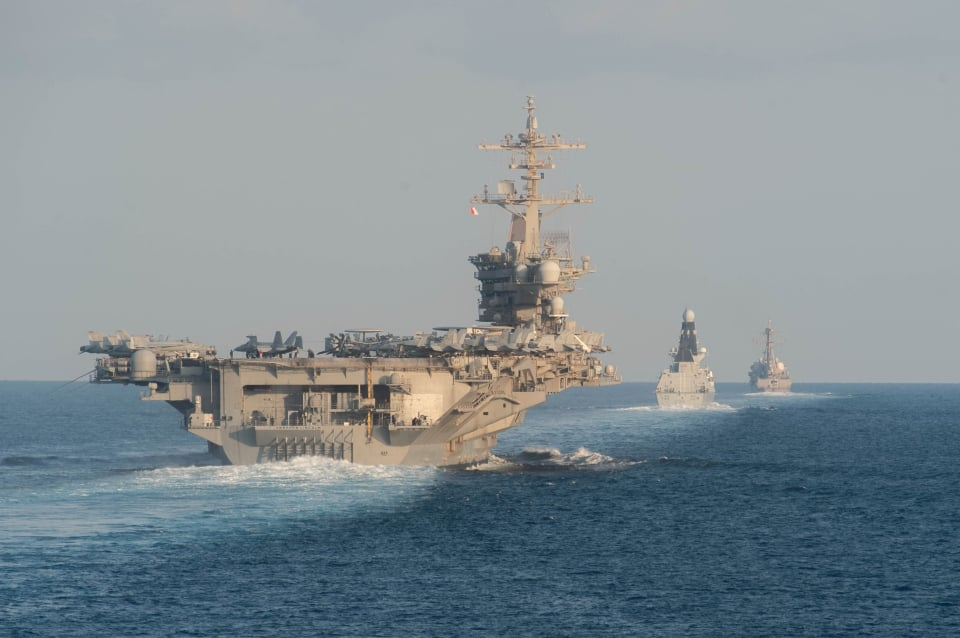
TEHRAN / Strait of Hormuz, Feb 17, 2026 — Iran has launched a series of large-scale military exercises in the strategically sensitive Strait of Hormuz, just ahead of a new round of nuclear talks with the United States. The drills, led by the Islamic Revolutionary Guard Corps (IRGC), are reportedly part of a broader strategy to showcase Iran’s defensive capabilities and readiness to protect its maritime and national security interests.
The exercises, conducted under the code name “Smart Control of the Strait of Hormuz”, reportedly involve a combination of naval vessels, fast-attack craft, missile units, and aerial surveillance operations. Officials stated that the maneuvers are designed to test rapid-response tactics and coordination among the different branches of Iran’s military forces in the event of potential threats to the critical waterway.

Strategic Significance of the Strait
The Strait of Hormuz is one of the world’s most important maritime chokepoints, with approximately 20% of global oil shipments passing through it daily. Any disruption in this narrow passageway could have significant implications for international energy markets, global trade, and regional security.
Analysts note that Iran’s timing of the exercises, immediately preceding diplomatic talks with the United States on its nuclear program, is deliberate. While the drills are framed as routine defense operations, they also serve as a demonstration of Iran’s military leverage and deterrence capabilities in the region.
Geopolitical Context
Tensions in the Persian Gulf have been heightened in recent months due to conflicting interests over Iran’s nuclear ambitions, sanctions, and military activities. The upcoming indirect negotiations with the United States aim to discuss Iran’s nuclear enrichment program and potential easing of international sanctions.
Observers suggest that Iran’s show of force in the Strait of Hormuz is a signal to Washington and other international stakeholders that Tehran retains substantial control over one of the most strategically sensitive maritime regions in the world.
International Response
Regional powers, including Gulf Cooperation Council (GCC) states, have closely monitored the exercises, expressing concerns over possible escalation. Western diplomats have emphasized the importance of maintaining open maritime channels for trade and energy supplies while urging Iran to exercise restraint to avoid accidental confrontations.
Maritime and energy analysts warn that continued military posturing in the Strait could increase risks for commercial shipping and global oil markets, potentially affecting prices and supply stability.
Statement from Iranian Authorities
Iranian military officials have described the drills as routine and defensive in nature, highlighting the importance of training, preparedness, and coordination across naval and air forces. They stressed that the exercises are not intended to provoke conflict, but rather to ensure that Iran can respond effectively to any security threat in the Strait.
The IRGC also reaffirmed that the exercises are conducted in accordance with international law and focus on protecting Iran’s territorial waters and national interests.
Conclusion
The launch of these military exercises underscores the delicate balance between diplomacy and defense in the Persian Gulf region. As nuclear negotiations approach, Tehran’s actions demonstrate its strategic intent to safeguard key maritime routes while signaling its capability to assert influence in a geopolitically vital area.
Global observers continue to watch developments closely, noting that the Strait of Hormuz remains a potential flashpoint with significant implications for regional stability and international energy security.