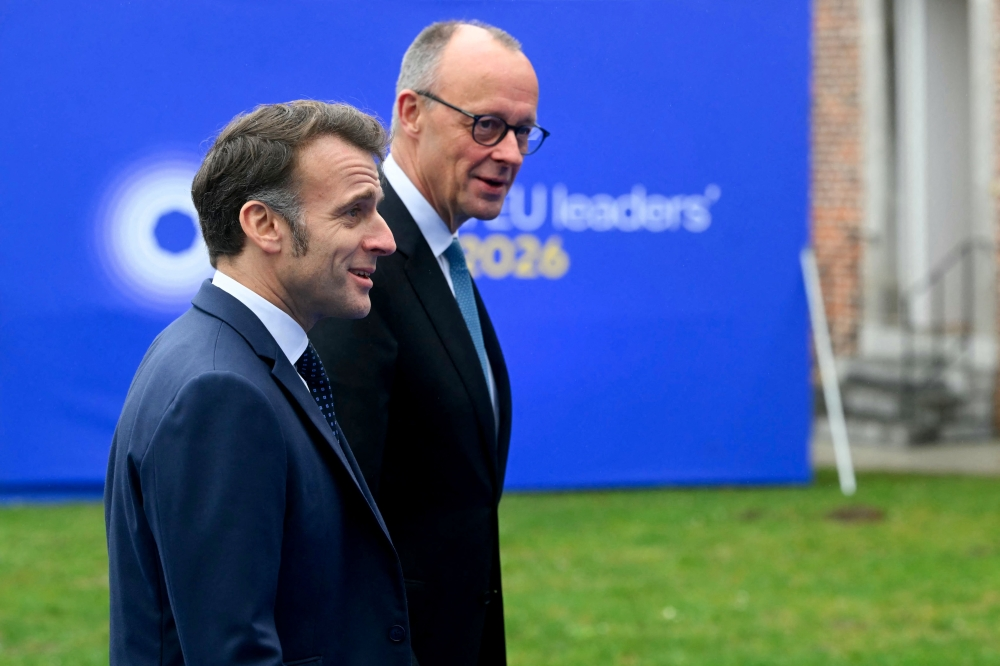
MUNICH, Feb 14, 2026 — German Chancellor Friedrich Merz confirmed that he has begun initial talks with French President Emmanuel Macron on strengthening European nuclear deterrence, highlighting growing concerns over the future of continental security as geopolitical tensions rise and questions emerge over the United States’ long-term military commitments to Europe.
Speaking at the opening of the Munich Security Conference, Merz said he and Macron had held confidential discussions on how Europe could bolster its nuclear deterrent capabilities within the framework of NATO. However, he stressed that the talks are still at an early stage and do not signal a rejection of existing U.S. security guarantees.

“The aim of the talks is to explore how closer cooperation on nuclear deterrence can be achieved,” a German government spokesperson explained, emphasizing that the discussions are intended to enhance European defense without diminishing the role of the United States within NATO’s security architecture.
European Defense Reassessment and Russian Threat
The initiative comes amid heightened concern across Europe about its ability to respond to security threats — particularly Russia’s ongoing war in Ukraine, now entering its fifth year. Analysts say the war has underscored the vulnerability of the continent and triggered broader reflection on whether Europe must develop more autonomous defense mechanisms.
During the conference, Macron echoed Merz’s emphasis on the need for Europe to redesign its security architecture independently, describing nuclear deterrence as part of a “holistic approach” to defense strategy. He noted that while France maintains its nuclear forces under its own command, the dialogue with Germany and other European partners could help shape a common strategic culture and strengthen collective preparedness.
No Plans for German Nuclear Arms
Despite the discussions, Merz firmly ruled out Germany pursuing its own nuclear weapons program, citing legal obligations under the Two Plus Four Treaty and the Nuclear Non-Proliferation Treaty, which prohibit Germany from developing independent nuclear capabilities. Instead, talk of a strengthened deterrent focuses on potential shared arrangements under France’s and possibly Britain’s nuclear umbrella, alongside existing NATO nuclear sharing frameworks.
Under current arrangements, Germany participates in nuclear sharing by hosting U.S. tactical nuclear weapons and maintaining fighter jets capable of delivering them, even though Berlin cannot independently authorize their use. Some commentators have pointed out that extending this model to include French and British nuclear weapons — although technically and legally complex — is being explored as part of broader strategic cooperation.
Rebuilding Transatlantic Trust
The talks also form part of a broader push by European leaders to repair and strengthen transatlantic relations, which have been strained by shifting U.S. policy priorities and evolving global dynamics. Merz highlighted that Europe cannot take American security guarantees for granted and must rethink how it can contribute more robustly to collective defense while maintaining strong ties with the United States.
In parallel, U.S. officials attending the Munich Security Conference — including senior diplomats — underscored the enduring importance of NATO and reaffirmed commitment to collective defense. This balanced message reflects a recognition that European security depends on both stronger internal cooperation and continued transatlantic partnership.
Strategic Implications
Experts say the German-French dialogue on nuclear deterrence reflects a growing desire within the European Union to assume greater responsibility for its security, particularly amid global power competition and uncertain strategic landscapes. Some see it as a signal that Europe aims to develop a more autonomous defense posture while remaining integrated within NATO’s broader framework.
However, the initiative remains in its preliminary stages, with many political, legal, and diplomatic questions still unresolved. Analysts caution that any move toward shared nuclear arrangements would require careful alignment with existing treaties and the explicit participation of all relevant allies.