KUALA LUMPUR — Iran has launched a large-scale retaliatory strike involving drones and guided missiles toward Israel, marking one of the most direct confrontations between the two regional adversaries in recent years.
The operation was confirmed by the Islamic Revolutionary Guard Corps (IRGC), which described the assault as the first phase of a broader military response to earlier attacks on Iranian territory. Iranian military officials said the strike targeted strategic and security-related sites, adding that further action could follow depending on developments on the ground.

The retaliation came after reports that Israeli forces, allegedly supported by the United States, carried out pre-emptive airstrikes on several locations inside Iran. Iranian authorities claimed that some of the targeted sites were near sensitive government and military facilities, including areas associated with Supreme Leader Ayatollah Ali Khamenei.
Tehran characterized the earlier strikes as a violation of its sovereignty and vowed a “decisive and calculated” response. Iranian state media reported that the drone and missile launches were carefully coordinated and intended to send a strong message of deterrence rather than trigger a prolonged war.
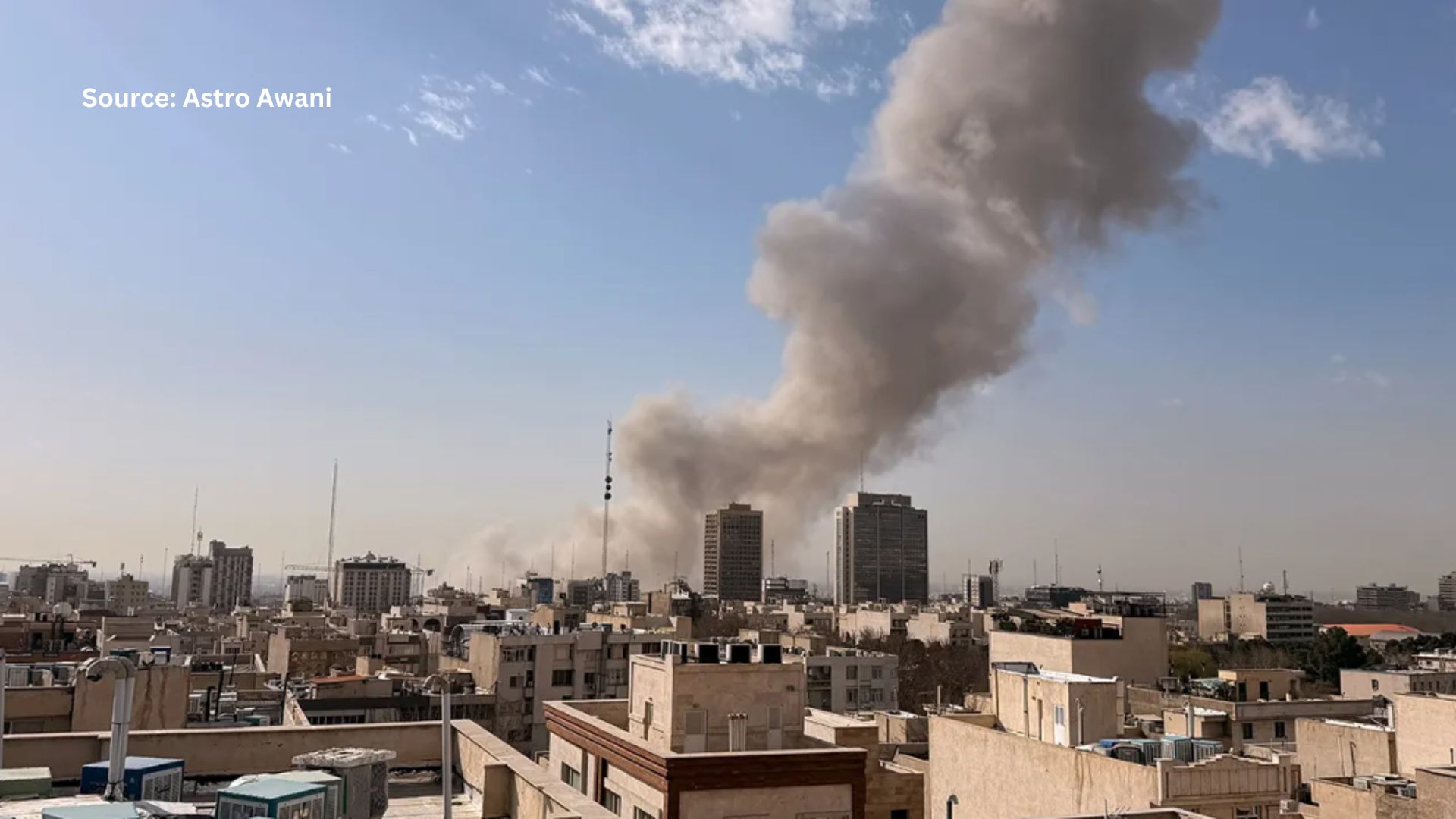
In Israel, air raid sirens sounded across multiple cities, including areas near Tel Aviv, as defense systems were activated to intercept incoming projectiles. Witnesses reported hearing explosions in the sky, believed to be the result of interception efforts by Israel’s air defense network.
Israeli authorities have yet to release comprehensive details regarding casualties or structural damage. However, officials stated that the majority of incoming drones and missiles were successfully intercepted. Emergency services were placed on high alert as precautionary measures were implemented nationwide.
Security analysts describe the exchange as a significant escalation in the shadow conflict that has simmered between Tehran and Tel Aviv for years. While previous confrontations often involved proxy groups or covert operations, the latest developments reflect a more overt military engagement.
The timing of the escalation has raised concerns among international observers, who fear that continued retaliation could expand the conflict beyond the two countries. Neighboring states and allied armed groups across the Middle East are closely monitoring the situation, with the potential for miscalculation posing serious risks to regional stability.
Calls for restraint have begun to emerge from global leaders, urging both sides to avoid further escalation. Diplomatic channels are reportedly active behind the scenes, although no immediate breakthrough has been announced.
Military experts warn that while both Iran and Israel may aim to demonstrate strength without triggering full-scale war, the volatile environment increases the risk of unintended consequences. A misjudgment in targeting or interception could rapidly widen the scope of hostilities.
For now, forces on both sides remain on heightened alert. Iranian officials have indicated that their response was measured but firm, while Israeli authorities have pledged to defend their territory against any threat.
As tensions continue to unfold, the situation remains fluid, with the possibility of additional military or diplomatic developments in the coming days.