MINNEAPOLIS, Feb 28, 2026 — A federal judge in Minnesota has ruled that the Trump administration cannot “terrorize” lawful refugees by arresting and detaining them under a newly announced immigration enforcement policy, in a decision that temporarily halts aspects of the government’s initiative and underscores growing legal pushback against its refugee strategy.
U.S. District Judge John Tunheim issued a preliminary injunction on Friday, converting a temporary restraining order from January into a more lasting order that prevents the Department of Homeland Security (DHS) and related agencies from arresting refugees in Minnesota simply because they have not yet obtained lawful permanent resident status (green cards).

The ruling specifically protects roughly 5,600 refugees — many originally admitted legally to the United States from regions such as Africa, Asia and Latin America — who were at risk of detention under a DHS policy announced in January as part of “Operation PARRIS” (Post-Admission Refugee Reverification and Integrity Strengthening). Under this initiative, immigration officials planned to retake custody of refugees a year after their arrival to conduct additional vetting, a move the judge said lacked clear legal backing.
“The court will not allow federal authorities to use a new and erroneous statutory interpretation to terrorize refugees who immigrated to this country under the promise that they would be welcomed and allowed to live in peace, far from the persecution they fled,” Judge Tunheim wrote in his order, which specifically cited the Refugee Act of 1980 — legislation designed to uphold protections for refugees fleeing conflict and persecution.
Judge Tunheim noted that, by law, refugees are permitted to remain in the US for at least a year before applying for adjustment of status and that the new policy’s implicit deadline — to arrest refugees on the 366th day of their lawful admission — was a misinterpretation of immigration statutes. He said the government’s plan threatened to undermine foundational promises about refugee resettlement and would create constitutional issues if allowed to proceed.
The legal challenge was brought as a class-action lawsuit by refugee advocates, including the International Refugee Assistance Project, who argued that the administration’s interpretation wrongly granted federal immigration agents authority that Congress never provided. They praised the ruling as a safeguard that allows refugees to continue living without fear of arbitrary arrest or detention.
Attorney Kimberly Grano, representing the Minnesota plaintiffs, commended the decision, saying refugees can now “live their lives without fear that their own government will snatch them off the street and imprison them far from their loved ones.”
The injunction applies only in Minnesota, but similar challenges are underway in other jurisdictions, including a separate lawsuit in Massachusetts seeking broader nationwide relief on the same policy.
Government spokespeople from DHS and U.S. Immigration and Customs Enforcement (ICE) did not immediately respond to requests for comment, but the administration has previously defended the policy as part of its broader immigration enforcement strategy. Critics have described the policy — and aggressive enforcement actions including raids and mass arrests — as heavy-handed and potentially counterproductive.
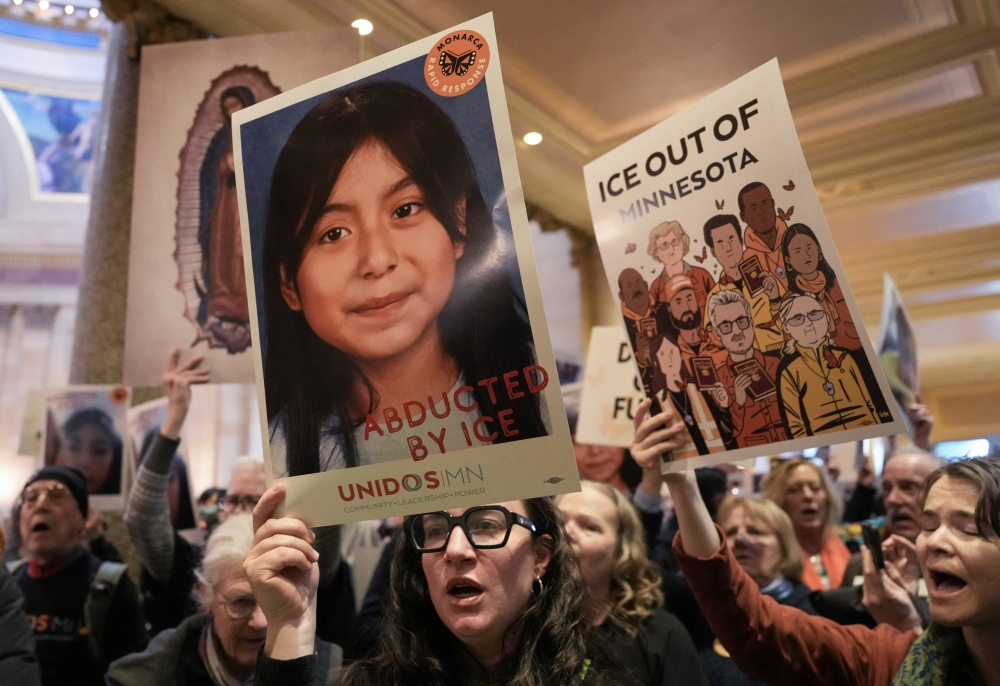
The case highlights ongoing tensions over U.S. immigration policy, refugee rights, and executive authority. Advocacy groups have also noted that some refugees have already been arrested in Minnesota and transferred to detention facilities in Texas under the policy before the injunction was issued, raising concerns about how such actions affect community trust and humanitarian commitments.
As broader legal battles unfold, the Minnesota ruling remains a significant check on the Trump administration’s immigration enforcement approach — at least temporarily preserving established protections under federal refugee law.