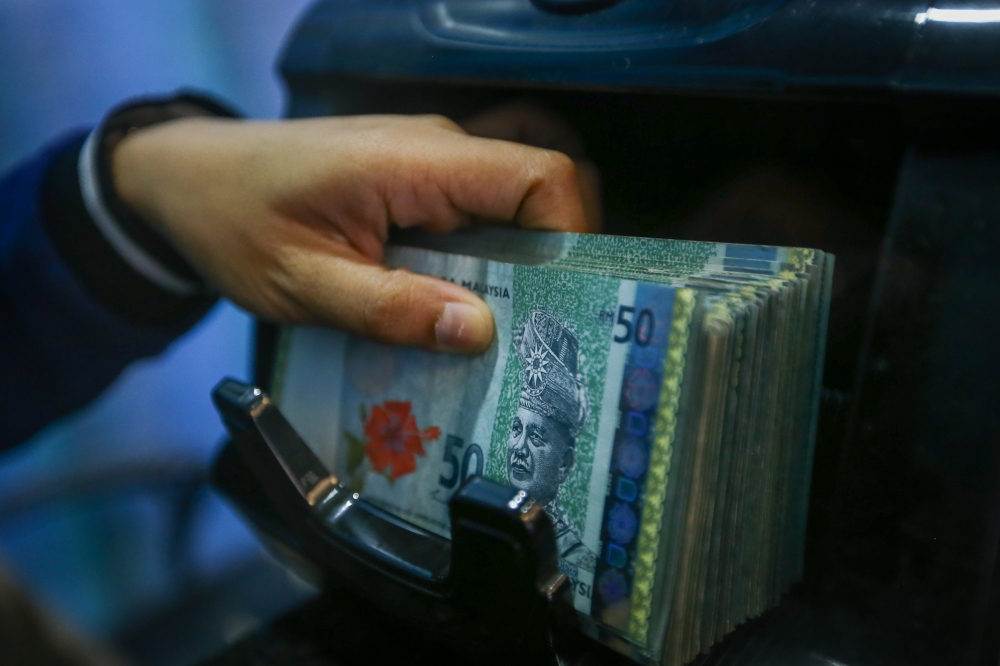
KUALA LUMPUR — Malaysia’s currency, the Malaysian ringgit, opened slightly higher against the US dollar on Wednesday but remains under significant pressure amid escalating geopolitical tensions that are driving investors toward safer assets such as the greenback. As global markets digest the fallout from ongoing conflict in the Middle East and rising energy prices, the local currency continues to face volatility and downward pressure.
At the morning session 8am local time, the ringgit was quoted at 3.9390/9535 against the US dollar — marginally firmer than Tuesday’s closing level of 3.9440/9495. Traders, however, cautioned that this modest improvement might not last if global tensions intensify and risk aversion persists.

Market Reaction & Safe‑Haven Demand
Market analysts say the strengthening of the US Dollar Index (DXY) reflects continued flight-to-safety demand as geopolitical risks mount, particularly after the closure of the Strait of Hormuz — a critical artery for global oil shipments — and concerns over extended conflict involving the United States, Israel and Iran.
Dr Mohd Afzanizam Abdul Rashid, chief economist at Bank Muamalat Malaysia Bhd, explained that the Greenback’s gains are tied directly to investor preferences for safe-haven assets during periods of uncertainty. With tensions disrupting energy routes and increasing the possibility of wider economic disruption, traders have shifted capital into perceived secure instruments such as the US dollar.
He pointed out that countries heavily dependent on Middle Eastern energy supplies, including China, have urged for protection of shipping lanes to mitigate supply disruption. Meanwhile, the United States has pledged to provide tanker escorts to ensure continued oil and natural gas flows. Those dynamics have helped reinforce the US dollar’s strength, undermining emerging market currencies like the ringgit.
Performance Against Major and Regional Currencies
At the opening, the ringgit displayed a mixed performance against other major global currencies:
- It strengthened against the Japanese yen, trading at 2.4964/5059 from 2.5010/5048.
- It edged slightly higher against the euro at 4.5736/5904 compared with 4.5778/5842 previously.
- The ringgit weakened against the British pound, quoted at 5.2590/2783 versus 5.2451/2524 on Tuesday.
Against its ASEAN peers, the ringgit’s performance was broadly weaker:
- It was almost flat against the Indonesian rupiah.
- Weakened against the Philippine peso and
- Eased slightly versus the Thai baht.
- However, the local unit showed some resilience against the Singapore dollar.
Background & Ongoing Pressure
Monday and Tuesday trading sessions had seen the ringgit generally soften due to risk-off sentiment triggered by the conflict in the Middle East. The local currency closed lower on Tuesday as investors rotated into the stronger US dollar, perceived as a stable asset amid global instability.
In recent sessions prior to Wednesday, the ringgit also traded under pressure as global investors priced in the likelihood of sustained geopolitical risk, which could aggravate energy prices and inflation internationally — tendencies that typically benefit the US dollar and weigh on emerging market currencies.
Outlook
Market watchers note that while the ringgit may show sporadic intraday gains, broader conditions — including rising crude oil prices, geopolitical uncertainty, and safe-haven flows into the US dollar — could keep the ringgit’s trajectory subdued in the short term. Analysts suggest that unless there is a clear easing of global tensions or stabilisation in markets, the ringgit may find it difficult to escape downward pressure.
Investors will likely continue monitoring developments in the Middle East, movements in oil markets, and central bank signals that could shift capital flows and influence foreign exchange trends in the weeks ahead.