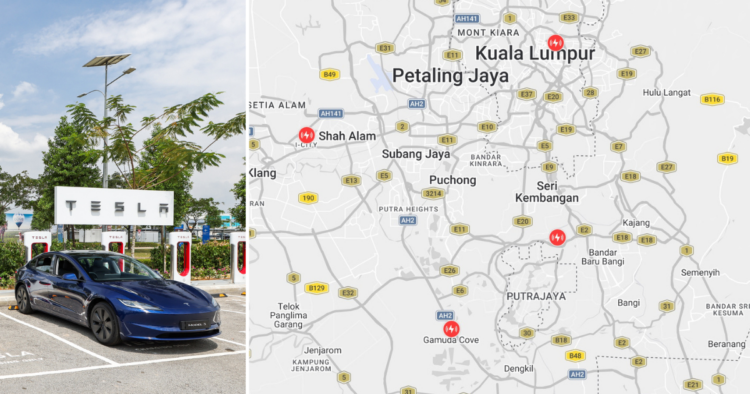
KUALA LUMPUR — Tesla’s Supercharger network in Malaysia is now accessible to electric vehicles (EVs) from other manufacturers, marking a significant shift in the country’s EV charging landscape. Traditionally reserved exclusively for Tesla owners, the open access is currently limited to select locations in the Klang Valley and represents a move aimed at broadening charging options for all EV users.
The participating Supercharger sites — located at i-City Finance Avenue in Shah Alam, Pavilion KL, IOI City Mall Putrajaya, and Gamuda Cove in Dengkil — are equipped with high-power chargers capable of delivering up to 250kW of DC fast charging through the CCS2 connector standard. These high output levels are among the stronger public charging options available in Malaysia’s growing EV ecosystem.

To access the Superchargers, non-Tesla EV owners must download the Tesla app on iOS or Android and create a Tesla account. Within the app, users can locate eligible Supercharger sites, add a payment method, and start or stop charging sessions directly. Tesla owners wishing to charge a secondary non-Tesla EV can use the “Charge Your Other EV” option within the app’s menu.
However, charging rates for non-Tesla EV owners differ from those offered to Tesla drivers. Current pricing listed in the Tesla app charges non-Tesla vehicles RM1.80 per kilowatt-hour (kWh), notably higher than the preferential pricing available to Tesla owners. Additionally, a congestion fee of up to RM2.00 per minute may be applied when a Supercharger site is busy, once the battery’s state of charge exceeds 80 per cent. Drivers should therefore be mindful of both charging costs and potential fees during peak usage.
The move to open Tesla Superchargers to all EVs in Malaysia aligns with requirements under the Battery Electric Vehicle (BEV) Global Leaders programme, administered by the Malaysian government. Tesla’s participation under this initiative stipulated that a portion of its fast chargers — at least 30 per cent of total installed units — must be made available for use by vehicles from other brands. This requirement supported Tesla’s approval and expansion of its charging infrastructure in the country.
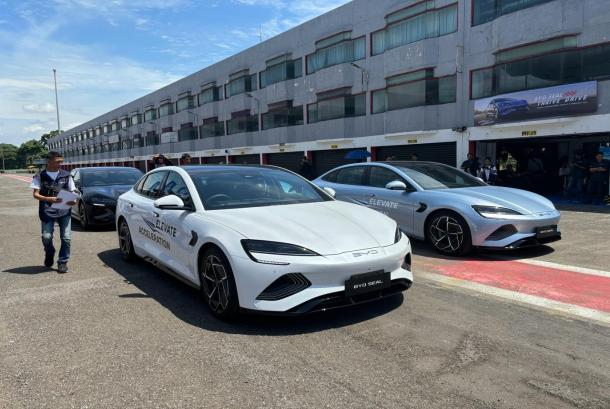
Despite the expanded access, the experience of using Tesla Superchargers may still vary depending on the EV model. Charging speeds and overall efficiency hinge on a vehicle’s onboard charging architecture and compatibility with high-power DC charging. For example, EVs with 800-volt systems can better exploit the Superchargers’ high output potential, while other models may see lower peak rates.
Although Tesla’s network is now accessible to more drivers, observers note that other public DC fast charging (DCFC) networks in Malaysia may offer advantages in terms of cost and convenience for many EV owners. Rates at competing DCFC networks in urban and highway locations often range from RM1.30 to RM1.80 per kWh, with more widespread coverage outside major cities — making them a strong choice for everyday charging needs.
The limited rollout of Superchargers open to non-Tesla EVs marks an incremental step toward broader interoperability of EV charging infrastructure in Malaysia. As more EV brands enter the market and charging networks continue to expand, drivers are likely to benefit from improved charging options spanning different technologies, pricing structures and locations