As geopolitical tensions rise in several parts of the world, discussions about the possibility of a global conflict are once again attracting public attention. Although a third world war remains a hypothetical scenario, analysts and security experts often study which countries could remain relatively safe if a large-scale war were to occur.
Several factors determine a country’s potential safety during global conflict. These include geographic isolation, political neutrality, natural resources, food security, and distance from major military powers.

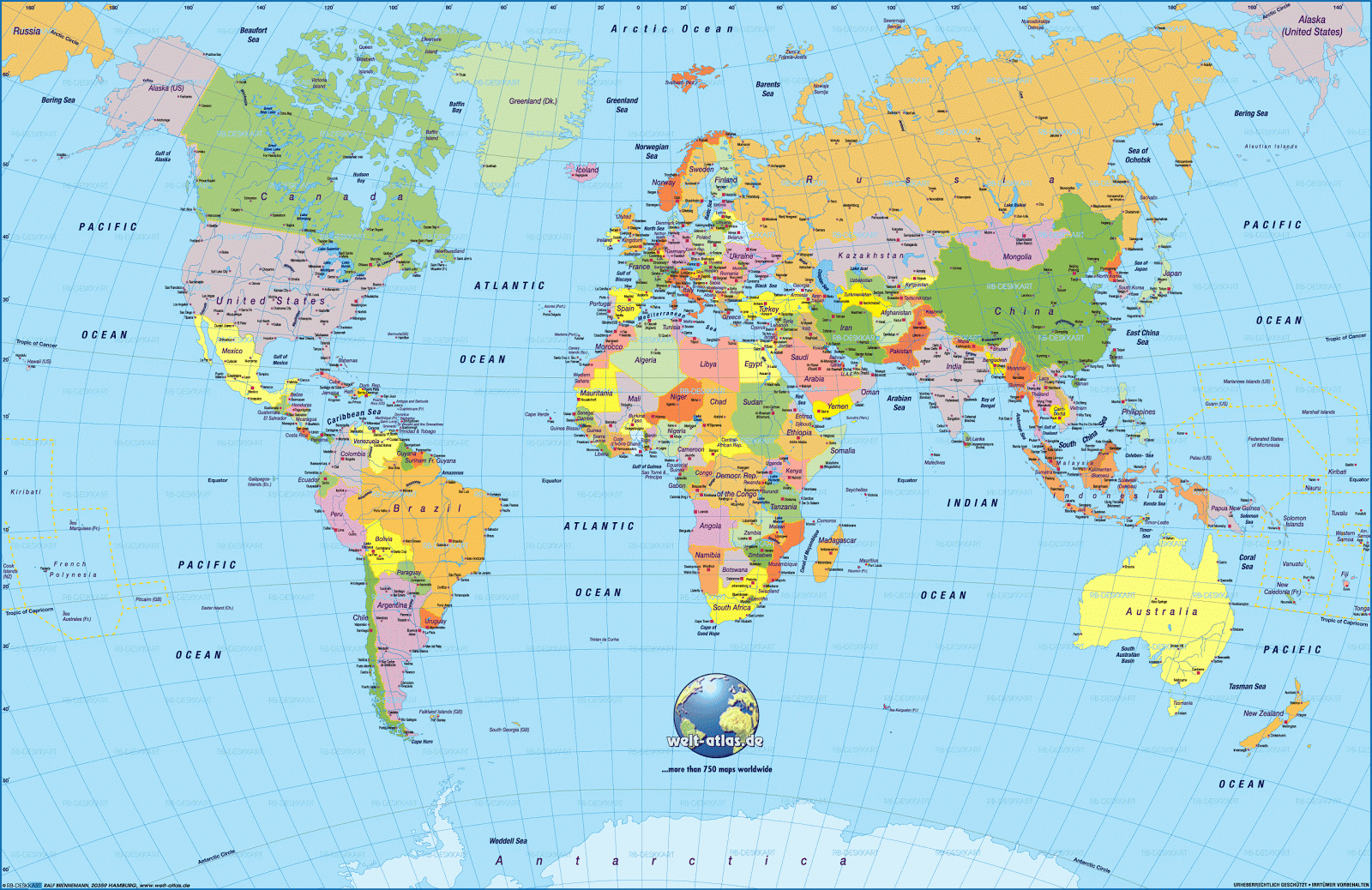
Based on these factors, some nations are often considered more secure compared to others. Among them are Indonesia, New Zealand, and Argentina — three countries that possess strategic advantages that could help them remain stable during a global crisis.
Indonesia Ranked Among the Safest Countries in a Global Conflict Scenario
Indonesia is frequently mentioned as one of the safest countries if a global war were to occur. As the largest archipelagic nation in the world, Indonesia consists of more than 17,000 islands spread across Southeast Asia.
This vast geography provides natural protection because the country’s population and infrastructure are not concentrated in a single location. The island-based structure could make large-scale military targeting significantly more difficult.
Another major advantage is Indonesia’s balanced foreign policy. The country traditionally maintains diplomatic relations with many global powers while avoiding strict military alliances that could pull it directly into global conflicts.
Indonesia also has significant natural resources and food production capabilities, including fisheries, agriculture, minerals, and energy reserves. In the event of global supply chain disruptions, these domestic resources could help the country sustain its population.
Its location, far from many of the world’s most volatile military zones, further strengthens Indonesia’s position as a potentially safer location during global instability.
New Zealand’s Isolation Makes It One of the World’s Safest Locations
New Zealand is widely regarded by international analysts as one of the most secure countries during global crises. The country is located in the South Pacific Ocean, thousands of kilometers away from many major geopolitical flashpoints.
This geographic isolation is one of New Zealand’s strongest advantages. Being far from large military powers reduces the likelihood of the country becoming a strategic target in global warfare.
New Zealand also has a high level of political stability, strong infrastructure, and reliable governance. These factors allow the country to respond effectively during emergencies and maintain order even in times of global uncertainty.
In addition, the country’s strong agricultural sector ensures that it can produce sufficient food domestically, reducing reliance on global supply chains that could be disrupted during wartime.
Because of these advantages, New Zealand is often mentioned in global security discussions as a potential safe haven during worldwide crises.
Argentina Benefits From Distance and Natural Resources
Argentina also appears on many discussions about countries that could remain relatively secure during global conflict. Located in South America, Argentina is geographically distant from the regions that have historically been centers of major wars, such as Europe, the Middle East, and East Asia.
The country also benefits from vast land resources and one of the largest agricultural industries in the world. Argentina is a major global producer of soybeans, wheat, and beef, which could provide crucial food security during global disruptions.
Another advantage is the country’s access to energy resources, fresh water, and large land areas, which could help support its population if international trade systems were affected by war.
Because of its geographic location and resource independence, Argentina is often considered one of the countries that may remain more stable in a major global conflict scenario.
No Country Is Completely Immune
Experts emphasize that even the safest countries would still face indirect consequences if a world war were to occur. Economic disruption, cyber warfare, and global supply chain breakdowns could affect nearly every nation.
However, countries that combine geographic distance, political neutrality, natural resources, and food security may have better chances of maintaining stability.
For that reason, Indonesia, New Zealand, and Argentina are often mentioned in global discussions as countries that could remain comparatively safer in the unlikely event of a worldwide conflict.