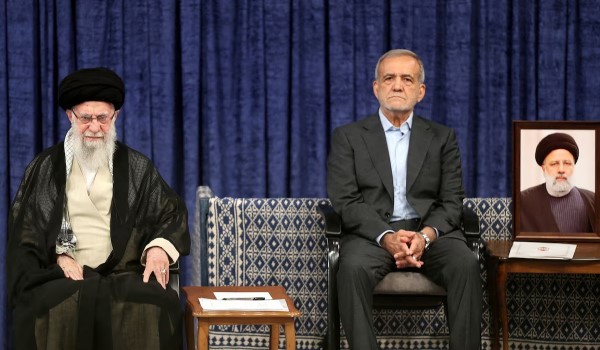
Kuala Lumpur – Iran’s political system is one of the most distinctive in the world, blending theocratic rule with elements of elected government. At its core lies a clear division of power between the Supreme Leader (also known as the Rahbar or Leader) and the President. While the President is the public face of the executive branch, real ultimate authority rests with the Supreme Leader.
Supreme Leader: The Most Powerful Figure in Iran
The Supreme Leader serves as the Head of State and holds the highest religious and political authority in the Islamic Republic of Iran. Established after the 1979 Islamic Revolution, this position ensures that all major policies align with Islamic principles (velayat-e faqih – guardianship of the Islamic jurist).

Key Powers and Responsibilities:
- Commander-in-Chief of the armed forces, including the powerful Islamic Revolutionary Guard Corps (IRGC).
- Oversees foreign policy, national security, and the overall direction of the country.
- Appoints key officials such as the head of the judiciary, commanders of the military and security forces, and directors of state media.
- Can influence or override decisions made by the President and Parliament.
- Holds the final say on major ideological and strategic issues.
The Supreme Leader’s authority is vast and largely unchecked during their tenure.
How the Supreme Leader is Chosen: The Supreme Leader is not elected directly by the people. Instead, they are selected by the Assembly of Experts, a body of 88 senior Shia clerics. Members of this assembly are themselves elected by the public every eight years, but candidates must first be approved by the Guardian Council. The position is held for life, unless the Assembly deems the leader unfit and removes them.
As of March 2026, Ayatollah Mojtaba Khamenei (son of the late Ayatollah Ali Khamenei) serves as Iran’s Supreme Leader following his father’s death.
President: The Head of Government
The President is the highest elected official and acts as the Head of Government. This role focuses on day-to-day administration and implementing policies within the framework set by the Supreme Leader.
Key Powers and Responsibilities:
- Manages the executive branch, including the national budget, economic policies, and domestic affairs.
- Appoints ministers and ambassadors (subject to approval by Parliament and alignment with the Supreme Leader).
- Represents Iran in international diplomacy for routine matters.
- Chairs the Supreme National Security Council.
However, the President’s power is significantly limited. All major decisions must align with the Supreme Leader’s guidance, and the President cannot challenge the core ideological or security policies set by the Rahbar.
How the President is Chosen: The President is directly elected by the Iranian people every four years in a national vote. A person can serve a maximum of two consecutive terms.
Candidates must first be vetted and approved by the Guardian Council (a 12-member body heavily influenced by the Supreme Leader), which often disqualifies reformist or opposition figures. After winning the election, the President must receive formal approval from the Supreme Leader to take office.
Current President: Dr. Masoud Pezeshkian, a reformist-leaning figure, has held the position since 2024.
Key Differences at a Glance
- Authority: The Supreme Leader is the ultimate decision-maker with near-absolute power in strategic and ideological matters. The President handles operational governance but operates under the Leader’s oversight.
- Selection: Supreme Leader → Selected by clerical Assembly of Experts (lifetime). President → Directly elected by citizens (4-year term, max 2 terms).
- Accountability: The Supreme Leader answers primarily to the Assembly of Experts (in theory). The President is accountable to both the public (via elections) and the Supreme Leader.
This dual structure was designed by the founders of the Islamic Republic to prevent purely secular or Western-style democracy while maintaining religious oversight. In practice, the Supreme Leader remains the most influential person in Iran, shaping the country’s direction both at home and abroad.