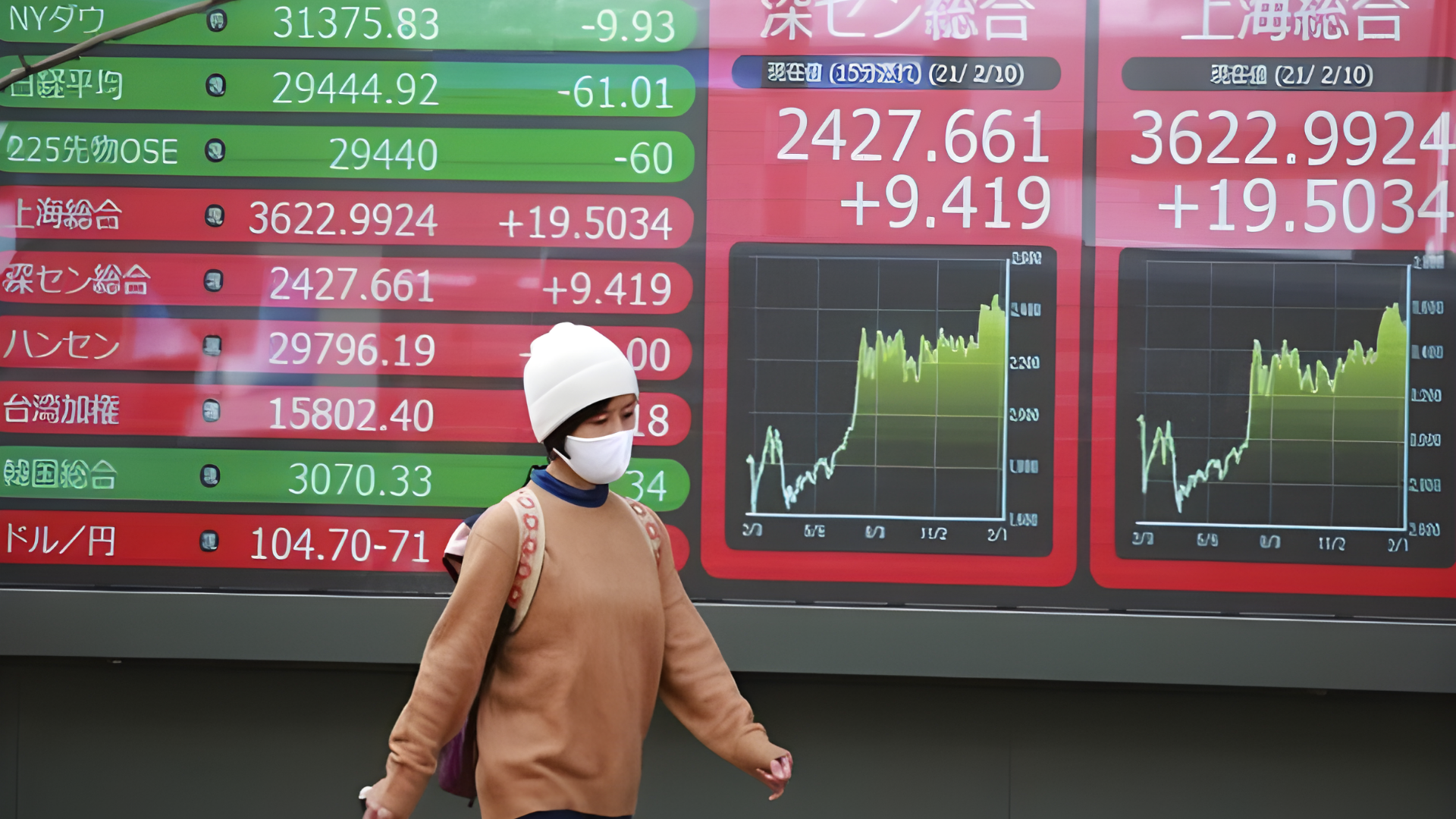
KUALA LUMPUR,April, 2026 — Asian stock markets declined on Thursday after briefly touching record highs, as a sharp rise in global oil prices triggered caution among investors amid ongoing geopolitical uncertainty.
The pullback follows a strong rally earlier in the week, but sentiment quickly reversed as energy markets surged, reflecting heightened risks tied to tensions in the Middle East, particularly involving Iran.

Global oil prices climbed significantly, with Brent crude rising above the US$100 per barrel mark, fueled by fears of supply disruptions linked to maritime tensions in the Strait of Hormuz.
The surge comes as geopolitical risks intensify, including incidents involving shipping routes and uncertainty over peace negotiations, raising concerns about the stability of global energy supply chains.
Rising oil prices are widely seen as a key driver behind the market downturn, as higher energy costs can:
- Increase inflationary pressures
- Reduce corporate profit margins
- Slow economic growth
Major Asian indices posted declines after reaching historic highs earlier in the session:
- Japan’s Nikkei 225 dropped after briefly crossing record levels
- Hong Kong’s Hang Seng Index fell amid broad market weakness
- China’s CSI300 and other regional benchmarks also declined
Overall, the MSCI Asia-Pacific index slipped after hitting a record peak, reflecting a region-wide shift toward risk aversion.
Despite strong gains on Wall Street, where major indices recently hit new highs, Asian markets struggled to maintain momentum due to external pressures.
Investor confidence has been heavily influenced by ongoing tensions surrounding the Iran conflict, which continues to disrupt global markets.
Key concerns include:
- Shipping disruptions in strategic النفط routes
- Uncertainty over ceasefire negotiations
- Risk of further escalation in the region
The situation has created a “wait-and-see” environment among investors, with many adopting a cautious stance toward risk assets.
The rise in oil prices is also fueling concerns about inflation across Asia, particularly in countries that rely heavily on energy imports.
Higher fuel costs can lead to:
- Increased transportation and production expenses
- Rising consumer prices
- Pressure on central bank policies
Analysts warn that sustained high oil prices could complicate monetary policy decisions and slow economic recovery in several Asian economies.
While Asian markets declined, global markets presented mixed signals:
- US stock indices reached record highs driven by strong corporate earnings
- Technology and AI-related sectors continued to perform well
- However, volatility remains elevated due to geopolitical risks
This divergence highlights the fragile nature of current market conditions, where strong fundamentals are being offset by external uncertainties.
Market analysts suggest that the near-term outlook for Asian equities will depend largely on:
- Developments in the Iran conflict
- Stability of global oil prices
- Investor sentiment toward risk assets
There is growing consensus that markets may remain volatile in the short term, particularly if geopolitical tensions persist or escalate further.
The recent decline in Asian stock markets underscores the significant impact of rising oil prices and geopolitical uncertainty on global financial stability.
While economic fundamentals remain relatively strong, external risks—especially those linked to energy markets—continue to shape investor behavior.
As the situation evolves, markets are expected to remain sensitive to geopolitical developments, with oil prices playing a central role in determining the direction of global equities.