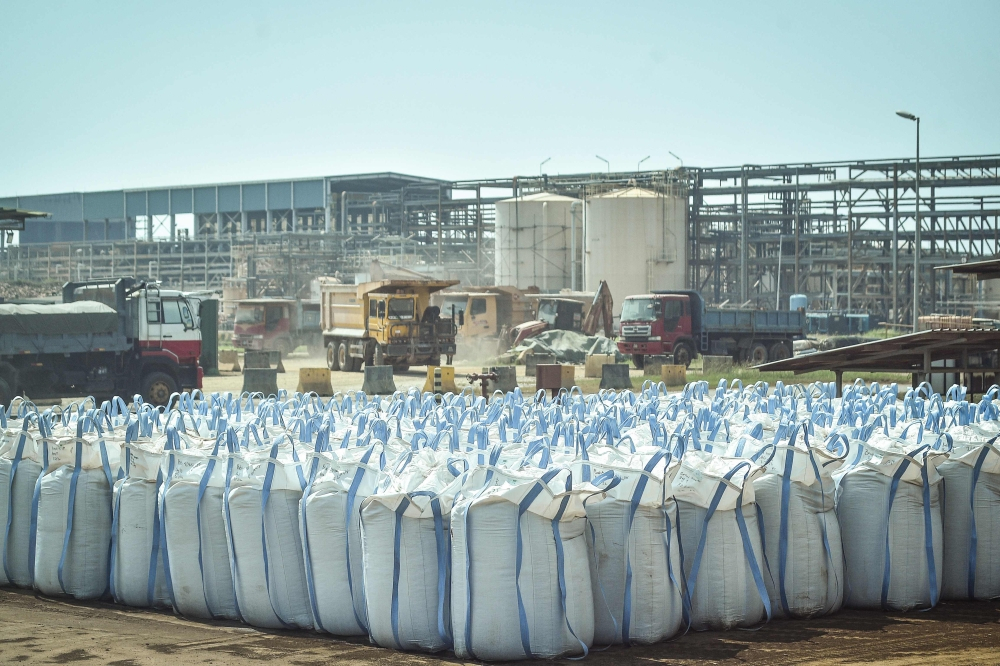
KUALA LUMPUR, April, 2026 — Malaysia is quietly positioning itself at the center of a global industrial shift, with a high-tech refinery producing rare earth minerals valued at approximately RM395,000 (US$100,000) per bag, underscoring the country’s growing importance in the global supply chain for critical materials.
Located in Gebeng, near Kuantan, the facility operated by Lynas Rare Earths is currently the largest single rare earth processing plant in the world, and one of the few outside China — which dominates roughly 90% of global supply.

The refinery processes rare earth elements that are essential to modern technology and advanced industries. Among the most valuable outputs is NdPr (neodymium-praseodymium) — a key material used to produce high-performance magnets.
Each bag of these materials can reach values of up to RM395,000 due to their critical role in:
- Electric vehicles (EVs) and battery systems
- Wind turbines and renewable energy
- Smartphones and consumer electronics
- Military and aerospace technologies
- Artificial intelligence hardware
Rare earth elements are considered indispensable in the transition toward a digital and low-carbon global economy.
The rise of this Malaysian facility comes amid growing global concerns over reliance on China for critical minerals. Countries and companies are actively seeking alternative supply chains to reduce geopolitical risks.
Malaysia is emerging as a strategic alternative hub, supported by:
- Advanced processing capabilities
- International partnerships and investments
- A policy shift toward higher-value manufacturing
The government has also emphasized moving beyond raw material exports toward downstream processing and value-added industries, strengthening its position in global markets.
The production process at the Gebeng plant is highly complex. Raw materials mined in Australia are transported to Malaysia, where they undergo chemical separation and refinement to extract usable rare earth elements.
Once processed:
- The minerals are packed and shipped via Port Klang
- Exported primarily to countries like Japan
- Used to manufacture high-performance magnets and components
These materials ultimately power industries ranging from automotive and electronics to defense and healthcare technologies.
Rare earth minerals have become a critical نقطة in global geopolitics, especially amid ongoing trade tensions between the United States and China.
China’s dominance in rare earth production has raised concerns about:
- Supply chain vulnerabilities
- Export restrictions
- Market manipulation risks
Malaysia’s growing role offers an alternative pathway, potentially helping to diversify global supply and stabilize markets.
Industry leaders emphasize that reducing dependence on a single dominant supplier will require:
- Long-term investment
- Strategic cooperation between countries
- Expansion of downstream industries
Despite its economic importance, rare earth processing comes with environmental risks. The extraction and refinement process involves heavy chemicals and can produce toxic waste if not properly managed.
Authorities and industry players are therefore under pressure to ensure:
- Strict environmental compliance
- Sustainable waste management
- Safe industrial practices
Malaysia recently approved continued operations for the refinery, signaling confidence in regulatory oversight while balancing economic benefits.
Looking ahead, Malaysia aims to strengthen its role in the global rare earth ecosystem by:
- Expanding processing capabilities
- Developing local manufacturing industries
- Attracting foreign investment and technology
Experts believe the country has the potential to become a key global player in advanced materials and clean technology supply chains, particularly as demand continues to rise.
The high-value rare earth production in Malaysia highlights a major shift in global industrial dynamics. With each bag of minerals worth nearly RM395,000, the stakes are high — not just economically, but strategically.
As the world races toward electrification, digitalization, and AI-driven growth, Malaysia’s role in supplying these critical resources is set to become increasingly vital.