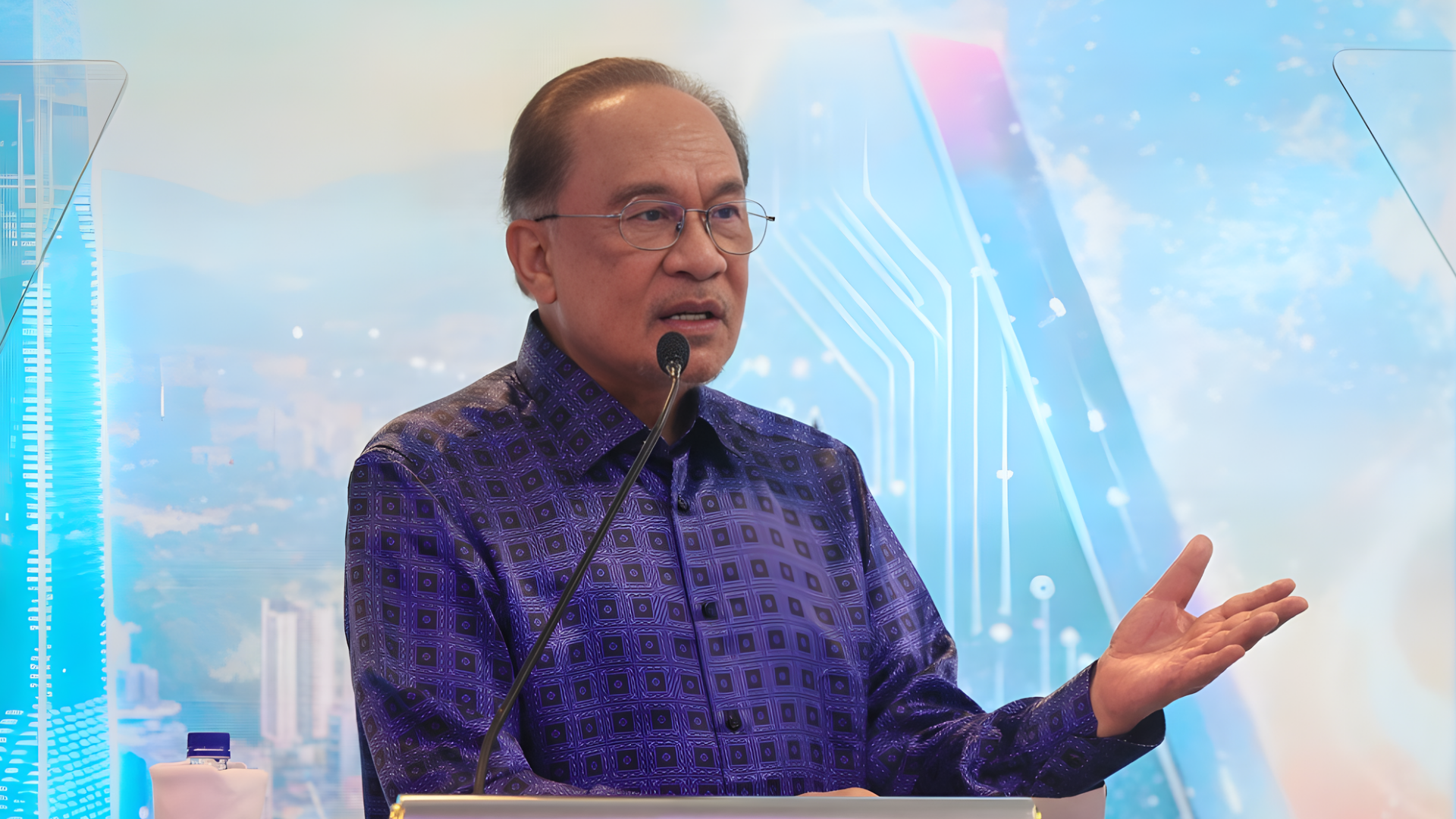
KUALA LUMPUR April , 2026 — Malaysia is moving toward a significant institutional reform as Deputy Prime Minister Ahmad Zahid Hamidi throws his full support behind a proposal to elevate the enforcement division under the Ministry of Domestic Trade and Cost of Living Malaysia into a full-fledged department.
The proposal signals a broader recognition within the government that enforcement mechanisms must evolve alongside the rapidly changing economic landscape, particularly as Malaysia faces increasingly complex challenges in trade, consumer protection, and subsidy management.

Speaking at the 54th Enforcement Day celebration, Zahid made it clear that the current enforcement structure is no longer adequate for today’s realities.
Over the years, the responsibilities of enforcement officers have expanded far beyond traditional roles such as price monitoring and basic consumer protection. Today, they are tasked with addressing:
- Sophisticated subsidy leakages involving large-scale networks
- Cross-border smuggling operations
- Digital marketplace violations and online fraud
- Complex supply chain manipulation
These evolving threats require not only stronger manpower but also a more robust institutional framework.
The push to upgrade the enforcement division into a department is not merely administrative—it represents a strategic shift.
According to Ahmad Zahid Hamidi, a department-level structure would:
- Provide greater authority and operational autonomy
- Improve coordination across multiple government agencies
- Enhance the ability to respond quickly to emerging threats
- Strengthen policy implementation on the ground
In essence, the upgrade is about turning enforcement into a more agile, intelligence-driven force capable of handling modern economic crimes.
One of the central concerns highlighted is the issue of subsidy leakages, particularly involving fuel and essential goods.
These leakages:
- Cost the government hundreds of millions of ringgit
- Distort market pricing and supply
- Undermine public trust in subsidy systems
Operations such as Ops Tiris have already demonstrated the scale of the problem, with authorities seizing goods worth over RM260 million since 2023.
However, officials believe that without structural reform, enforcement efforts may struggle to keep pace with increasingly sophisticated criminal networks.
Another key factor driving the proposed upgrade is the rapid expansion of the digital economy.
The rise of e-commerce platforms has introduced new enforcement challenges, including:
- Online price manipulation
- Sale of counterfeit goods
- Hidden transactions that bypass regulations
- Cross-border digital trade loopholes
Zahid emphasized that enforcement agencies must adopt advanced technologies, including data analytics and digital monitoring systems, to remain effective.
A major goal of the restructuring is to shift enforcement from a reactive approach to a proactive one.
Currently, enforcement actions are often triggered by complaints or incidents. With a stronger institutional framework, authorities aim to:
- Detect violations earlier through intelligence systems
- Prevent large-scale leakages before they occur
- Build predictive models for enforcement planning
This transformation would align Malaysia with global best practices in regulatory enforcement.
Zahid also took the opportunity to highlight the crucial role played by enforcement officers, describing them as the frontline defenders of consumer rights and market stability.
Their responsibilities include:
- Conducting inspections across the country
- Monitoring compliance with pricing regulations
- Responding to public complaints
- Tackling illegal trade activities
With over one million inspections conducted in a year, their workload reflects the scale and importance of their role.
The proposal, initially put forward by Domestic Trade and Cost of Living Minister Datuk Armizan Mohd Ali, will now require further evaluation.
Key steps ahead include:
- Review by the Public Service Department (JPA)
- Cabinet-level discussions and approval
- Structural planning and resource allocation
If approved, the transition to a department could mark one of the most significant enforcement reforms in recent years.
The potential upgrade carries implications beyond enforcement itself.
A stronger enforcement system could:
- Improve investor confidence
- Ensure fair competition in the market
- Protect consumers from exploitation
- Enhance the efficiency of subsidy distribution
In a time of global economic uncertainty, such reforms are seen as critical for maintaining stability.
Malaysia’s economy is becoming more interconnected and complex, requiring a delicate balance between encouraging growth and enforcing regulations.
The proposed upgrade reflects a strategic effort to:
- Strengthen governance without stifling business activity
- Support economic growth while ensuring compliance
- Build a resilient and transparent market system
The proposal to upgrade the enforcement division under the Ministry of Domestic Trade and Cost of Living Malaysia into a full department marks a pivotal moment in Malaysia’s approach to economic governance.
With strong backing from Ahmad Zahid Hamidi, the move represents more than a structural change—it is a commitment to strengthening enforcement, protecting consumers, and adapting to the demands of a rapidly evolving economy.
If implemented, the reform could reshape how Malaysia tackles subsidy leakages, trade violations, and emerging economic challenges in the years ahead.