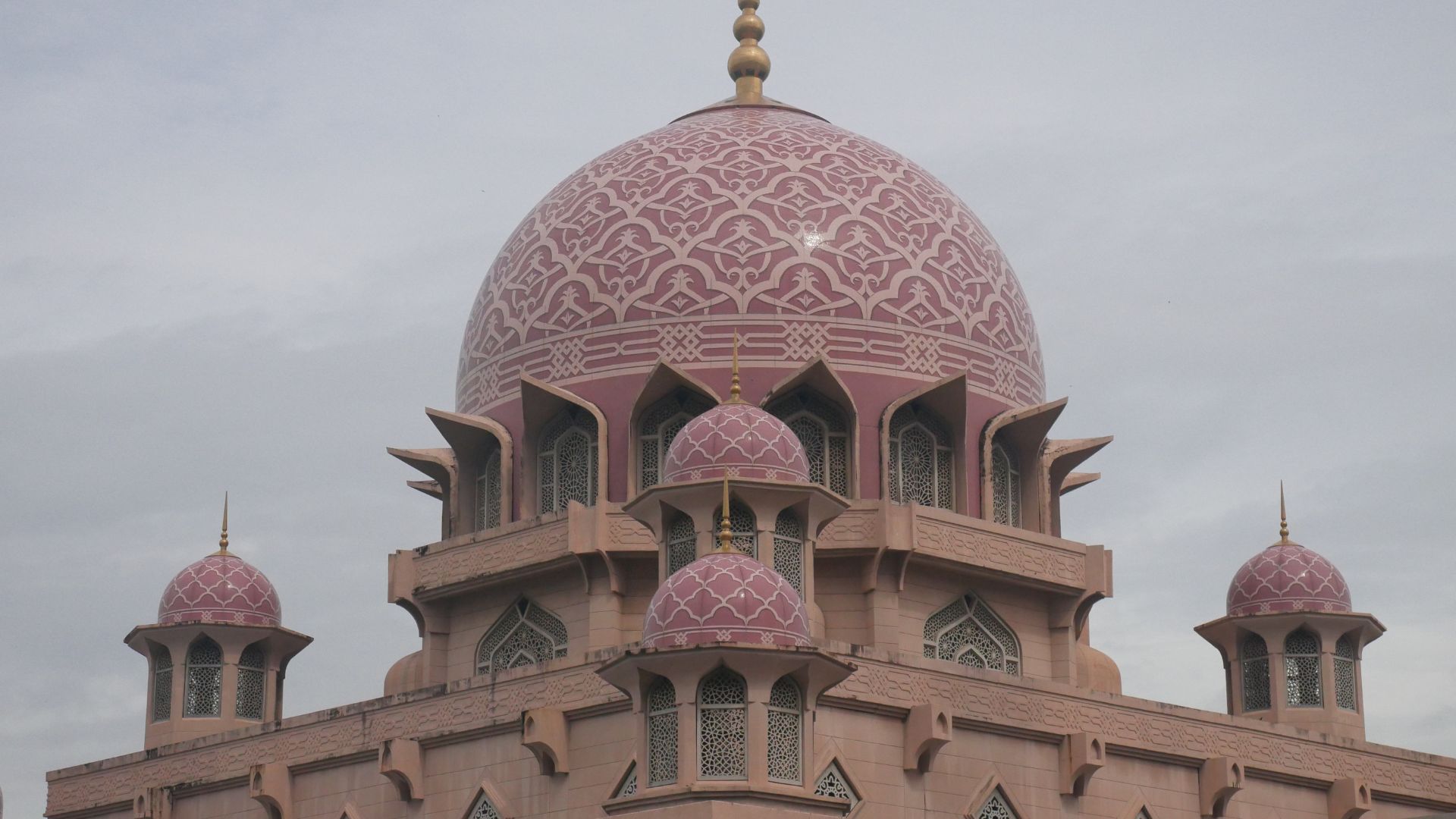
Putrajaya, El Sky News – Putra Mosque, one of the most famous landmarks in Putrajaya, Malaysia, continues to draw visitors from around the world. Known for its striking pink domes and elegant Islamic architecture, the mosque is more than just a place of worship — it is a symbol of Malaysia’s rich history and spiritual heritage. Beyond the stunning exterior, the mosque’s intricate design elements and symbolic features carry deep meanings that are often shared with tourists by dedicated volunteer guides.
One of these guides, Rihaya, has been volunteering at Putra Mosque for several years, helping visitors understand the stories behind its architecture and design. In an interview, she shared the historical significance of the mosque’s name and its connection to Malaysia’s first Prime Minister:

“Masjid ini dikenali dengan nama Masjid Putra. Putra itu diambil daripada nama Perdana Menteri yang pertama. Jadi Perdana Menteri itu namanya Abdul Rahman Putra Al-Haj. So Putra itu kalau di translate kan ialah Prince. Yang mulia Abdul Rahman Putra Al-Haj ni dia berketurunan daripada darah diraja. Karena itu namanya ada Putra. Jadi kawasan ini namanya Putrajaya. Dan masjid ini juga mengambil sempena namanya Masjid Putra.”
(“This mosque is known as Putra Mosque. ‘Putra’ is taken from the name of Malaysia’s first Prime Minister. His name was Abdul Rahman Putra Al-Haj. ‘Putra’, when translated, means ‘Prince’. The honorable Abdul Rahman Putra Al-Haj came from royal blood, which is why his name contains the word ‘Putra’. Therefore, this area is called Putrajaya, and the mosque is named after him — Putra Mosque.”)
This connection not only ties the mosque to Malaysia’s early leadership but also to the royal lineage of its first Prime Minister, giving visitors a sense of historical significance as soon as they enter the site.
Symbolism in the Minaret Design

Every part of Putra Mosque carries symbolic meaning, and Rihaya pointed out that even the minaret was thoughtfully designed.
“Menara itu ada lima tingkat ya kalau kita lihat dari atas betul dia tidak bersusun dia macam berpusing. Jadi itu menggambarkan 5 rukun Islam dan juga 5 solat yang kita kerjakan setiap hari.”
(“The minaret has five levels, and when viewed from above, it does not stack straight but appears to spiral. This symbolizes the Five Pillars of Islam and the five daily prayers.”)
Visitors often marvel at the spiral design, which gives the illusion of motion while conveying the spiritual foundation of Islam.
Quranic Verses at the Entrance
The mosque’s entrance also serves as a subtle guide to worshippers and visitors. Rihaya explained the choice of Quranic verses featured at the main gate and inside the mosque:

“Gate masuk utama itu… daripada Surah Al-Jumu’ah ayat ke-9 yang mengatakan jika kamu dengar azan maka tinggalkan jual beli dan masuk untuk solat. Di dalam ini ialah Surah Al-Jumu’ah juga ayat seterusnya ayat 10 yang menyatakan apabila selesai solat kamu maka bertebaran lah di atas muka bumi Allah jangan lupa Allah.”
(“The main entrance gate displays Surah Al-Jumu’ah, verse 9, which instructs believers to leave trade when the call to prayer is heard and proceed to prayer. Inside, the following verse — Surah Al-Jumu’ah, verse 10 — reminds believers to disperse across the land after prayer and to never forget Allah.”)
These verses not only reflect the religious purpose of the mosque but also reinforce a message of balance between worship and worldly responsibilities.
Columns That Collect Rainwater
One of the mosque’s most intriguing architectural features is its series of umbrella-shaped columns. According to Rihaya, these columns are both aesthetic and functional:
“Tiang-tiang yang terdapat di sekitar masjid ini seolah-olah tiang yang merupakan seperti payung yang terbuka… di atas setiap tiang itu ada lubang untuk mengumpul air hujan dan air itu akan turun melalui tiang dan terus ke tasik.”
(“The columns around the mosque resemble open umbrellas… at the top of each column is a hole that collects rainwater, which then flows down through the column into the lake.”)
The surrounding lake is also man-made and carefully maintained to enhance the mosque’s serenity.

“Tasik yang ada di sekitar masjid ini ialah tasik buatan manusia, dia bukan natural. Bila dia sudah habis diminum di masjid ini dialirkan balik dengan dua batang sungai… proses itu memakan masa selama 2 bulan. Sekarang kedalaman tasik itu ialah setinggi 15 kaki.”
(“The lake surrounding the mosque is man-made, not natural. Once the water is used in the mosque, it is channeled back via two rivers… the process takes about two months. The lake is now about 15 feet deep.”)
This careful water management not only highlights sustainability but also creates a reflective surface that enhances the mosque’s visual appeal.
Interior Design Inspired by Nature

Inside Putra Mosque, the decorations were deliberately chosen to connect worshippers with both nature and divine symbolism.

“Dekorasi yang dipilih untuk masjid ini ialah apa yang ada di sekitar alam semula jadi… hanya yang dari alami bunga-bunga dan juga geometrical design.”
(“The chosen decorations reflect elements found in nature — floral motifs and geometrical designs only.”)
“Stained glass itu… menapis cahaya hanya 40% daripada cahaya itu yang masuk.”
(“The stained glass filters light, letting in only 40% of it.”)
“Geometrical itu simbol seperti keberadaan Tuhan tidak ada mula dan tidak ada akhir… pattern itu can be duplicated endlessly.”
(“Geometrical patterns symbolize God’s existence — with no beginning and no end — because these patterns can be repeated endlessly.”)
“Floral pula… mengingatkan kita kepada alam dan betapa jarangnya kita bersyukur.”
(“The floral patterns remind us of nature and how rarely we reflect on it or express gratitude.”)
Even small details, like the design of the doors, carry a creative inspiration drawn from nature:

“Pintu ini sebenarnya merupakan kacang bendi dipotong… jadi design itu dibuat bentuk pintu.”
(“This door is actually inspired by the shape of sliced okra. That is where the door design comes from.”)
With its blend of architectural ingenuity, spiritual symbolism, and nature-inspired beauty, Putra Mosque is more than a landmark — it is a place where visitors can reflect on faith, history, and the interconnectedness of the natural and divine worlds. Thanks to volunteers like Rihaya, every visitor leaves with a richer understanding of the stories and meanings behind this iconic mosque.