Manila, Philippines, El Sky News – Tropical Storm Hagupit struck several provinces in the Philippines at the end of November 2025, causing severe flooding, landslides, and extensive infrastructure damage. The Philippine government has declared a state of national emergency to manage the disaster response.
Casualties and Impact

At least 12 people have died, with dozens more injured. Thousands were forced to evacuate their homes in affected provinces, including Cebu, Leyte, and Samar.
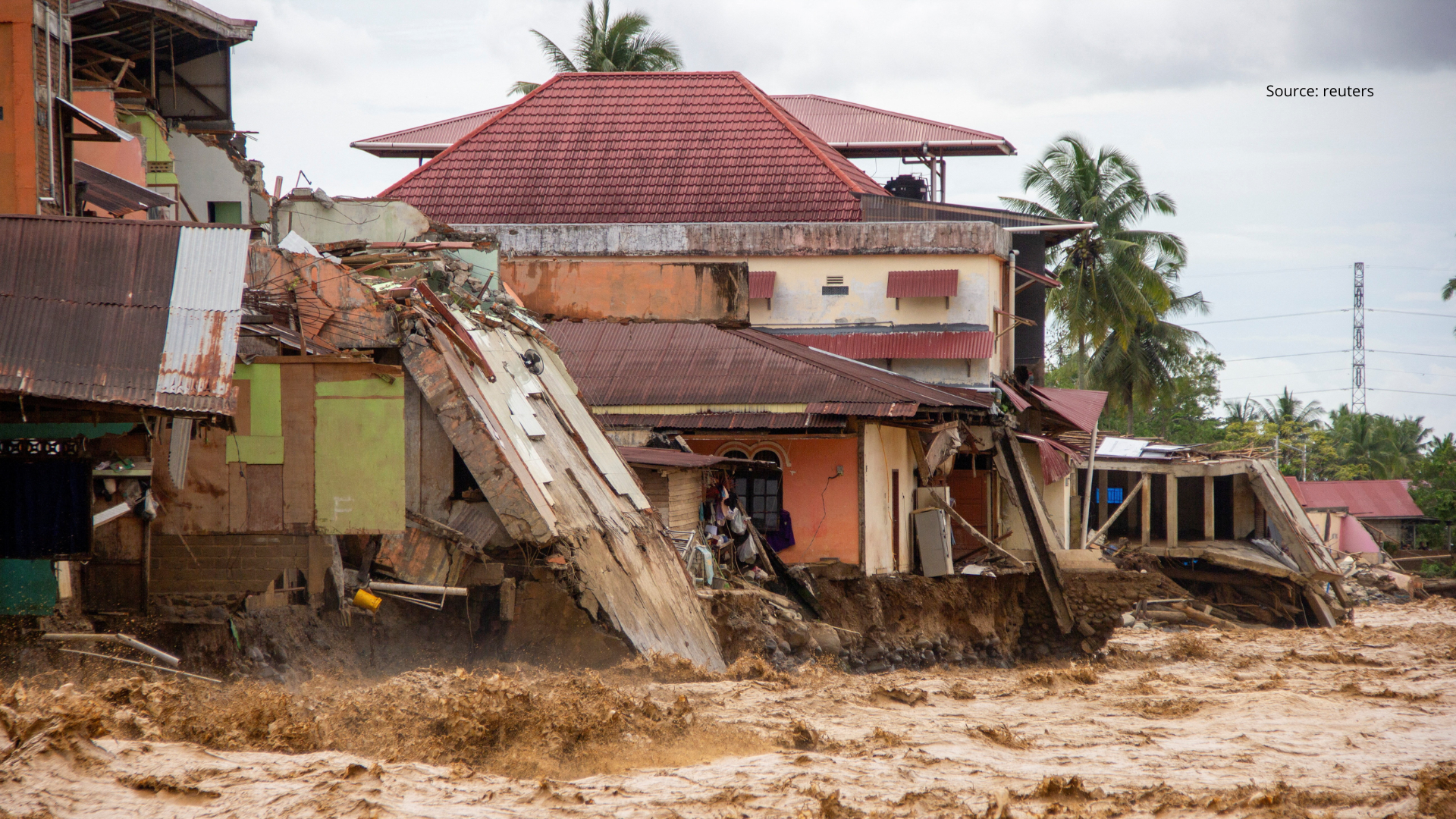
Flooding disrupted roads, bridges, and public facilities, hampering transportation and relief operations. Landslides in the mountainous areas of Leyte blocked access to several villages, resulting in material losses and complicating rescue efforts.
Government Response
President Ferdinand Marcos Jr. issued emergency orders to mobilize the military and the National Disaster Risk Reduction and Management Council (NDRRMC). Thousands of military personnel, volunteers, and medical teams were deployed to evacuate residents, distribute food and medicine, and clear blocked transportation routes. Temporary shelters have been set up for families displaced by flooding and landslides.
Storm Conditions and Progress
Hagupit, now weakened to Category 1 Tropical Storm, initially formed over the western Pacific Ocean on November 27, 2025. The storm brought heavy rainfall, winds up to 120 km/h, and high coastal waves along the eastern Philippines. The Philippine Atmospheric, Geophysical and Astronomical Services Administration (PAGASA) warned of possible secondary flooding and landslides, particularly in mountainous and river valley areas.
Infrastructure Damage
Hundreds of homes were damaged or submerged, several bridges were destroyed, and major roads temporarily became impassable. Airports in Cebu and Tacloban were temporarily closed to prevent accidents caused by extreme weather. Power and communications were disrupted in several provinces, slowing down coordination of emergency relief.
Analysis and Forecast
Meteorologists warn that the 2025 typhoon season in the Philippines is above average, influenced by climate change and global warming. Disaster experts emphasize the importance of early evacuation, weather warning systems, and disaster-resilient infrastructure to reduce casualties in future events. Tropical Storm Hagupit highlights the Philippines’ vulnerability to tropical disasters, especially in mountainous and coastal areas. Rapid response by the government, military, and local volunteers has been key to saving lives and minimizing damage. Authorities remain on high alert for additional heavy rainfall and landslides in the coming days.