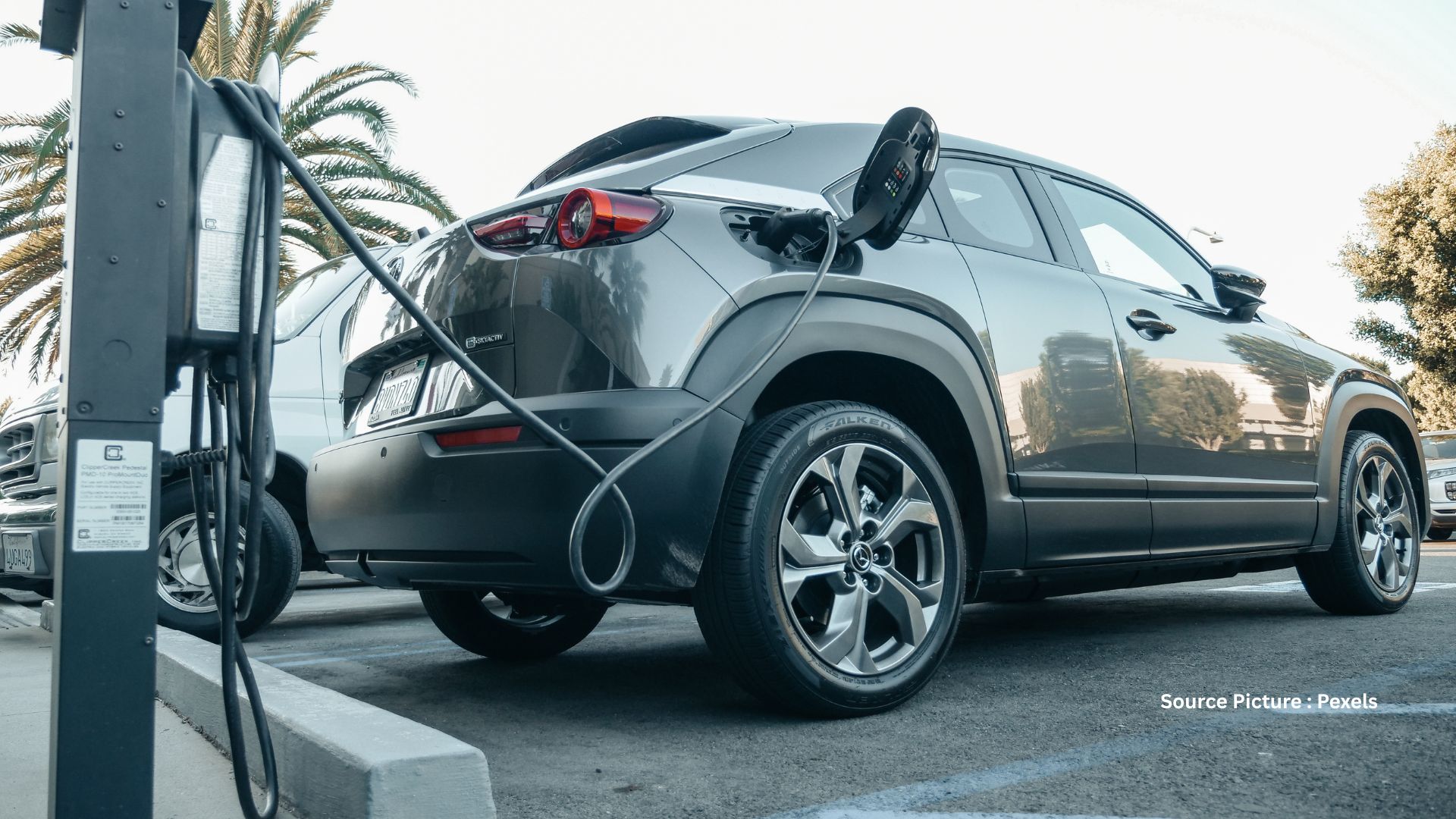
Kuala Lumpur, El Sky News – Malaysia’s electric vehicle (EV) market is currently experiencing a critical acceleration phase, driven by the government’s aggressive infrastructure targets and a looming deadline for key tax exemptions.
Infrastructure Target Under Pressure
The nation’s transition to green mobility hinges on its charging network. Under the Low Carbon Mobility Blueprint (LCMB), the Malaysian government set an ambitious goal to deploy 10,000 public EV charging points by the end of 2025. While significant progress has been made, recent data from the Ministry of Investment, Trade and Industry (MITI) indicates that reaching the full target before the year closes remains a considerable challenge.

However, the growth in high-power Direct Current (DC) fast chargers is particularly promising, surpassing its initial target of 1,000 units. Major charge point operators (CPOs) like Gentari, JomCharge, and ChargEV are spearheading this expansion, focusing on establishing charging hubs along interstate highways to alleviate range anxiety among drivers. Furthermore, new policies and the Malaysia Electric Vehicle Charging Network (MEVnet) dashboard are being used for strategic planning and monitoring, ensuring a more coordinated nationwide rollout.
Tax Deadline Spurs Sales Rush
Meanwhile, consumer demand for imported EVs has seen a significant spike as buyers rush to capitalise on favourable tax policies before they expire.
- Imported EV Deadline: The full exemption from import and excise duties for Completely Built-Up (CBU) imported battery electric vehicles (BEVs) is set to lapse on December 31, 2025. This impending deadline has driven a strong uplift in sales of foreign models in recent months.
- Local Focus: Following this deadline, the focus is expected to shift heavily toward locally assembled (CKD) EVs, which will continue to enjoy full sales tax and duty exemptions until the end of 2027. This structure incentivizes global brands to establish or expand local assembly operations in Malaysia, transforming the country into a regional EV manufacturing hub.
- Road Tax: The general road tax exemption for all EVs is also expiring at the end of the year, although the government has indicated a new, potentially lower, tax structure will be implemented in 2026.
These concurrent developments—the intense focus on infrastructure deployment and the year-end fiscal deadline—make 2025 a pivotal year that will significantly shape the landscape of Malaysia’s automotive future.