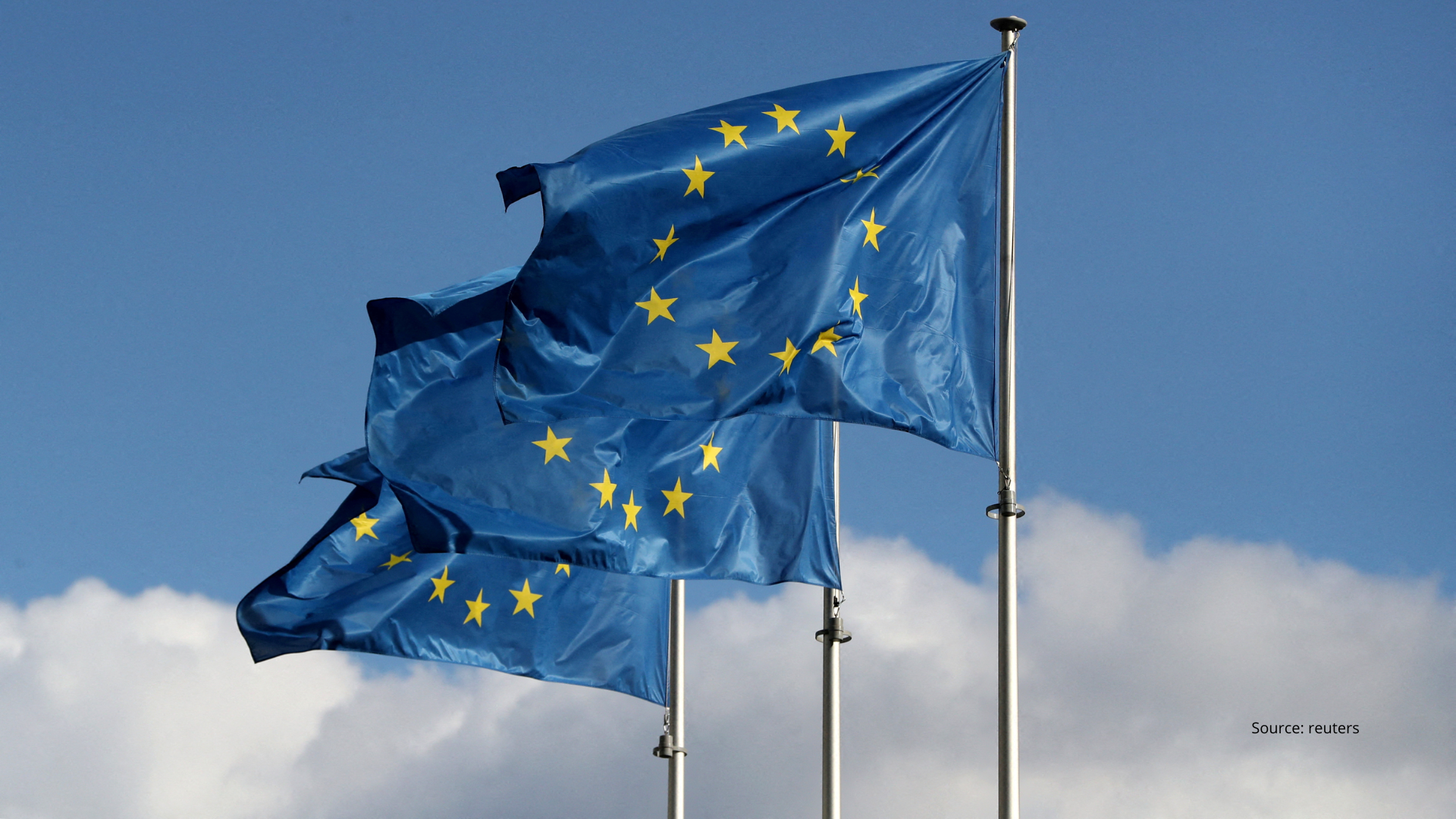
Washington, El Sky News — Diplomatic tensions between the United States and the European Union have intensified after the U.S. government imposed visa bans on five prominent European individuals, accusing them of attempting to influence American social media platforms and suppress U.S. viewpoints a move swiftly condemned by European leaders as unjustified and coercive.
US Announces Visa Restrictions

On 24 December 2025, the U.S. Department of State announced that it would deny visas to five European citizens, including Thierry Breton, a former European Commissioner and architect of the EU’s Digital Services Act (DSA) a key legislative framework aimed at regulating online content and tackling misinformation across major platforms.
U.S. Secretary of State Marco Rubio justified the decision on social media platform X, claiming that the targeted individuals and their affiliated organizations had led “organized efforts to coerce American platforms to punish American viewpoints they oppose,” and framed the bans as necessary to counter what Washington describes as “extraterritorial censorship.”
Who Are the Targeted Individuals?
The five Europeans affected by the visa bans are:
- Thierry Breton – Former European Commissioner for Internal Market and a principal driver of the Digital Services Act.
- Imran Ahmed – British CEO of the Centre for Countering Digital Hate.
- Josephine Ballon and Anna-Lena von Hodenberg – Leaders of German non-profit HateAid, an organization focused on combating online hate and disinformation.
- Clare Melford – Co-founder of the Global Disinformation Index.
The U.S. government alleges their collective work exerted pressure on U.S. tech companies to censor content and viewpoints within the United States — a claim heavily disputed by European officials.
European Union Condemns the Decision
The European Commission responded with a strong rebuke, issuing a public statement saying it “strongly condemns” the U.S. visa restrictions and has sought clarification from American authorities about the reasoning behind the move. The Commission also warned that the EU may act “swiftly and decisively” to defend its regulatory autonomy if necessary.
EU officials stressed that the Digital Services Act was democratically adopted by the 27 member states and the European Parliament, and it governs online platforms’ transparency and accountability not aimed at censoring speech.
Statements from Key European Leaders
- French President Emmanuel Macron condemned the visa bans on his official X account, calling them “intimidation and coercion aimed at undermining European digital sovereignty.” He emphasized that EU digital regulations are determined through democratic processes, not external pressure.
- German Foreign Minister Johann Wadephul described the U.S. entry bans as “not acceptable” and reiterated that the Digital Services Act has no extraterritorial reach beyond the EU.
- A spokesperson for the British government highlighted that while every nation can set its own visa rules, the UK still supports rules and institutions working to preserve online freedom and safety.
Broader Diplomatic Context
The visa restrictions have exacerbated ongoing tensions over digital regulation, free speech, and transatlantic relations. The U.S. action is seen by many European leaders as an aggressive assertion of power over allied democracies’ regulatory frameworks, potentially setting a precedent for future diplomatic friction.
Observers warn this dispute could ripple into economic and technological cooperation, particularly as both sides navigate increasingly complex debates over platform accountability, misinformation, and jurisdictional reach in digital policy.
(Lunar)