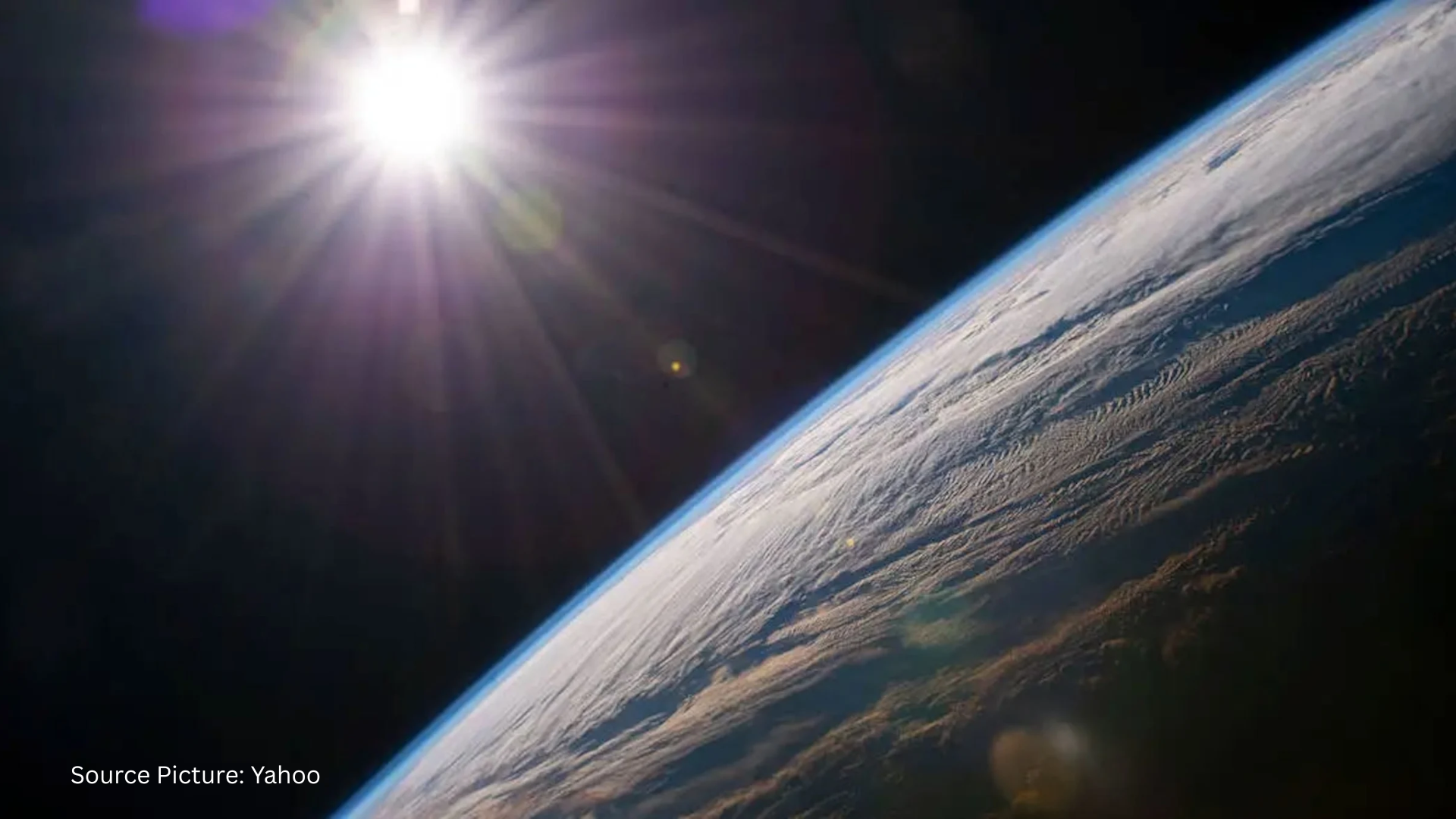
GREENWICH / GLOBAL, El Sky News – On this Saturday, January 3, 2026, the Earth has officially reached its Perihelion—the specific point in its annual elliptical orbit where it sits at its closest proximity to the Sun. At approximately 17:15 UTC (1:15 AM Malaysia Time, Jan 4), our planet will be roughly 147 million kilometers (91.4 million miles) from the center of the solar system, about 5 million kilometers closer than it will be during the Aphelion in July.
While the term “Perihelion” may sound like a complex scientific jargon, it represents a beautiful milestone in our planet’s cosmic journey, reminding us of the precise and elegant dance of the celestial bodies.

Distance vs. Temperature: A Common Misconception One of the most frequent questions during this event is: “If we are closer to the Sun, why is it still winter in the Northern Hemisphere?” Astronomers clarify that while Earth receives about 7% more solar energy at perihelion than at its farthest point, the proximity does not dictate our seasons. Instead, the Earth’s 23.5-degree axial tilt is the primary driver of weather patterns. Currently, the Northern Hemisphere is tilted away from the Sun, resulting in winter, while the Southern Hemisphere enjoys the height of summer.
A Visual Treat for Skywatchers For those with specialized solar telescopes or professional photography equipment, today offers a unique visual opportunity. Because we are at our closest point, the Sun’s disk will appear approximately 3% larger in the sky today than it does in early July.
“While this change is subtle and invisible to the naked eye, it provides a fantastic moment for researchers to capture high-definition data on solar activity,” noted a representative from a leading global observatory. “It is a friendly reminder of how dynamic our solar system truly is.”
Key Scientific Highlights of Perihelion 2026:
- Orbital Speed: Earth is currently traveling at its maximum orbital velocity—moving approximately 2,000 miles per hour faster today than it does in mid-summer.
- The “Wolf Moon” Connection: Coincidentally, the 2026 Perihelion aligns closely with the first Full Moon of the year—the Wolf Moon—and a Supermoon event, making the night sky just as exciting as the day.
- Tidal Influence: The increased gravitational pull from the Sun during Perihelion can lead to slightly higher “perihelion spring tides,” though the effect is generally minor and managed by coastal authorities.
A Professional Perspective on Our Planet Events like the Perihelion serve as an educational bridge, helping the public clear up misconceptions about climate and space. It reinforces the role of science in explaining the natural phenomena we experience every day.
As we move past today’s milestone, Earth will begin its gradual trek back toward the Aphelion on July 6, 2026. For now, we can all appreciate being just a little bit closer to our home star as we embark on the adventures of the year ahead.
(Leakim Otid)