KUALA LUMPUR – The Colombian government has officially declared a 30-day state of emergency following catastrophic flooding that has left at least 18 people dead and forced thousands of families to flee their homes.
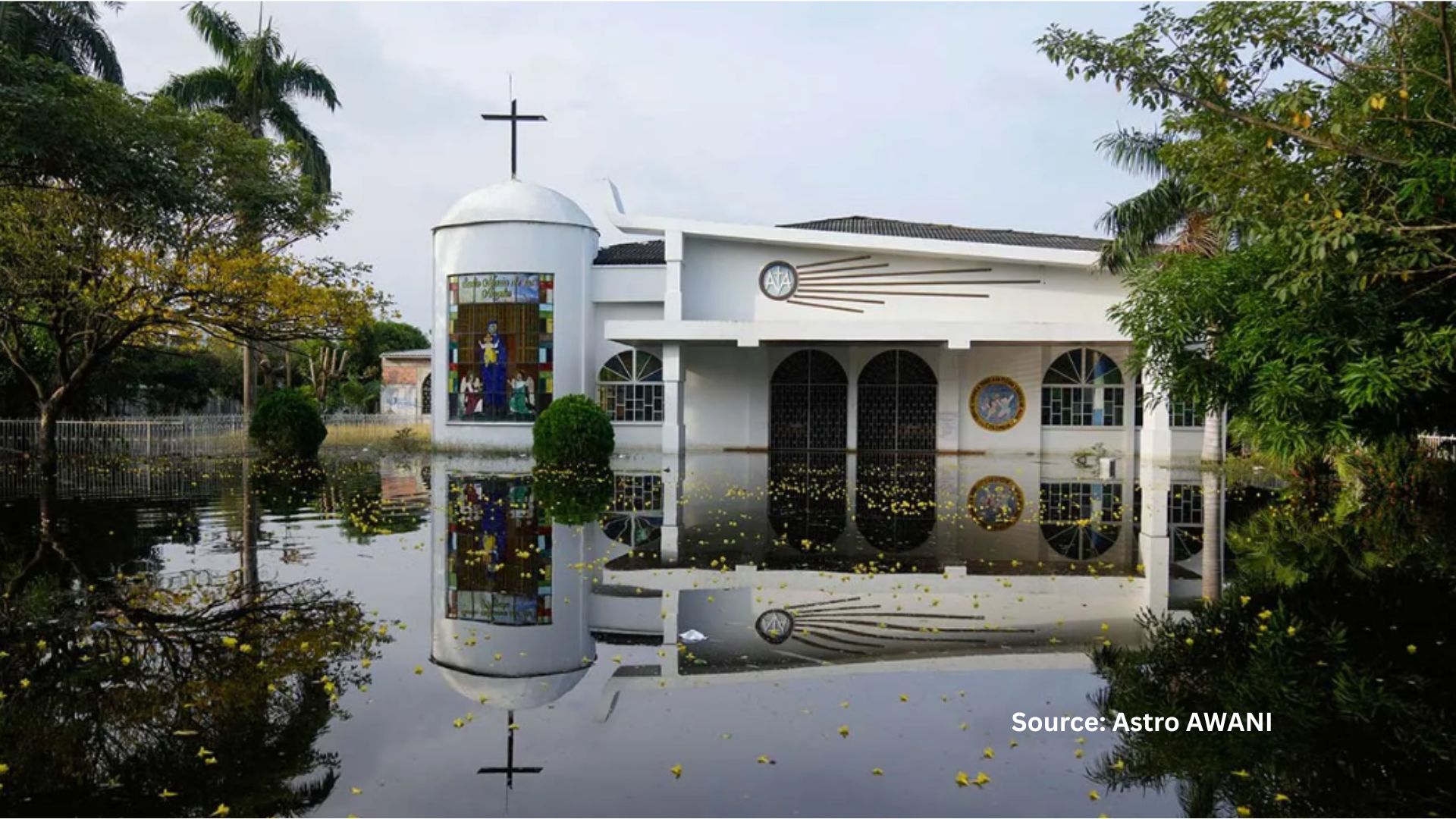
The crisis, which has hit the Northern Cattle Valley region the hardest, was triggered by a dam breach and several rivers bursting their banks in the Córdoba province. The resulting deluge has submerged entire residential areas and vast tracts of agricultural land.

Extensive Displacement and Economic Loss
Local authorities report that the scale of the disaster has reached a critical level, with over 150,000 residents affected by the rising waters. Initial assessments reveal a grim picture of the destruction:
- Residential Impact: More than 4,300 homes have been destroyed.
- Agricultural Toll: At least 1,200 head of cattle have perished, threatening the livelihoods of local farmers.
- Casualty Update: While initial reports from the disaster agency cited 22 deaths, the official toll was later revised to 18 following further verification.
Rapid Response Measures
President Gustavo Petro signed the emergency decree to bypass standard bureaucratic hurdles, allowing the government to fast-track funding and humanitarian aid. By invoking these powers, the administration can bypass Congressional approval to ensure that immediate support reaches the hardest-hit provinces without delay.
The President emphasized that the priority remains the evacuation of stranded citizens and the restoration of essential infrastructure, such as clean water and electricity.
Climate Concerns and Future Outlook
The disaster has reignited urgent discussions regarding climate change in Colombia. Heavy, prolonged rainfall has become increasingly frequent, leading to saturated soil that is prone to landslides and sudden river overflows.
Meteorologists have warned that the situation remains precarious. With the ground already unable to absorb more moisture and forecasts predicting continued rain in the northern territories, authorities remain on high alert for further flooding.
Rescue teams are currently focused on providing food, medical supplies, and temporary shelter to those currently housed in emergency evacuation centers.