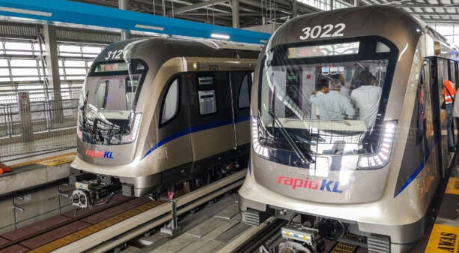
KUALA LUMPUR — The long-awaited LRT3 Shah Alam Line has officially entered the final phase of fault-free run (FFR) testing, marking a significant step towards launching operations that will serve thousands of commuters daily in the Klang Valley region.
The FFR testing phase involves comprehensive system-wide trials to verify that trains, signaling, communication systems, and operational protocols can run smoothly and safely without any interruptions. Prasarana Malaysia Berhad, which oversees the project, confirmed that eight train sets are currently being tested, with all remaining technical and operational checks being conducted prior to the submission of safety certification applications.

“This is a critical milestone for the LRT3 project. Safety and reliability remain our top priorities, and we are committed to ensuring that the line is fully operational without any technical issues,” said Amir Hamdan, President and CEO of Prasarana Malaysia.
While no definitive operational date has been officially announced, Prasarana said updates will be made in April 2026, following the completion of safety assessments and final approval from independent safety auditors. Earlier projections had suggested that the line could commence operations as early as June 2026, contingent on the successful conclusion of the final testing phase.
The LRT3 Shah Alam Line is a major urban rail project spanning several key districts, including Shah Alam, Klang, and Setia Alam, and aims to provide a fast, reliable, and environmentally friendly alternative to the region’s road transport network. The line is expected to significantly reduce traffic congestion, shorten travel times, and enhance connectivity for daily commuters in one of Malaysia’s busiest urban corridors.
Since the project’s inception, the LRT3 line has faced multiple delays due to technical challenges, testing phases, and regulatory compliance. Initially scheduled for completion in September 2025, the line’s opening was later postponed to December 2025, and subsequently into 2026, as engineers and contractors conducted extensive trials to ensure system safety and reliability.
In addition to operational testing, the main contractors have faced liquidated damages (LAD) for delays, amounting to millions of ringgit based on daily penalty rates. Despite these challenges, Prasarana has reiterated its commitment to delivering a safe, modern, and fully functional rail system for the public.
The upcoming operational launch of the LRT3 Shah Alam Line is expected to be a transformational development in Malaysia’s public transport landscape, offering residents and commuters a high-quality, efficient, and convenient mode of travel while supporting the country’s goals for sustainable urban mobility.
Passengers and the public are encouraged to stay updated through official announcements from Prasarana Malaysia regarding operational timelines, ticketing information, and service routes. With FFR testing nearing completion, the region is now only weeks away from seeing the LRT3 line fully integrated into the Klang Valley’s transit network, bringing Malaysia one step closer to a more connected, modern, and commuter-friendly urban transport system.