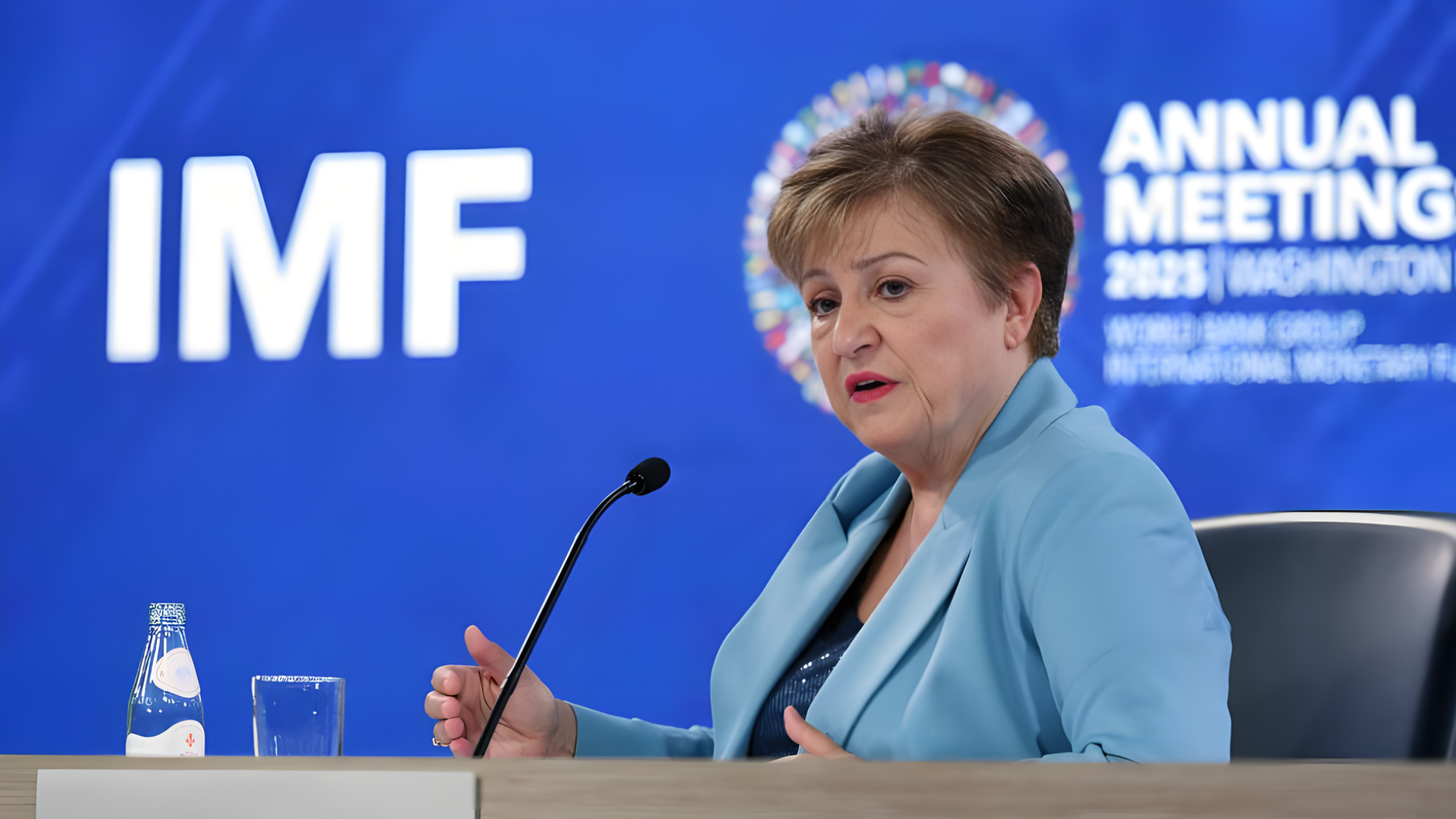
KUALA LUMPUR,APRIL — The International Monetary Fund (IMF) has issued a stark warning over the growing risks posed by artificial intelligence (AI) to the stability of the global monetary system, highlighting concerns that rapid technological adoption could outpace regulatory safeguards and create new financial vulnerabilities.
IMF Managing Director Kristalina Georgieva cautioned that while AI is driving productivity and economic growth, it also introduces complex risks that could destabilize financial markets if left unchecked.

AI Boom Brings Both Growth and Risk
Artificial intelligence has become a key driver of global economic expansion, with massive investments fueling innovation across industries. However, the IMF warns that this growth is increasingly concentrated in a narrow set of technology sectors, making the global economy more fragile and dependent on continued AI performance.
If expectations around AI-driven productivity fail to materialize, it could trigger a broader economic slowdown, market corrections, and reduced investor confidence.
The IMF also noted that global growth projections remain sensitive to shifts in AI investment trends, with risks “tilted to the downside” if disruptions occur.
Threats to Monetary and Financial Stability
Beyond economic growth, the IMF highlighted deeper structural concerns regarding how AI is transforming financial systems.
Key risks include:
- Increased reliance on algorithmic trading systems, which can amplify market volatility
- Rapid expansion of AI-driven financial products and digital assets
- Growing influence of stablecoins and digital currencies on traditional monetary systems
- Potential for sudden capital flows and liquidity shocks
IMF officials have warned that emerging technologies such as stablecoins could place pressure on national monetary frameworks, particularly in countries with weaker financial systems.
Systemic Risk: Speed Outpacing Regulation
A major concern raised by the IMF is the speed at which AI is being integrated into financial markets compared to the pace of regulatory development.
AI systems can:
- Execute high-frequency trades in milliseconds
- Process massive datasets beyond human capability
- Influence investment decisions at scale
While these capabilities improve efficiency, they also increase the risk of system-wide shocks, especially if algorithms behave unpredictably or are triggered simultaneously across markets.
Experts warn that a failure in AI-driven financial systems could spread rapidly across global markets, creating a cascade effect similar to past financial crises—but at a much faster pace.
Geopolitical and Economic Context
The warning comes amid heightened global uncertainty, including geopolitical tensions and energy market disruptions linked to ongoing conflicts in the Middle East.
The IMF has already cautioned that global economic stability is under pressure from multiple factors, including rising inflation, supply chain disruptions, and financial volatility.
In this context, the addition of AI-related risks introduces another layer of complexity to an already fragile global economic environment.
Call for Stronger Global Coordination
The IMF is urging policymakers, central banks, and financial regulators to act quickly in addressing the risks associated with AI.
Recommended measures include:
- Strengthening global financial regulations for AI-driven systems
- Enhancing transparency in algorithmic trading and digital finance
- Improving oversight of emerging financial technologies
- Promoting international cooperation to manage cross-border risks
Georgieva emphasized that without coordinated global action, AI could shift from being a driver of growth to a source of systemic instability.