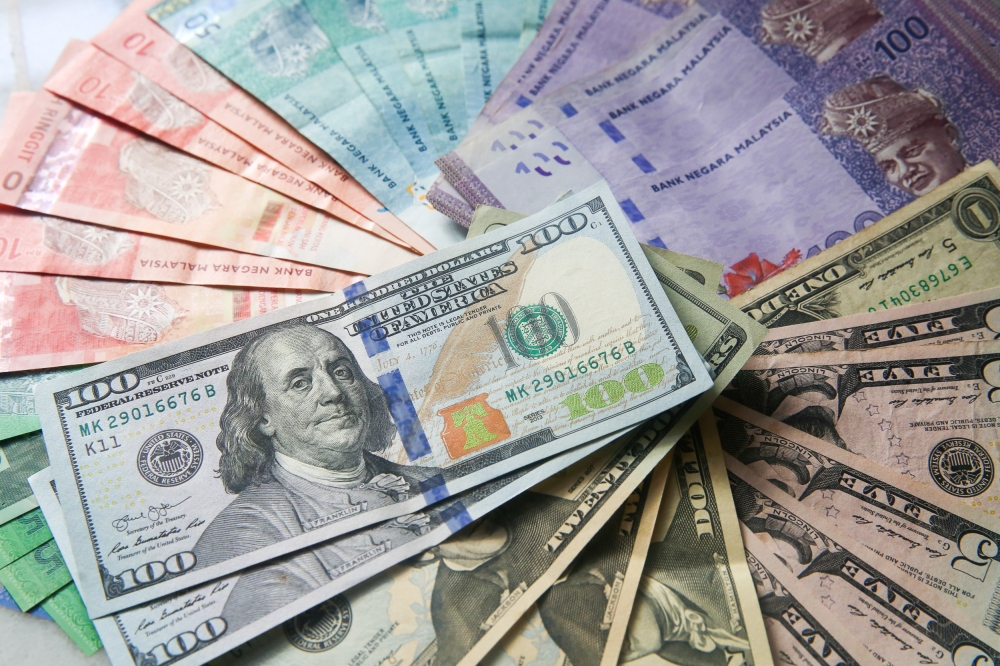
KUALA LUMPUR — Malaysia’s currency, the ringgit, rebounded to the 3.96 level against the US dollar on Tuesday, supported by improving global risk sentiment amid renewed optimism over potential negotiations between the United States and Iran.
At the opening, the ringgit strengthened to around 3.9600/9715, compared to its previous close of 3.9735/9805, reflecting a notable recovery as investors shifted away from safe-haven assets.

Improved Sentiment Driven by Diplomatic Hopes
Market confidence was lifted by expectations that Washington and Tehran could resume talks following recent tensions. Analysts noted that even the possibility of renewed negotiations has been enough to calm global markets.
According to economists, the easing geopolitical outlook has helped push oil prices lower, with benchmark crude prices falling below the US$100 per barrel level.
This decline in oil prices has reduced inflationary pressure and contributed to a more favorable environment for emerging market currencies like the ringgit.
Weaker US Dollar Supports Regional Currencies
The rebound was also supported by a softer US dollar, traditionally seen as a safe-haven asset during times of geopolitical uncertainty.
Recent data showed that:
- US Treasury yields edged lower
- The US Dollar Index declined slightly
- Investors shifted toward riskier assets
As global risk appetite improved, demand for the US dollar weakened, allowing regional currencies—including the ringgit—to gain ground.
This trend aligns with broader market movements, where easing tensions between the US and Iran have reduced demand for defensive assets and boosted investor confidence.
Cautious Outlook Despite Recovery
Despite the positive momentum, analysts warned that the ringgit’s gains may remain limited in the near term.
Experts expect the currency to trade within a narrow range of RM3.96 to RM3.98, reflecting continued uncertainty surrounding geopolitical developments and the outcome of potential negotiations.
They emphasized that while optimism is improving, the situation remains fluid, and any escalation in tensions could quickly reverse recent gains.
Mixed Performance Against Other Currencies
Although the ringgit strengthened against the US dollar, its performance was mixed against other major currencies.
The local currency:
- Weakened against the euro and British pound
- Strengthened slightly against the Japanese yen
- Showed mixed movement against ASEAN currencies
This reflects broader currency market dynamics, where global factors continue to influence exchange rate movements beyond bilateral US dollar trends.
Global Context: Markets React to Geopolitical Signals
Global financial markets have been highly sensitive to developments in the US–Iran conflict. Even small signs of diplomatic progress have led to:
- Rising equity markets
- Falling oil prices
- Reduced volatility in currency markets
However, analysts caution that markets are currently reacting to expectations rather than confirmed outcomes, meaning sentiment could shift rapidly if negotiations stall or tensions escalate again.
The ringgit’s rebound highlights how closely Malaysia’s currency is tied to global geopolitical developments and investor sentiment.
While hopes for renewed US–Iran talks have provided temporary relief, the sustainability of the ringgit’s gains will depend on whether diplomatic progress materializes into concrete agreements.
For now, markets remain cautiously optimistic—but highly sensitive to any shifts in the evolving geopolitical landscape.