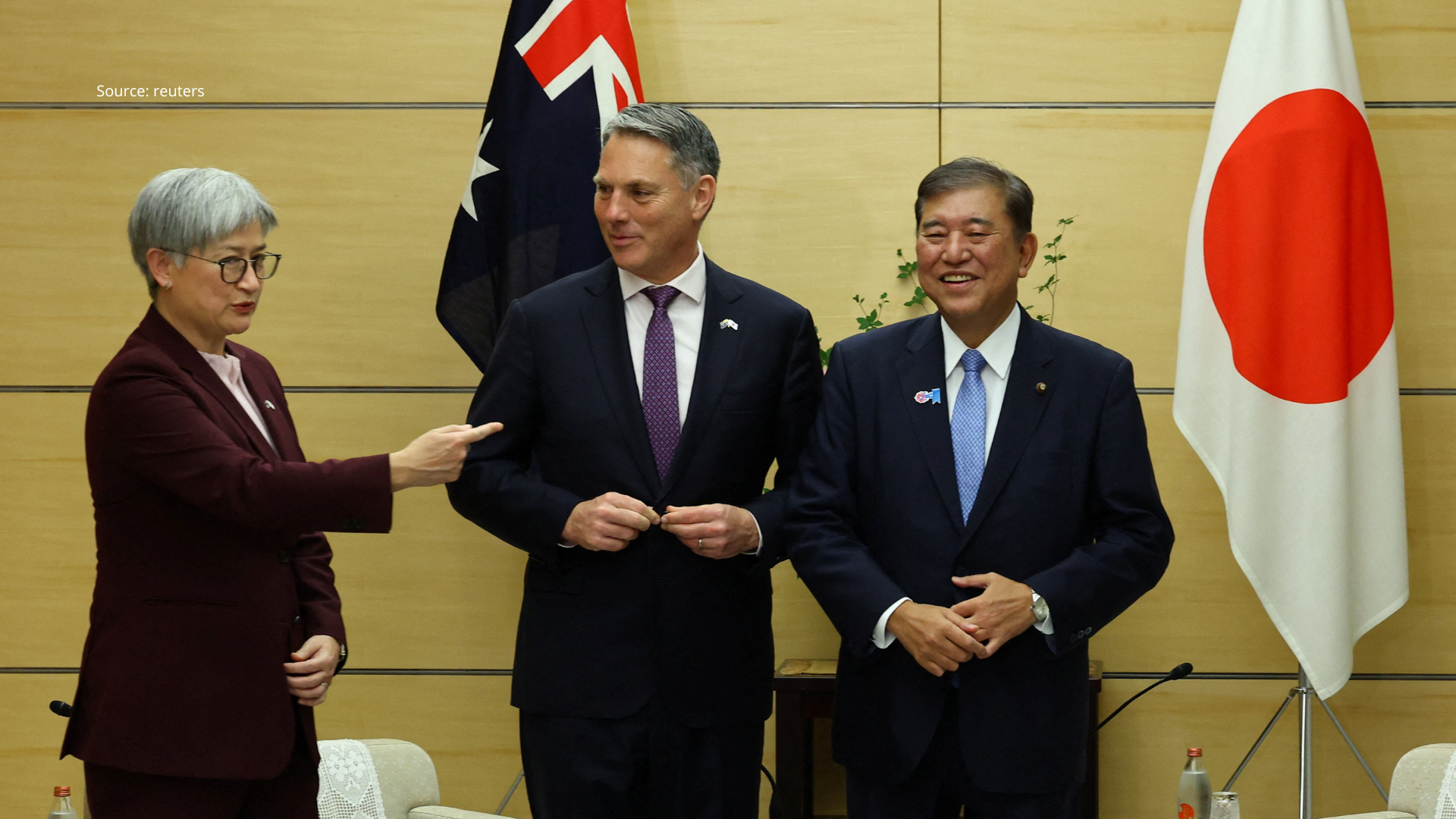
Tokyo, El Sky News — Australia’s Department of Defence confirmed on Friday that Defence Minister Richard Marles will depart for Japan this week in a high-stakes diplomatic and security mission aimed at strengthening strategic cooperation between the two countries. The visit arrives at a defining moment for the Indo-Pacific region, where geopolitical tensions, military build-ups, and territorial disputes are accelerating at an unprecedented pace.
According to the official statement, the visit is part of Australia’s broader regional strategy to solidify its partnerships with like-minded nations as power competition intensifies. Japanone of Australia’s closest security partners is seen as a central pillar in Canberra’s long-term defense framework.

A Strategic Visit Amid Rising Regional Pressures
In recent years, the Indo-Pacific has undergone a dramatic shift in its security landscape. Territorial disputes in the South China Sea, increased missile tests by North Korea, expanding naval activities by major powers, and growing concerns over cyber and hybrid warfare have collectively heightened regional uncertainty.
Against this backdrop, Marles’ visit has been described by defence analysts as “timely and consequential,” signalling Australia’s intent to respond proactively to emerging security risks.
A senior Australian defence official emphasized that the mission is designed not merely as a symbolic gesture, but as a concrete step to enhance military readiness, improve interoperability, and coordinate long-term security planning with Japan. Both nations have faced similar strategic pressures, prompting deeper alignment.
Key Agendas: RAA, Joint Maritime Patrols, and Defence Technology
During his stay in Tokyo, Marles is scheduled to hold a series of meetings with Japan’s Defence Minister and other senior figures in the Japanese security establishment. High on the agenda is the Australia–Japan Reciprocal Access Agreement (RAA), which came into effect to facilitate faster, smoother, and more flexible movement of military personnel and equipment across borders for joint operations and training.
Officials from both sides will also review:
- Expanded joint maritime patrols in contested waters
- Integrated air and naval exercises aimed at boosting operational compatibility
- Intelligence sharing mechanisms, particularly around missile threats and naval movements
- Defence technology collaboration, including surveillance systems, early-warning capabilities, and cyber defense tools
- A proposed trilateral dialogue involving the United States, further solidifying the strategic triangle in the Pacific
Japan’s recent policy shiftsa llowing for greater military investment and more assertive defense postures have made cooperation with Australia both feasible and strategically advantageous.
A Shared Commitment to Regional Stability
Both Canberra and Tokyo have long expressed support for a rules-based international order, open shipping lanes, and peaceful resolution of disputes. Marles reiterated this stance before departing, stating that Australia is committed to working with partners who share democratic values and mutual security concerns.
He noted that Japan remains “one of Australia’s most trusted and capable defence partners,” adding that the collaboration is vital to ensuring long-term regional stability.
For Japan, Australia represents a reliable counterpart as it manages pressures from its own geopolitical challenges, including rising tensions around Taiwan and increasing military activities near its maritime borders.
What This Visit Means for the Indo-Pacific
Experts predict that the outcomes of Marles’ Japan mission will likely shape the next phase of Indo-Pacific security cooperation. It may pave the way for:
- New multi-year military planning arrangements
- Enhanced technological integration for intelligence and surveillance
- A joint approach to emerging threats, including cyber attacks and disinformation campaigns
- Potential expansion of trilateral or multilateral security blocs in the region
Furthermore, observers believe that both nations will use this opportunity to align their strategic messaging ahead of a series of major regional defense summits scheduled for early 2026.
A Decisive Step in a Time of Uncertainty
As geopolitical frictions intensify, Australia and Japan appear increasingly committed to reinforcing their defence partnership. Marles’ visit though routine in format carries significant strategic weight and is expected to result in new frameworks that deepen military cooperation for years to come.
For both nations, the mission represents a clear signal: the Indo-Pacific’s security environment is shifting rapidly, and coordinated, forward-looking collaboration is essential to navigating the challenges ahead.
(Lunar)